
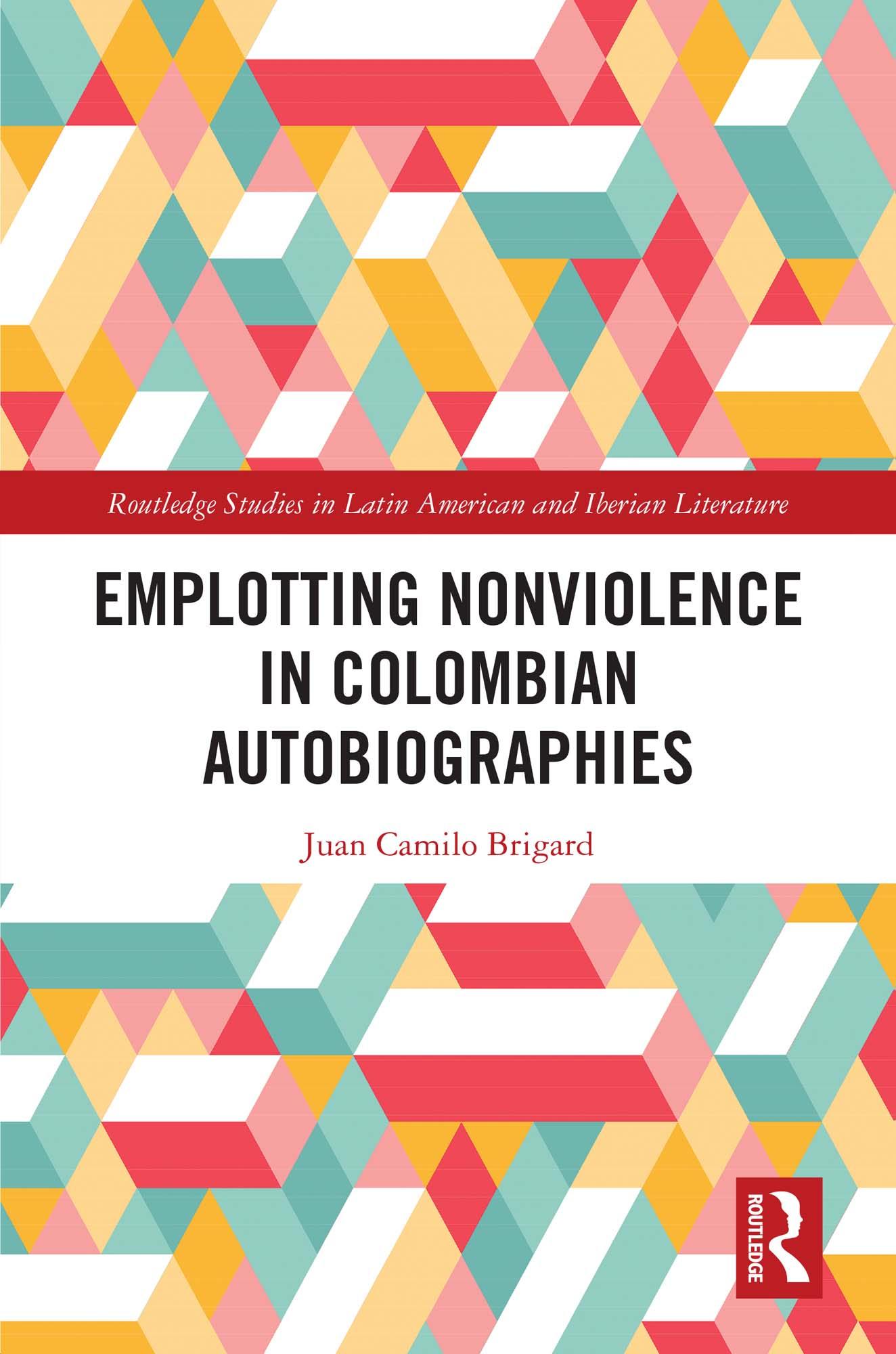
How do individuals upholding an ethos of nonviolence tell their life narratives in places ravaged by armed conflict? With an understanding of violence and nonviolence as socially contingent concepts, Emplotting Nonviolence in Colombian Autobiographies focuses on the life writings of three Colombian social movement leaders (the U’wa Esperanza-Aguablanca’s Tengo los pies en la cabeza, the Afrocolombian Rudecindo Castro’s Calle caliente, and the LGBTQ+ artivist Manuel Antonio Velandia’s De homosexual a marica sujeto de derechos) and contrasts them with the memoirs of a hegemonic ex-president (Álvaro Uribe’s No Lost Causes). These autobiographies are analyzed using a "contextual narratology of contingency". This is a narrative approach that examines "emplotment" —the structuring of storytelling sequences and its narrative devices— in the light of historical literary genres. Moreover, through a context-sensitive literary lens, this approach emphasizes each book’s rhetoric of group-oriented self-representation, or "collective narration" and the way literary genres inflect the representation of nonviolence.
Zahle einfach mit Karte, Klarna, Apple Pay oder Google Pay. Nicht zufrieden? Du hast immer ein 14-tägiges Widerrufsrecht. Lies mehr in unseren AGB. Hast du Fragen, schreib uns eine E-Mail an hello@memmo.org.
Memmo macht das Lernen einfacher – wo auch immer du bist. Bei uns findest du deine Kursbücher und smarte Lerntools an einem Ort: Zusammenfassungen, Quizzes, Podcasts und Lernkarten. Und Ted, dein Lernbuddy, beantwortet alles, was du wissen möchtest. Über 50.000 Studierende lernen bereits hier – gemacht, damit du schneller lernst und weniger Stress hast.