
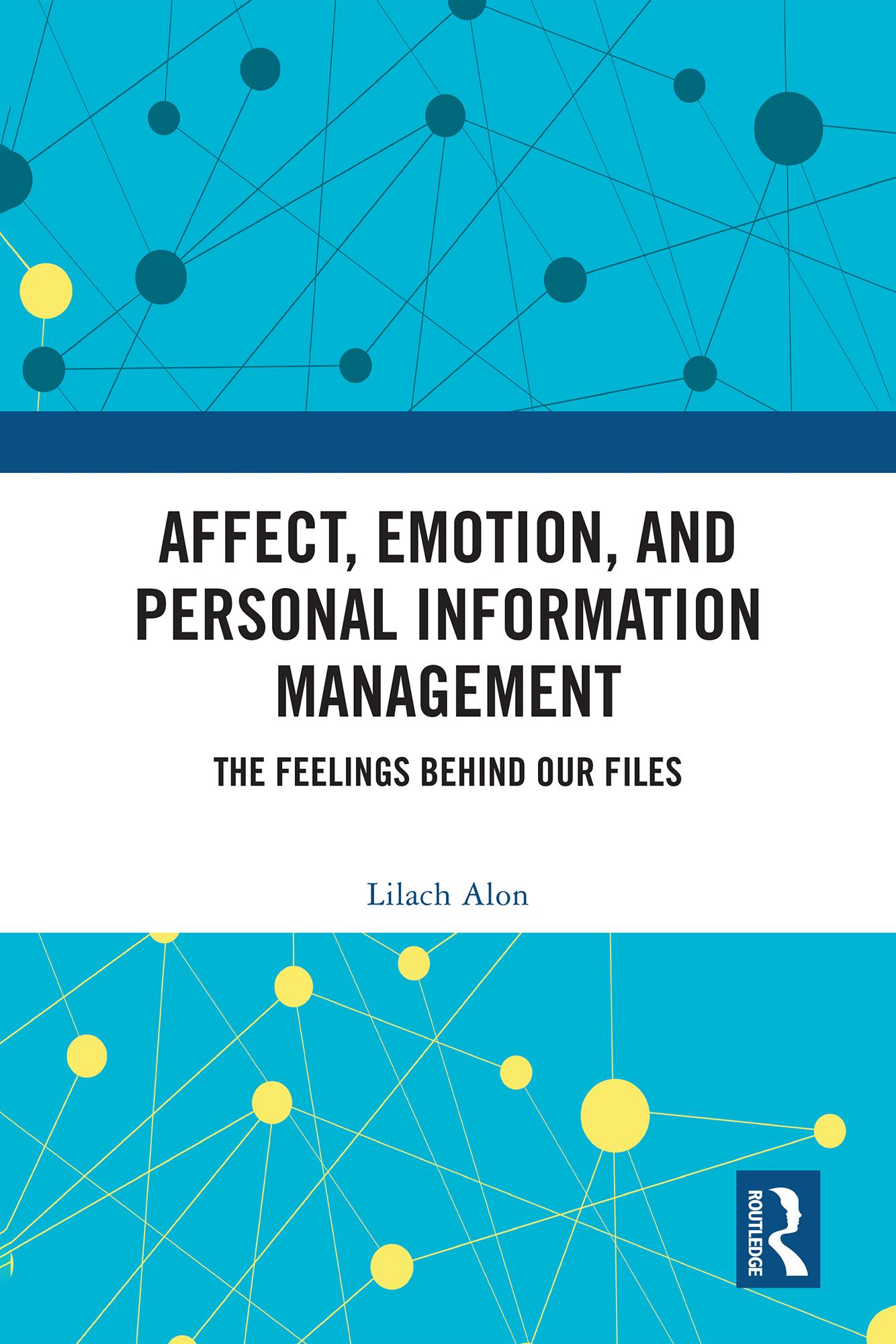
Bringing together psychological, cognitive, and sociocultural perspectives, this book offers a new way of understanding personal information management (PIM) as an emotional as well as practical activity. It explores how everyday acts such as saving, sorting, retrieving, and discarding information are tied to memory, identity, responsibility, care, and control.
Affective PIM examines the emotional dimensions of PIM, showing how what we save, delete, organise, and search for is shaped as much by feeling as by function. Organised in three parts, the book moves from conceptual foundations to empirical case studies and narratives from everyday life and periods of transition, and then to future directions, including AI- enabled automation, wearable technologies, and user- centred design. Reflection prompts throughout support critical engagement and help readers connect the discussion to their own information practices. The result is a theoretically grounded and accessible account of how PIM is lived, felt, and negotiated in contemporary digital life.
The book is intended for researchers and students in library and information science, information behaviour, digital literacy, human–computer interaction, and user experience design. It will also be valuable to designers, educators, and other readers interested in the human side of personal information, digital life, and the changing relationship between people, technologies, and everyday information practices.
Zahle einfach mit Karte, Klarna, Apple Pay oder Google Pay. Nicht zufrieden? Du hast immer ein 14-tägiges Widerrufsrecht. Lies mehr in unseren AGB. Hast du Fragen, schreib uns eine E-Mail an hello@memmo.org.
Memmo macht das Lernen einfacher – wo auch immer du bist. Bei uns findest du deine Kursbücher und smarte Lerntools an einem Ort: Zusammenfassungen, Quizzes, Podcasts und Lernkarten. Und Ted, dein Lernbuddy, beantwortet alles, was du wissen möchtest. Über 50.000 Studierende lernen bereits hier – gemacht, damit du schneller lernst und weniger Stress hast.