
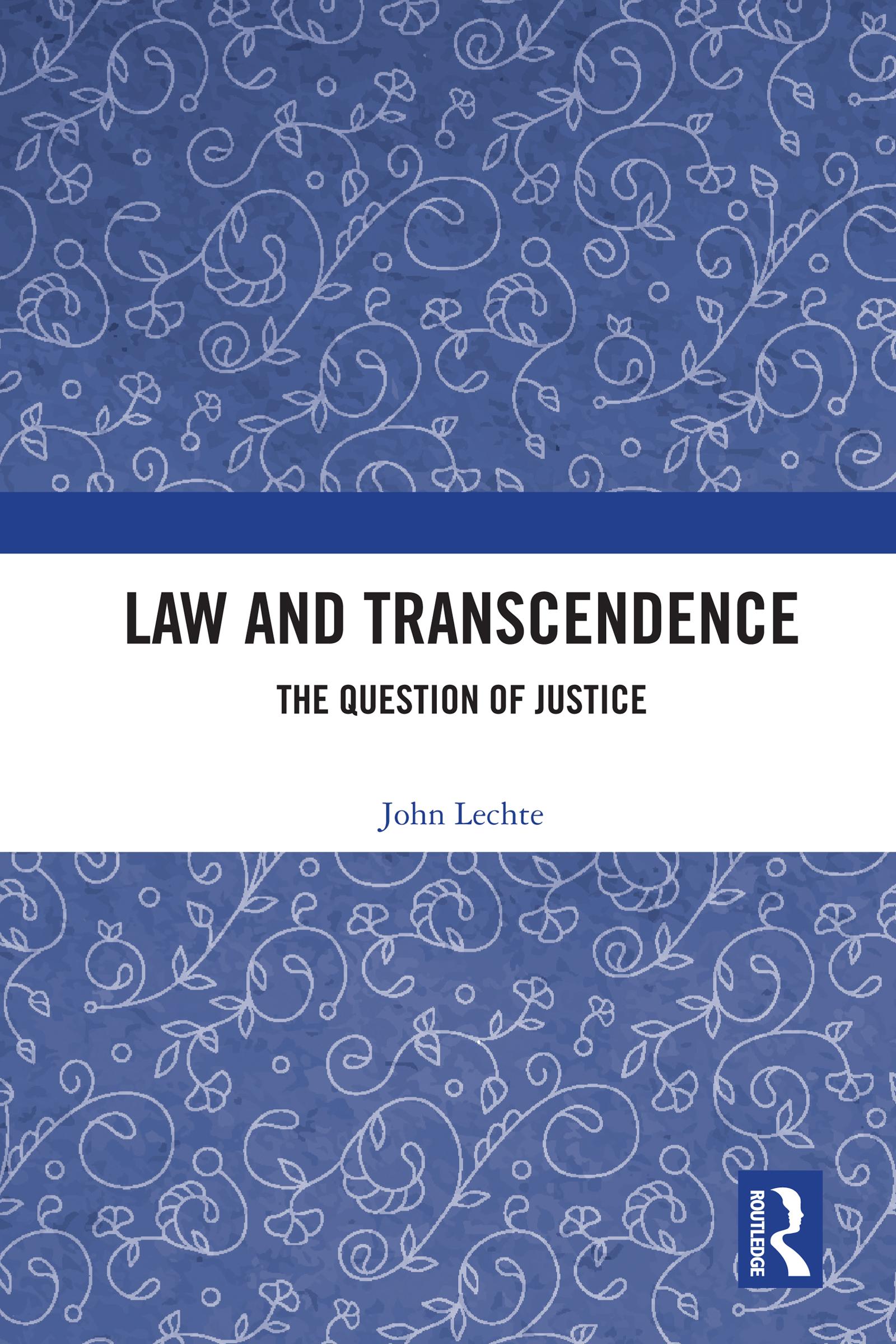
Inspired by the philosophy of Emmanuel Levinas, this book shows that for justice to be realised law must be understood to originate in transcendence rather than in violence, conflict and the sacred – prevalent themes in philosophies of law and the political.
To this end, the book takes up the case of ‘scapegoating’: evident in Carl Schmitt’s influential theory of the ‘friend–enemy’ dichotomy as the essence of the political, and here considered as a paradigm of injustice. After considering positivist approaches to the law, as well as a case study that considers the question of what it would mean for Aboriginal people to be treated justly, the book shows that pragmatic, positivist and immanent approaches to the law and the scapegoat cannot deal with ‘bad’ law and cannot provide an insight into the nature of justice as ‘good’ law. The book then draws further on Levinas to demonstrate the necessity of law’s foundation, not in immanence, as is widely presupposed, but rather in transcendence.
Law and Transcendence will appeal to scholars in law, philosophy and political theory and especially to those with interests in sovereignty and power.
Zahle einfach mit Karte, Klarna, Apple Pay oder Google Pay. Nicht zufrieden? Du hast immer ein 14-tägiges Widerrufsrecht. Lies mehr in unseren AGB. Hast du Fragen, schreib uns eine E-Mail an hello@memmo.org.
Memmo macht das Lernen einfacher – wo auch immer du bist. Bei uns findest du deine Kursbücher und smarte Lerntools an einem Ort: Zusammenfassungen, Quizzes, Podcasts und Lernkarten. Und Ted, dein Lernbuddy, beantwortet alles, was du wissen möchtest. Über 50.000 Studierende lernen bereits hier – gemacht, damit du schneller lernst und weniger Stress hast.