
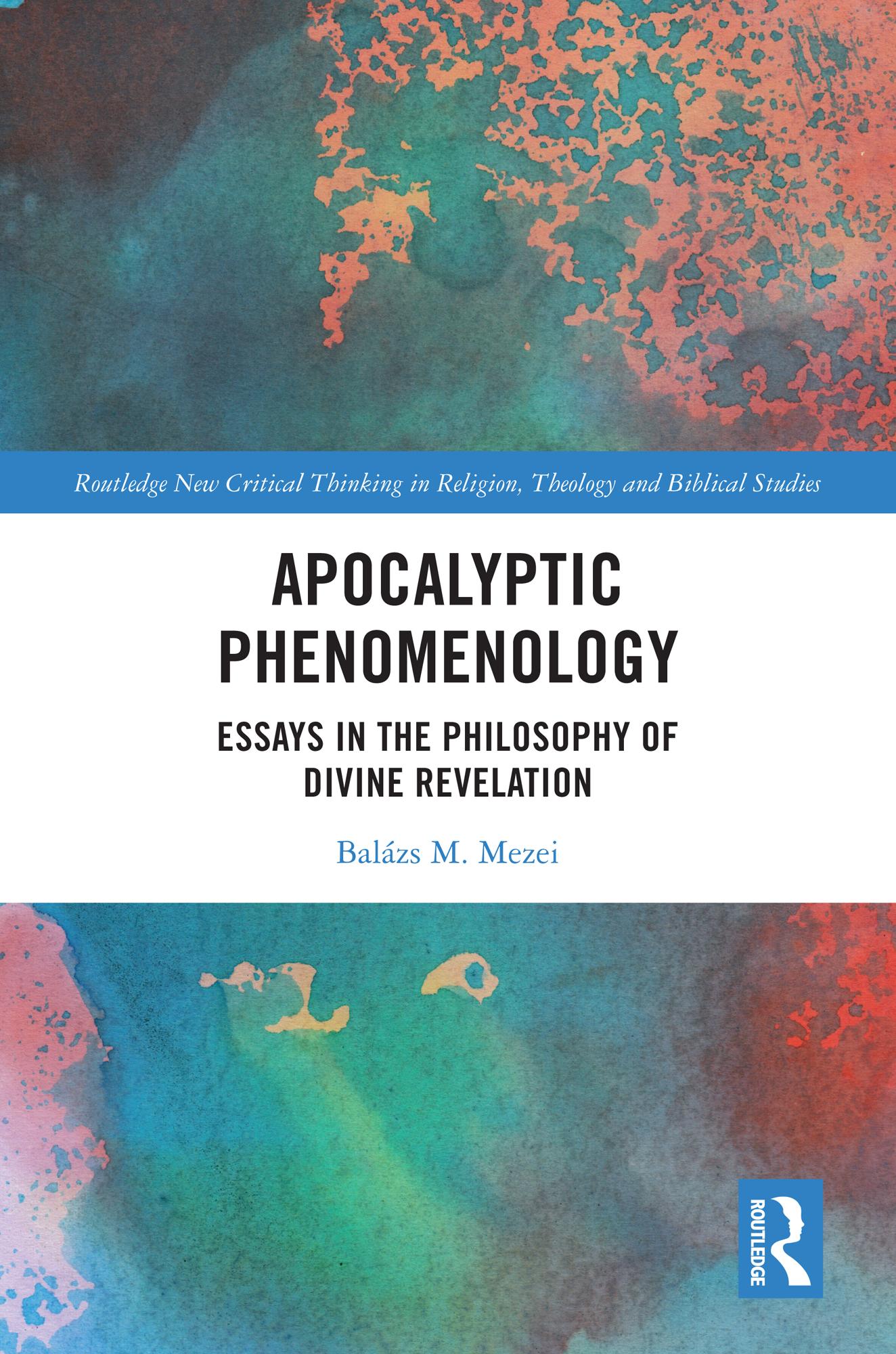
This book provides a detailed view of the author’s conception of ‘apocalyptic phenomenology’, referring to the revelatory and self-disclosing nature of phenomenological thinking, a thinking that is central to our philosophical traditions today.
The concept of ‘apocalyptic phenomenology’, i.e., a phenomenological theology that discloses the ultimate ground of being, God in the form of divine revelation, is original. At the same time, it is rooted in the phenomenological tradition of Offenbarung (revelation, revealing) as the basic feature of phenomena. In the author’s view, reality is self-disclosing, ‘apocalyptic’, and thus he explains the connections between the original, biblical notion of apocalupsis and the important developments of our philosophical traditions leading up to the ‘theological turn of phenomenology’. The chapters are framed around a focus on newness and engage with the work of key thinkers such as Edmund Husserl, Martin Heidegger, Paul Ricœur, Hans Urs von Balthasar, and Anton Günther.
Apocalyptic Phenomenology will be of interest to scholars of both theology and philosophy.
Zahle einfach mit Karte, Klarna, Apple Pay oder Google Pay. Nicht zufrieden? Du hast immer ein 14-tägiges Widerrufsrecht. Lies mehr in unseren AGB. Hast du Fragen, schreib uns eine E-Mail an hello@memmo.org.
Memmo macht das Lernen einfacher – wo auch immer du bist. Bei uns findest du deine Kursbücher und smarte Lerntools an einem Ort: Zusammenfassungen, Quizzes, Podcasts und Lernkarten. Und Ted, dein Lernbuddy, beantwortet alles, was du wissen möchtest. Über 50.000 Studierende lernen bereits hier – gemacht, damit du schneller lernst und weniger Stress hast.