
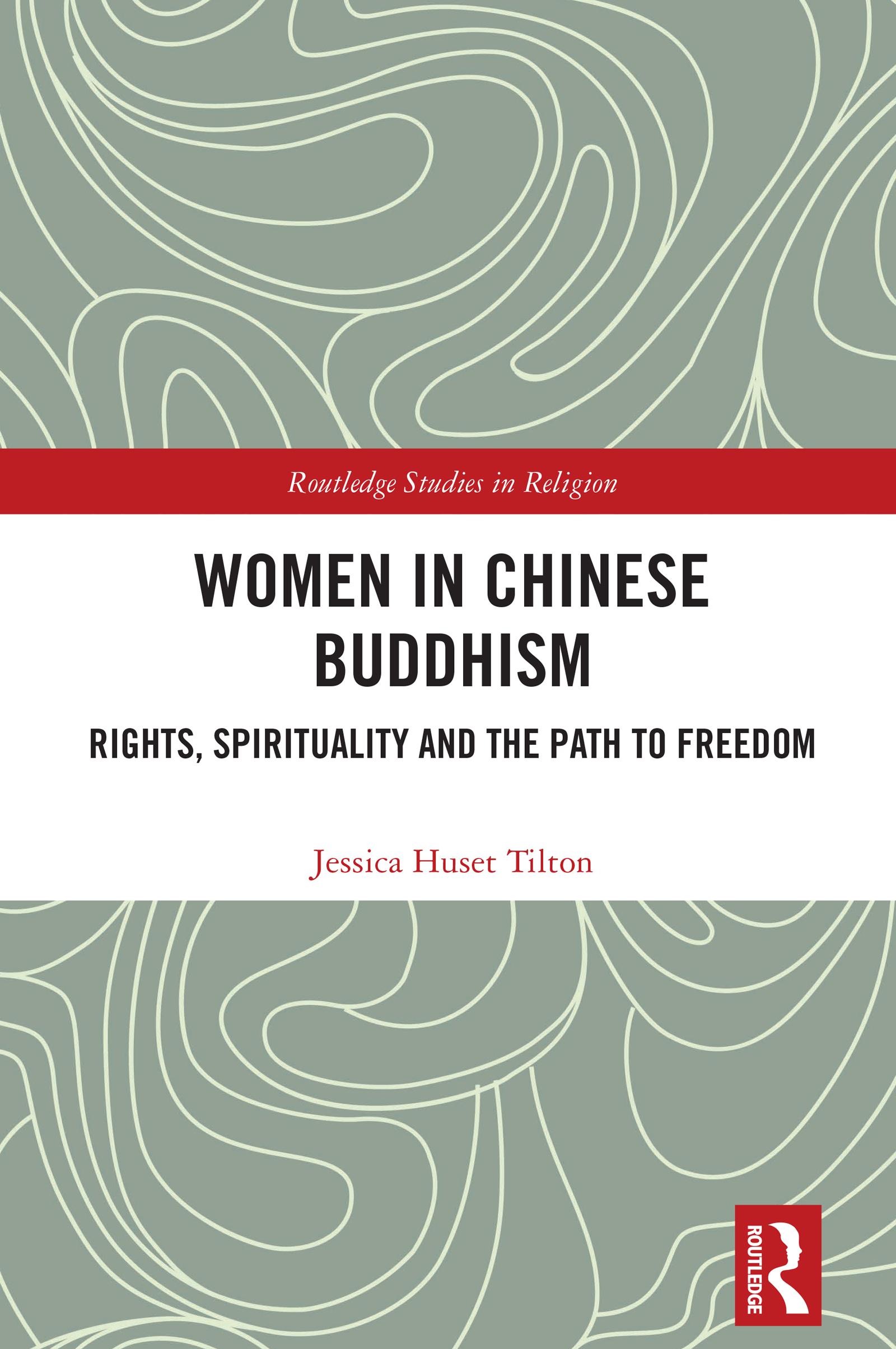
Tilton examines how cultural, political and economic forces exert pressures on the levels of freedom and equality for female Buddhists within the Buddhist community as well as women’s rights within society.
The book charts women’s spiritual paths over four periods, beginning with the Buddha and his revolutionary stance on women, to the creation of a fully ordained female Saṅgha in China—which peaked during the Tang dynasty—and finally to its resurgence in the late Qing and early Republic period, ending with a sharp decline to near extinction during the Mao Zedong years (1949–1976). As the nun and lay communities arise directly from the broader female community, Tilton argues that there is a direct correlation between women’s rights issues and those of liberties for Buddhist women within the Saṅgha. Specifically, women’s equality within “this world” as well as their right to achieve liberation from “this world,” or saṃsāra.
Charting the evolution of Buddhist women in China across multiple centuries, this book is a valuable resource for academics, researchers and students of Asian Studies, Buddhist Studies, as well as those interested in the intersection of gender and religion.
Zahle einfach mit Karte, Klarna, Apple Pay oder Google Pay. Nicht zufrieden? Du hast immer ein 14-tägiges Widerrufsrecht. Lies mehr in unseren AGB. Hast du Fragen, schreib uns eine E-Mail an hello@memmo.org.
Memmo macht das Lernen einfacher – wo auch immer du bist. Bei uns findest du deine Kursbücher und smarte Lerntools an einem Ort: Zusammenfassungen, Quizzes, Podcasts und Lernkarten. Und Ted, dein Lernbuddy, beantwortet alles, was du wissen möchtest. Über 50.000 Studierende lernen bereits hier – gemacht, damit du schneller lernst und weniger Stress hast.