
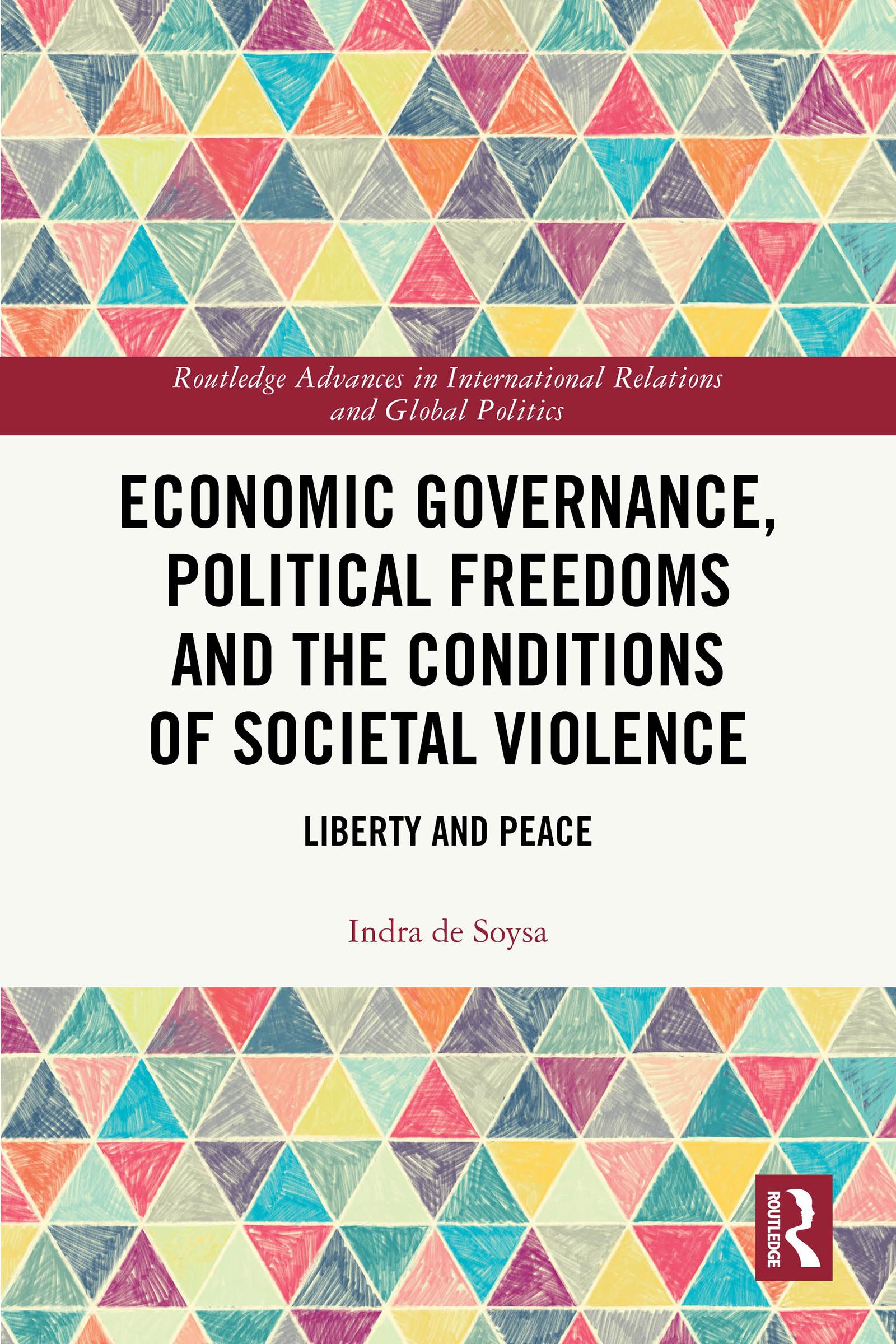
This book shows how the underlying causes of civil war and political violence are based in concrete conditions relating to economic governance. The author argues that what matters for cauterizing the potentiality of "sustainable" violence is economic governance, specifically growth-promoting governance that maximizes returns to investment due to competitive free-market processes upheld by the rule of law and the protection of private property rights. The arguments are assessed against three major forms of societal violence—civil wars, one-sided violence by states against ordinary citizens, and interpersonal violence that results in mortality.
Political and economic rights and freedoms are clearly intertwined, but there may be advantages to prefacing one over another. This study shows why and how economic governance matters for generating civil peace, perhaps more so than rival perspectives based on the understanding that violence is motivated by political concerns and grievances that motivate people to rebel broadly. The book demonstrates that the organization of violence that is sustained over long periods of time is far more narrowly focused than the loud discourses generated by violence itself predict. Even if people have legitimate reasons for contesting a government’s policies, such concerns become side-tracked, even abandoned, for reasons that may trump the necessity of compromise; namely, because more narrowly organized groups may have advantages for organizing violence and surviving sanction. The mechanism through which this may occur is the primary focus of this book. The author examines quantitative data but uses empirical detail from Sri Lanka as a case study. Relying on a variety of historical sources on the Sri Lankan conflict to guide the discussion, the author uses data collected by a host of individuals and agencies in the statistical analyses that follow.
The work demonstrates that economic governance matters more than the political mechanisms most often argued in the literature. It will be of interest to those studying South Asian Politics, economic development, sociology, history, law, international relations, cultural studies, and peace, security, and conflict studies.
Zahle einfach mit Karte, Klarna, Apple Pay oder Google Pay. Nicht zufrieden? Du hast immer ein 14-tägiges Widerrufsrecht. Lies mehr in unseren AGB. Hast du Fragen, schreib uns eine E-Mail an hello@memmo.org.
Memmo macht das Lernen einfacher – wo auch immer du bist. Bei uns findest du deine Kursbücher und smarte Lerntools an einem Ort: Zusammenfassungen, Quizzes, Podcasts und Lernkarten. Und Ted, dein Lernbuddy, beantwortet alles, was du wissen möchtest. Über 50.000 Studierende lernen bereits hier – gemacht, damit du schneller lernst und weniger Stress hast.