
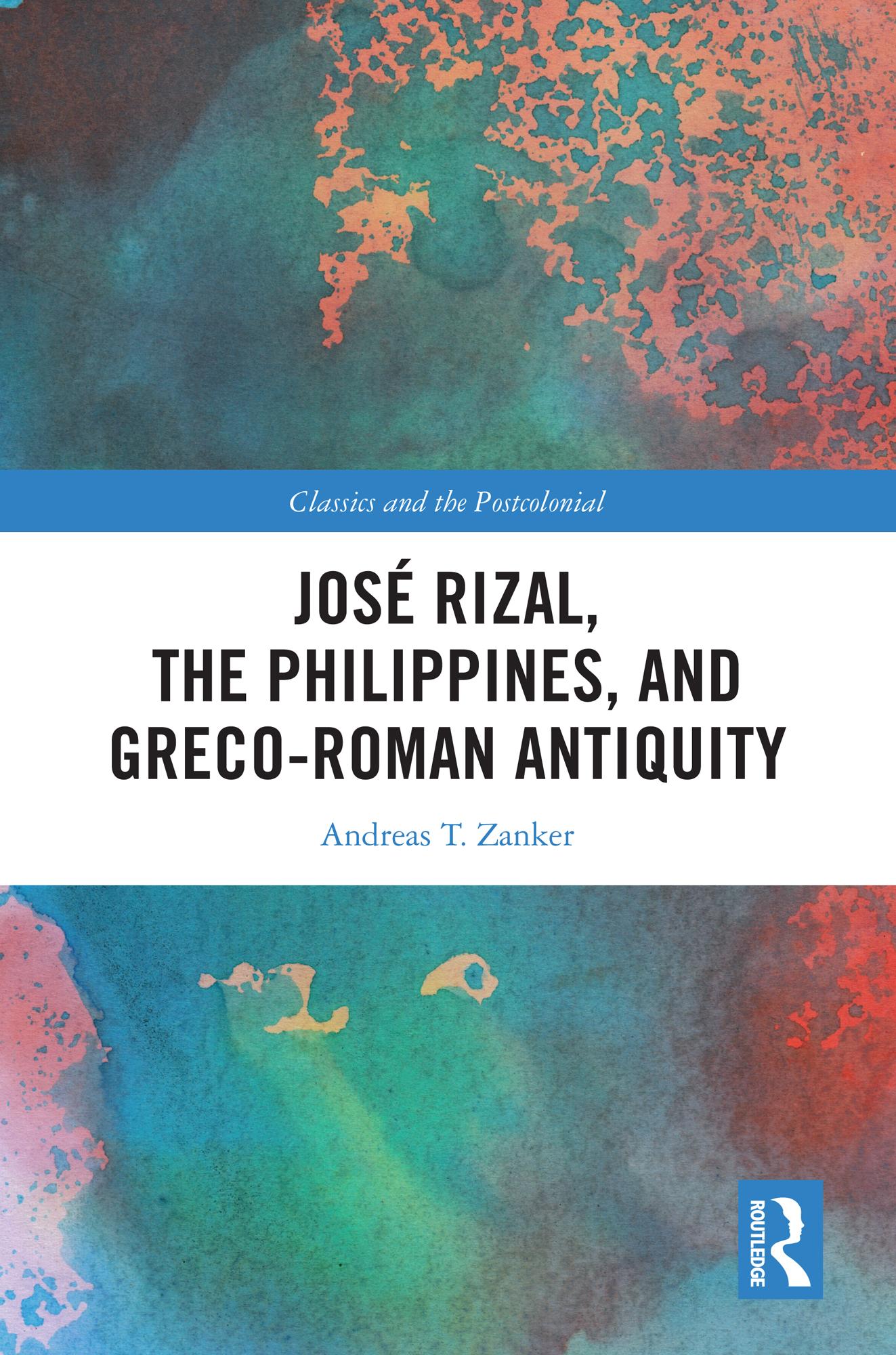
This volume is the first extended investigation of the classicism of José Rizal (1861–1896), the de facto national hero of the Philippines, and explores how Greco-Roman antiquity was harnessed by Rizal and other Philippine artists and thinkers at the end of the Spanish colonial period.
Rizal lived at a crucial juncture in his nation’s history, and Zanker argues that Rizal’s writing and thought represents a rich and evolving example of late-colonial classical reception. The volume illustrates how the forms of knowledge associated with Greco-Roman antiquity were put to creative and powerful new tasks in the attempts of Rizal and his contemporaries to redefine the relationship between Spain and its most distant colony. It not only explores the presence of Greco-Roman antiquity in Rizal’s novels but also his lesser-known works in a roughly chronological order. Besides covering the entirety of Rizal’s surviving works, Zanker considers the role of antiquity in the paintings of Juan Luna and in Rizal’s parsing of his friendship with his Austrian collaborator, Ferdinand Blumentritt.
José Rizal, the Philippines, and Greco-Roman Antiquity is of interest to students and scholars of Classics, particularly Classical Reception, and the colonial-era Philippines, as well as Latin American Studies, Southeast Asian Studies, and Postcolonial Studies more broadly.
Zahle einfach mit Karte, Klarna, Apple Pay oder Google Pay. Nicht zufrieden? Du hast immer ein 14-tägiges Widerrufsrecht. Lies mehr in unseren AGB. Hast du Fragen, schreib uns eine E-Mail an hello@memmo.org.
Memmo macht das Lernen einfacher – wo auch immer du bist. Bei uns findest du deine Kursbücher und smarte Lerntools an einem Ort: Zusammenfassungen, Quizzes, Podcasts und Lernkarten. Und Ted, dein Lernbuddy, beantwortet alles, was du wissen möchtest. Über 50.000 Studierende lernen bereits hier – gemacht, damit du schneller lernst und weniger Stress hast.