
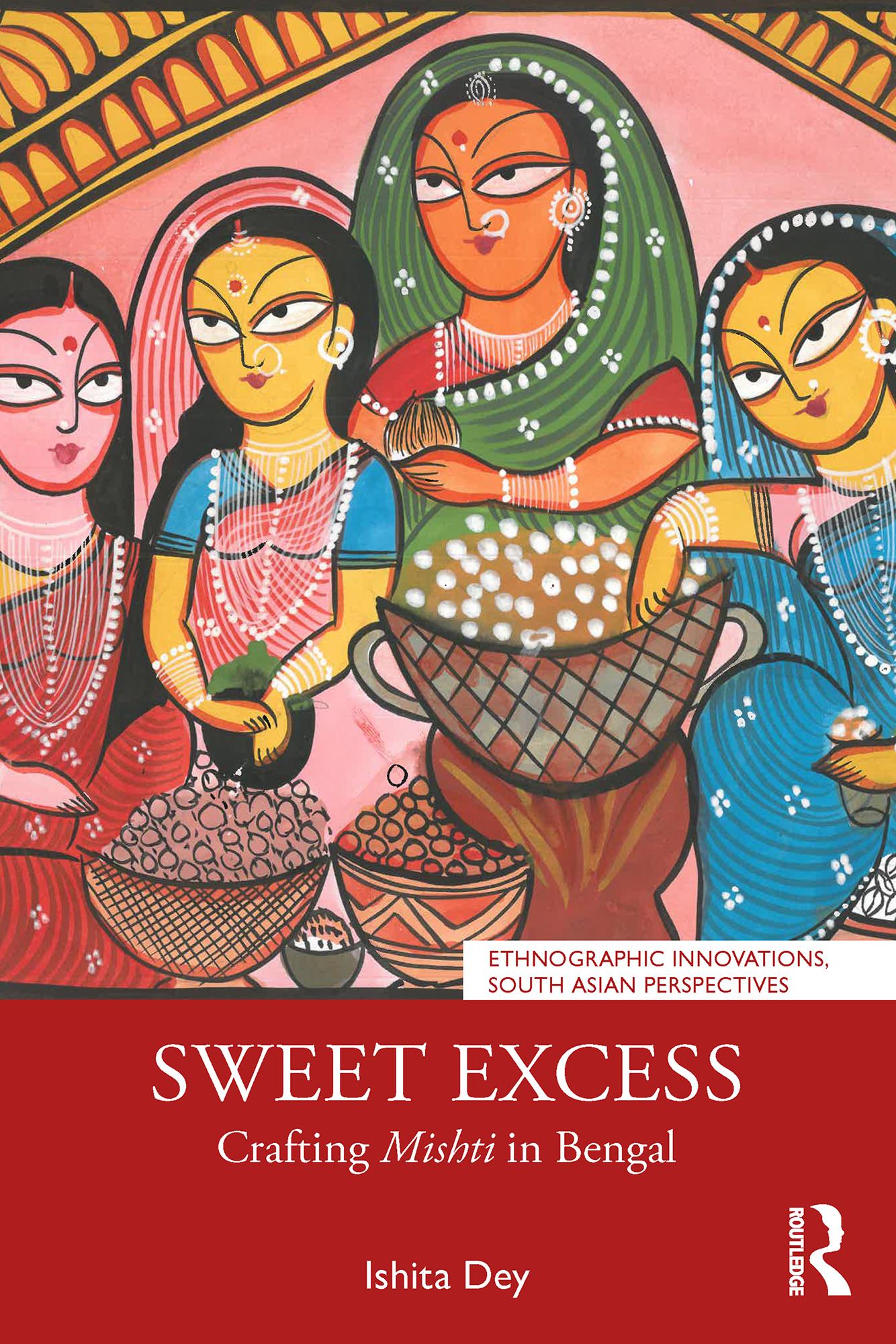
This book is an ethnographic work on excess. Based on a decade-long field work of a single food substance — sweets — it follows sweet-making in sweetshops, domestic spaces, fairs, festivals and its representation in recipe books to understand how caste, religion, science and law inform the life of a food item with an extremely short shelf life. It shows how food items of conspicuous consumption find a meaning in everyday lives of people through its socio-cultural meanings - ritual, pride of craftsmanship, heritage and cultural identity. It also shows how sweets continue to be a ubiquitous part of ‘Bengali’ diet in a geography that has been witness to acute hunger, starvation, food movements and social welfare programmes to ensure food security.
As a multi-sited ethnography on sweetness in diverse settings and its associated meanings in West Bengal and Bangladesh, this book explores everyday workplace hierarchies between artisans that reveal how caste and religion inform the choice of who is hired into this line of work. It also highlights how discourses on food safety and the overpowering presence of World Trade Organization have affected the life of the Bengali mishti.
The volume will be of great interest to scholars and researchers of ethnography, sociology, history, and South Asian studies. And if you, dear reader, love mishti, you will love this, too!
Zahle einfach mit Karte, Klarna, Apple Pay oder Google Pay. Nicht zufrieden? Du hast immer ein 14-tägiges Widerrufsrecht. Lies mehr in unseren AGB. Hast du Fragen, schreib uns eine E-Mail an hello@memmo.org.
Memmo macht das Lernen einfacher – wo auch immer du bist. Bei uns findest du deine Kursbücher und smarte Lerntools an einem Ort: Zusammenfassungen, Quizzes, Podcasts und Lernkarten. Und Ted, dein Lernbuddy, beantwortet alles, was du wissen möchtest. Über 50.000 Studierende lernen bereits hier – gemacht, damit du schneller lernst und weniger Stress hast.