
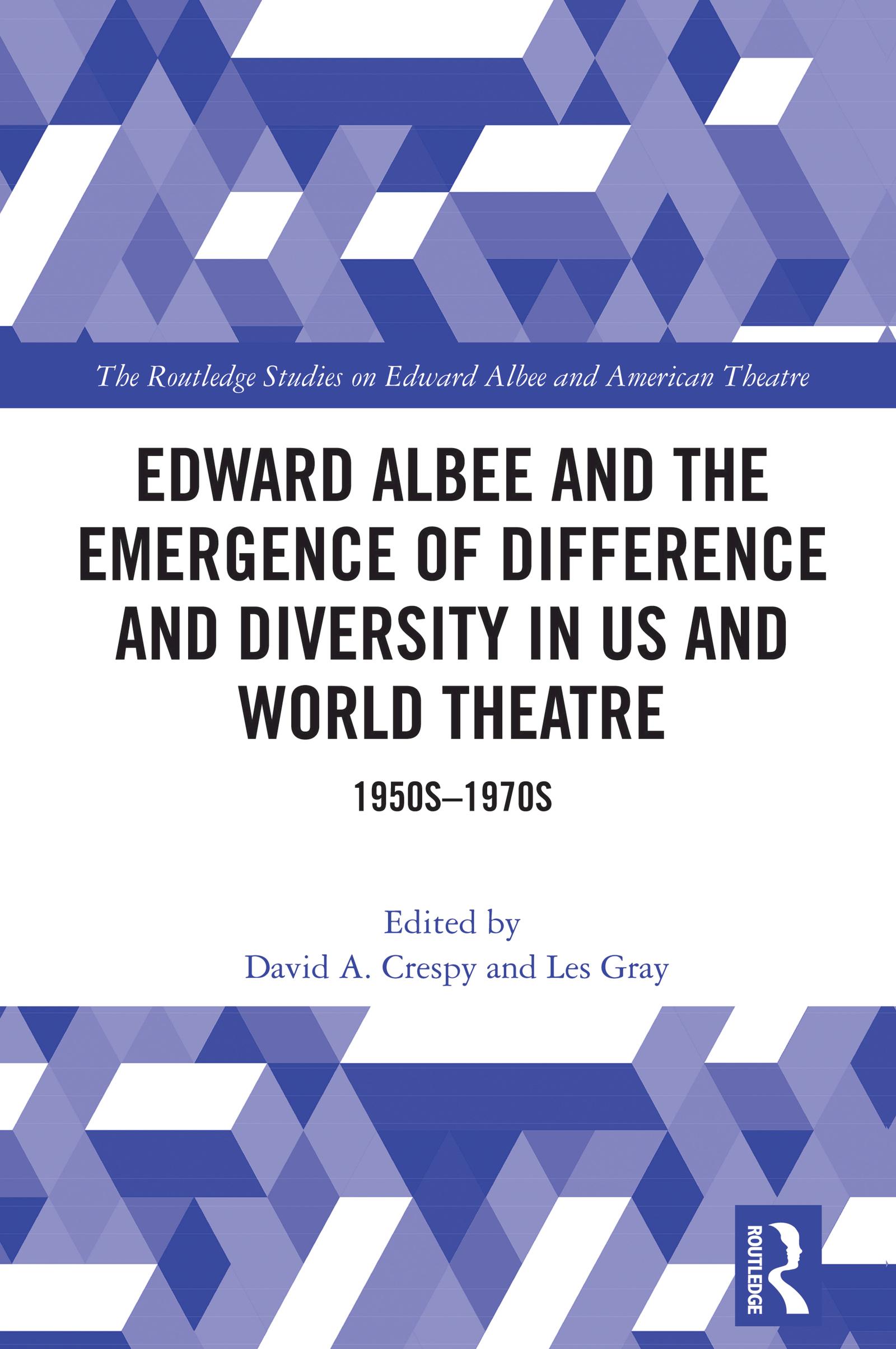
This collection of essays seeks to present articles that examine the early ventures of the 1960s and 1970s in the progressive theatre of identity with a new contemporary view, considering the intersection of race, gender, ethnicity, economic class, and sexual orientation.
In 1964, Edward Albee and his producers, Richard Barr and Clinton Wilder, produced Funnyhouse of a Negro by Adrienne Kennedy, and Dutchman by Amiri Baraka (then, Leroi Jones), and by 1968, had produced the seminal gay drama, The Boys in the Band by Mart Crowley. No other major American playwright of this period (including Thornton Wilder, Arthur Miller, Tennessee Williams, or William Inge) produced the plays of their junior colleagues with a specific focus on difference and diversity. For most scholars, these productions and Albee’s involvement in them are a somewhat obscure footnote in theatre history. But they remain important for their early support of diverse voices. Even as Albee’s career was skyrocketing, he and his producers had begun a producing project that sowed the seeds of diversity, equity, and inclusion in a decidedly anti-racist, decolonizing, and progressive move that still resonates powerfully today. While this book is not a hagiography and does not intend to paint Albee as without his own critical failings in terms of diversity in his own work and that of others, this volume of theatre history, dramatic literature, and performance essays takes a detailed, critical approach to Albee’s engagement with other initiating plays, productions, producers, theatre companies, theatre artists, and performances in the United States that pushed the dial toward difference and diversity in the late 1950s through the late 1970s, beginning the formations of new theatres of identity across the United States.
This volume will be of great interest to students and scholars in theatre and performance studies.
Zahle einfach mit Karte, Klarna, Apple Pay oder Google Pay. Nicht zufrieden? Du hast immer ein 14-tägiges Widerrufsrecht. Lies mehr in unseren AGB. Hast du Fragen, schreib uns eine E-Mail an hello@memmo.org.
Memmo macht das Lernen einfacher – wo auch immer du bist. Bei uns findest du deine Kursbücher und smarte Lerntools an einem Ort: Zusammenfassungen, Quizzes, Podcasts und Lernkarten. Und Ted, dein Lernbuddy, beantwortet alles, was du wissen möchtest. Über 50.000 Studierende lernen bereits hier – gemacht, damit du schneller lernst und weniger Stress hast.