
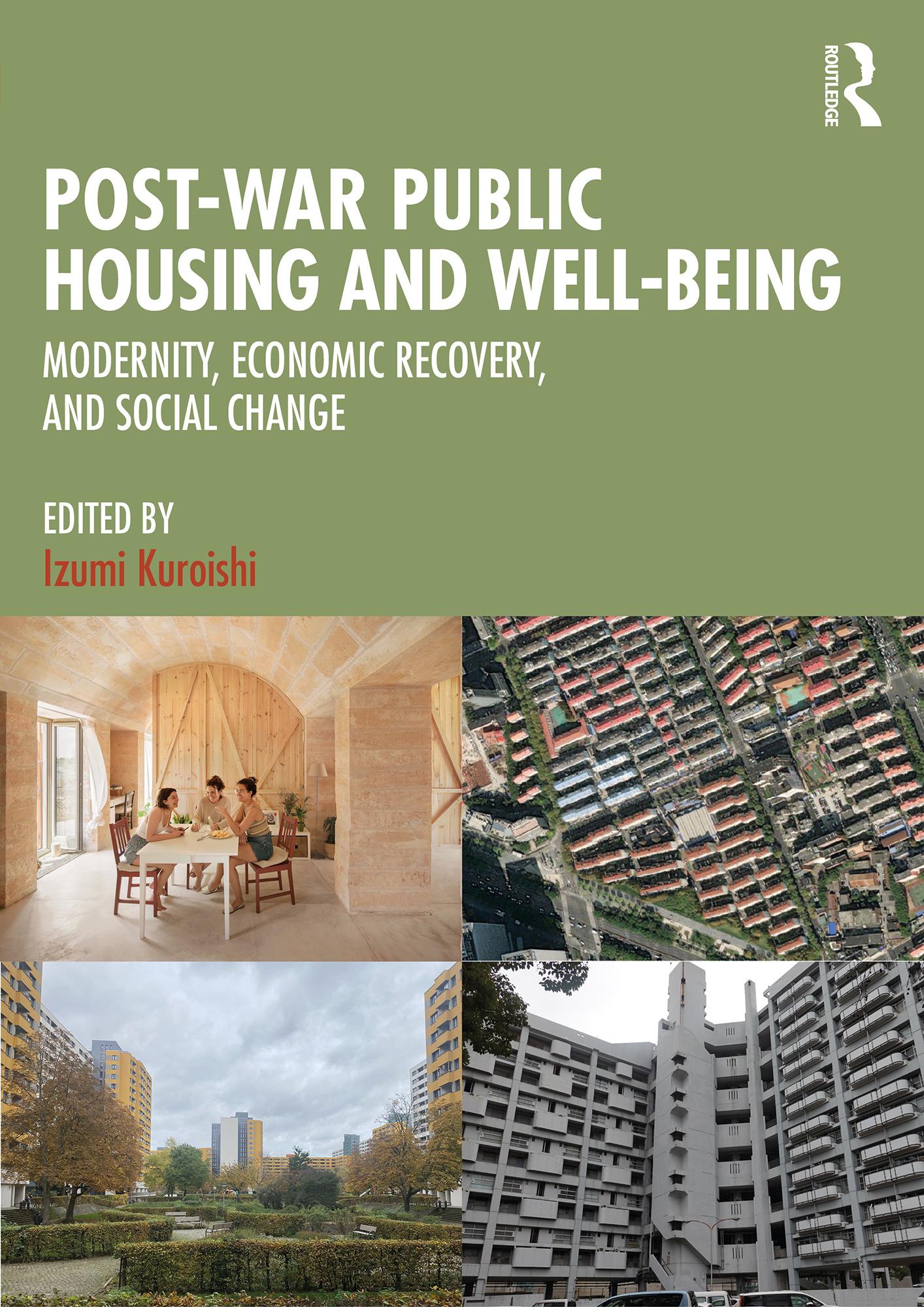
This collection illustrates the evolving role of housing as a symbol of modernity, a tool for economic recovery and a response to societal transitions. It argues that understanding earlier efforts to integrate well-being in the twentieth century can provide valuable insights for contemporary actors in the built environment who are working to address these issues today. As such, it explores and shines light on this lesser-known history, drawing on case studies, it focuses on the intersection of public housing, well-being and social change in the aftermath of the Second World War. With case studies from the UK, US, Singapore, Japan, Germany, China and Spain, this volume provides insights into how these countries have shaped the values, designs and institutions of their dwellings. By incorporating diverse cultural contexts, it contributes to a nuanced understanding of housing dynamics and well-being. Through a multidisciplinary lens, this volume encourages a re-evaluation of living conditions and fundamental values, emphasising the dynamic interplay between humans, their social environment and diverse living environments.
This book is essential for scholars, researchers, professionals, students, policymakers and practitioners in cultural history, architecture, planning, urban studies, sociology, education and public policy.
Zahle einfach mit Karte, Klarna, Apple Pay oder Google Pay. Nicht zufrieden? Du hast immer ein 14-tägiges Widerrufsrecht. Lies mehr in unseren AGB. Hast du Fragen, schreib uns eine E-Mail an hello@memmo.org.
Memmo macht das Lernen einfacher – wo auch immer du bist. Bei uns findest du deine Kursbücher und smarte Lerntools an einem Ort: Zusammenfassungen, Quizzes, Podcasts und Lernkarten. Und Ted, dein Lernbuddy, beantwortet alles, was du wissen möchtest. Über 50.000 Studierende lernen bereits hier – gemacht, damit du schneller lernst und weniger Stress hast.