
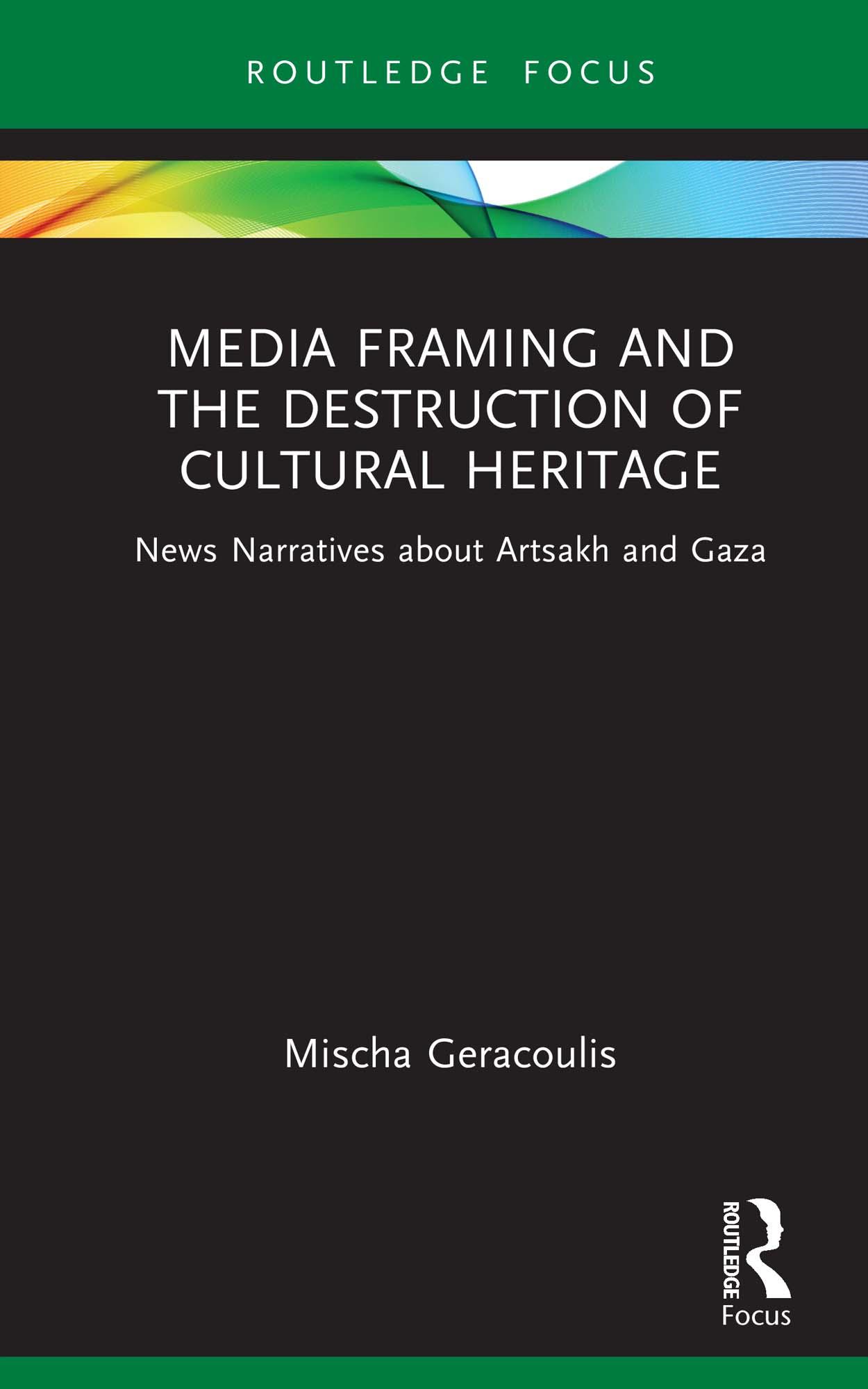
Analyzing media coverage in cases where cultural heritage sites have been destroyed during conflict, occupation, and war, this book highlights the important role media play in the preservation of cultural heritage when states or other combatants engage in human rights violations.
Author Mischa Geracoulis discusses how the role of journalism and the media during times of conflict is to report information from the front lines and war zones with integrity, and report accurately when states or other combatants engage in human rights violations. This book examines the media coverage, language, and discourse surrounding two key situations—the destruction of Armenian cultural heritage in Artsakh/Nagorno‑Karabakh and that of Palestinian cultural heritage in Gaza—and explores the ways media coverage has succeeded or failed in accurately illustrating the destruction of cultural heritage as a human rights violation. Geracoulis emphasizes the importance of factual, ethical reporting and sufficient coverage, underlining professional journalistic standards and best practices for the future to ensure similar destruction is not only understood but responded to within a human rights framework.
This book will be of interest to students and scholars of media, journalism, and cultural studies, as well as media professionals interested in the role and influence of media framing and narratives on war, conflict, human rights, and humanitarian response.
Zahle einfach mit Karte, Klarna, Apple Pay oder Google Pay. Nicht zufrieden? Du hast immer ein 14-tägiges Widerrufsrecht. Lies mehr in unseren AGB. Hast du Fragen, schreib uns eine E-Mail an hello@memmo.org.
Memmo macht das Lernen einfacher – wo auch immer du bist. Bei uns findest du deine Kursbücher und smarte Lerntools an einem Ort: Zusammenfassungen, Quizzes, Podcasts und Lernkarten. Und Ted, dein Lernbuddy, beantwortet alles, was du wissen möchtest. Über 50.000 Studierende lernen bereits hier – gemacht, damit du schneller lernst und weniger Stress hast.