
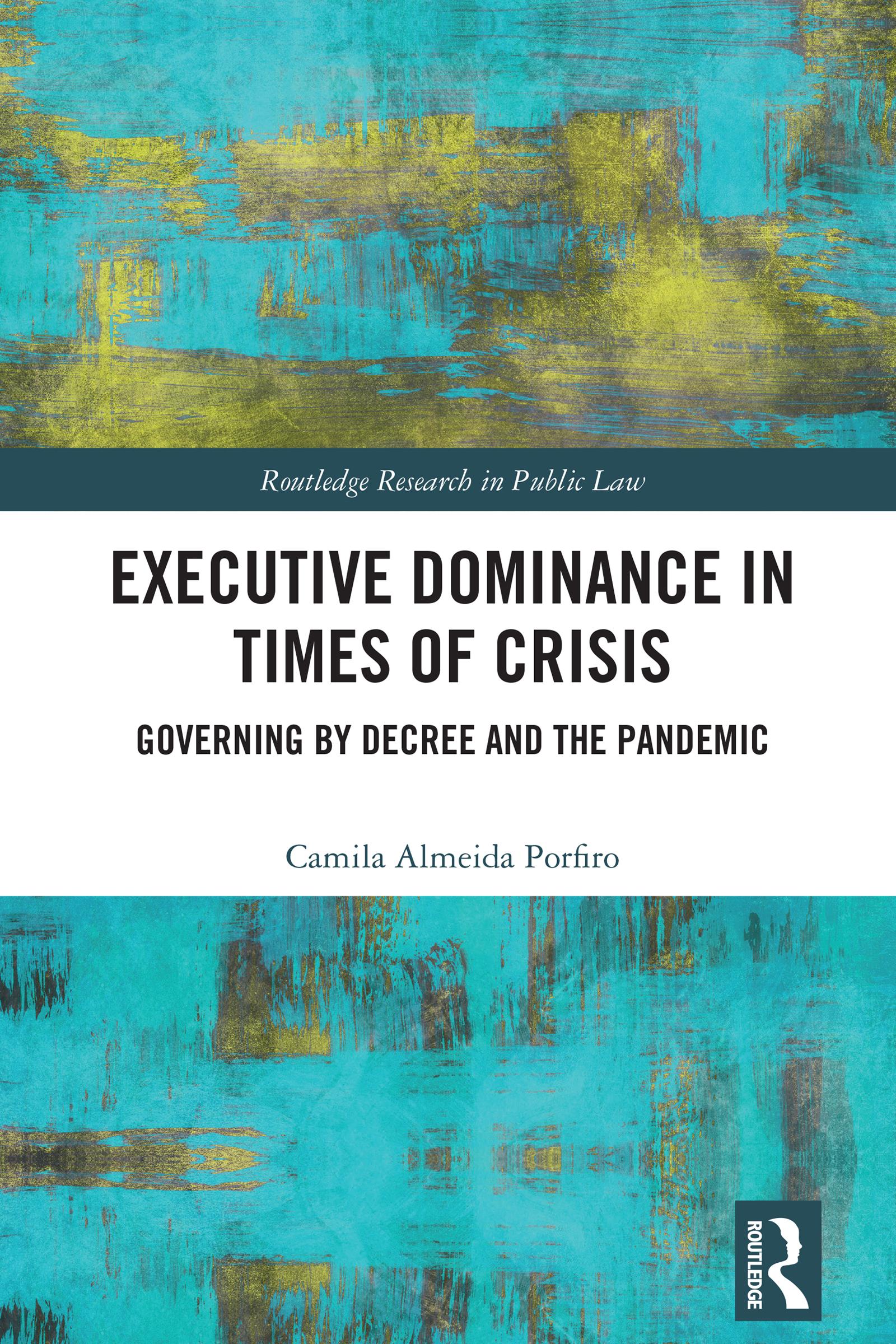
In recent times, there has been a growing dominance of executives centered on the figure of a central leader, while parliaments, which should be the focus of political power, are being marginalized. This development reflects a historical process that has only worsened with the COVID-19 emergency. This book argues that the frequent use of unilateral acts by the executive, exacerbated in times of emergency, can lead to a process of serious democratic erosion. It holds that the unlimited expansion of unilateral action is incompatible with the principle of separation of powers and the basic elements of a constitutional democracy. The judicial and legislative branches, especially in times of crisis, must exercise firm control over executive acts. It puts forward the case that they should limit abuses and risks to democracy based on parameters that are attentive to democratic principles, institutional capacities, and the protection of fundamental rights. In this scenario, the book offers a contemporary analysis of executive dominance in Brazil, Italy, and Germany, particularly in the context of the COVID-19 pandemic. It engages with traditional literature on the subject while providing a novel perspective, particularly in relation to the Global South. The book will be of interest to academics and researchers working in the areas of constitutional law and politics, administrative law, and international and comparative law.
Zahle einfach mit Karte, Klarna, Apple Pay oder Google Pay. Nicht zufrieden? Du hast immer ein 14-tägiges Widerrufsrecht. Lies mehr in unseren AGB. Hast du Fragen, schreib uns eine E-Mail an hello@memmo.org.
Memmo macht das Lernen einfacher – wo auch immer du bist. Bei uns findest du deine Kursbücher und smarte Lerntools an einem Ort: Zusammenfassungen, Quizzes, Podcasts und Lernkarten. Und Ted, dein Lernbuddy, beantwortet alles, was du wissen möchtest. Über 50.000 Studierende lernen bereits hier – gemacht, damit du schneller lernst und weniger Stress hast.