
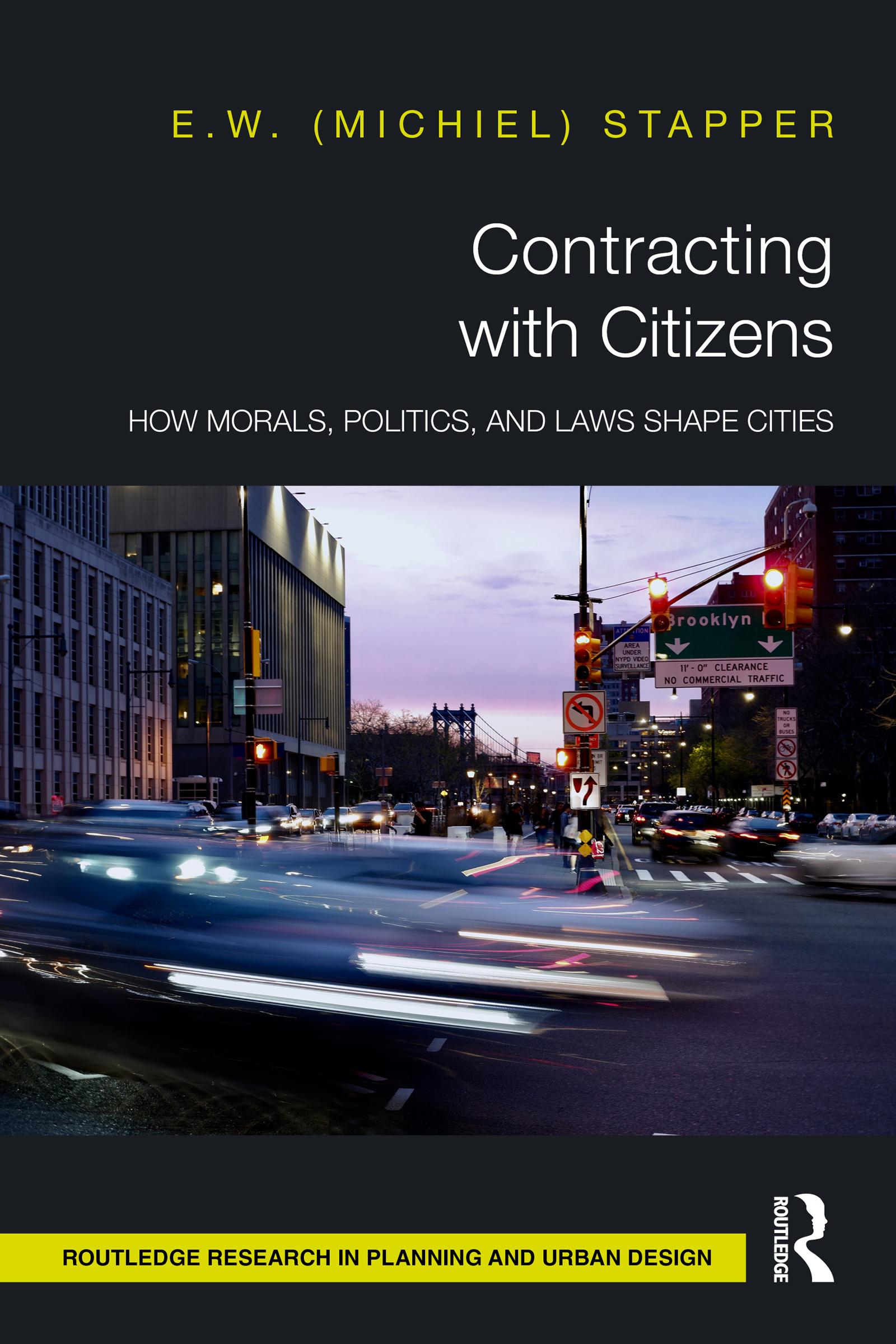
This book demonstrates that contracts, community intermediaries, and participatory processes are closely interlinked, and they can change urban politics.
In participatory processes, residents negotiate with policymakers about the future of their neighborhood. In the last few decades, this happened increasingly in co-creation sessions where citizens are deemed to have an equal position vis-a-vis developers and civil servants. The goal of this book is to understand and theorize how these negotiations affect collective action. The book will scrutinize the role of contracts, community intermediaries, and participatory processes in development projects and planning policies. Using a comparative case study of Amsterdam, Hamburg, and New York, this book reveals how seemingly fresh and novel planning practices are used to justify processes of capital accumulation and reveals how morals, politics, and law can create institutional change.
The book presents a novel theoretical approach to studying urban politics, putting emphasis on (private) law and the material arrangements of participatory processes. It will be of interest to researchers and students of planning, geography, sociology, public administration, and law and will provide valuable lessons for practitioners interested in understanding the effects of contractual governance on neighborhoods.
Zahle einfach mit Karte, Klarna, Apple Pay oder Google Pay. Nicht zufrieden? Du hast immer ein 14-tägiges Widerrufsrecht. Lies mehr in unseren AGB. Hast du Fragen, schreib uns eine E-Mail an hello@memmo.org.
Memmo macht das Lernen einfacher – wo auch immer du bist. Bei uns findest du deine Kursbücher und smarte Lerntools an einem Ort: Zusammenfassungen, Quizzes, Podcasts und Lernkarten. Und Ted, dein Lernbuddy, beantwortet alles, was du wissen möchtest. Über 50.000 Studierende lernen bereits hier – gemacht, damit du schneller lernst und weniger Stress hast.