
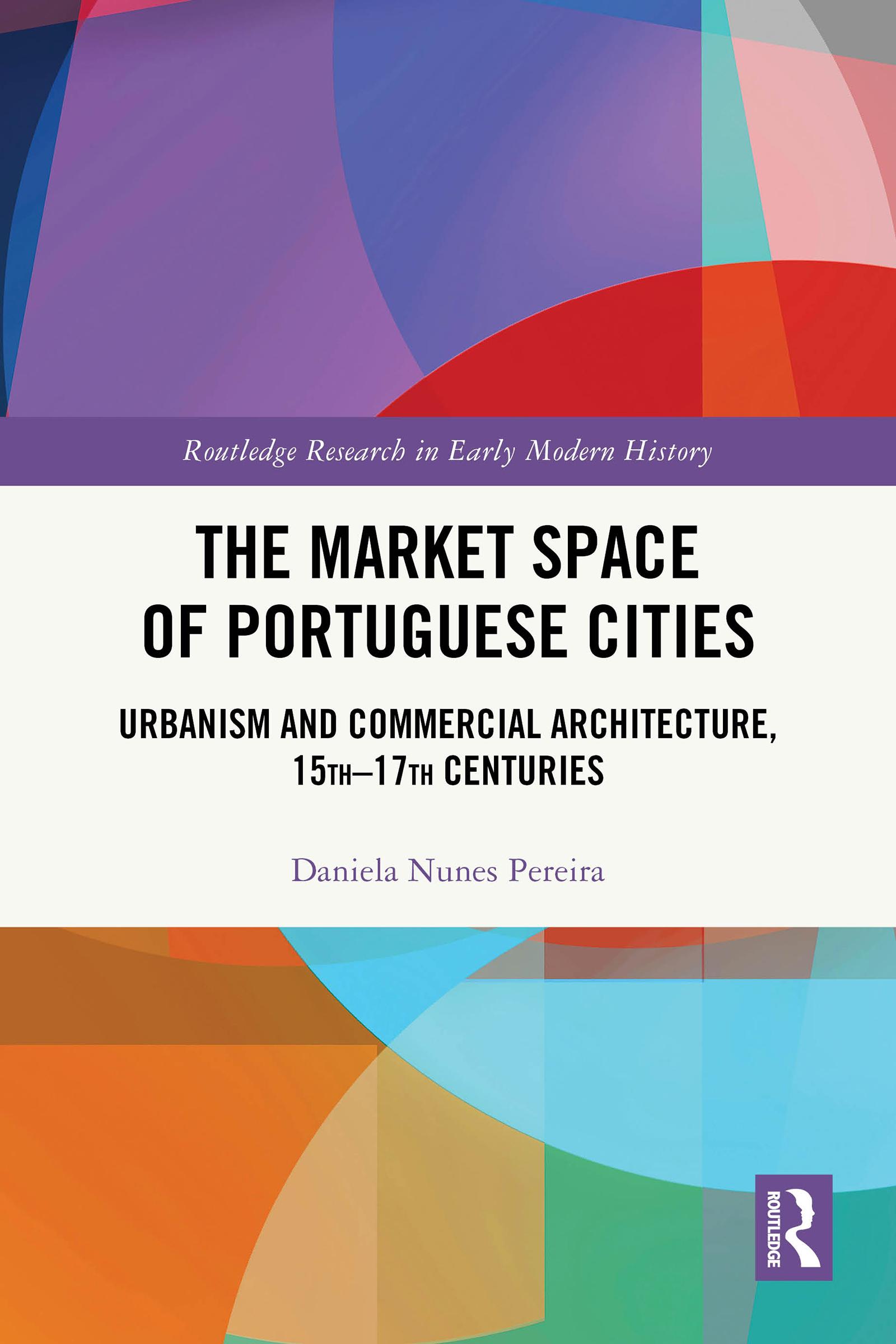
This book explores the transformation of market spaces in Portuguese cities during the intensification of trade driven by increasing profits from overseas exchanges, and how architectural structures and urban planning were directly impacted by these changes to accommodate the new economic dynamics.
The terminology and architectural elements of commercial spaces are analyzed to understand the organization of markets. By examining terms such as square, street, town hall, estaus, granaries, porches, arcades, balconies, and shops, the book not only maps the physical locations of these markets but also offers an interpretation of these spaces as instruments of economic control and power organization, reflecting the tensions between market efficiency and the dominance of urban elites. Based on historical documents including contracts, municipal records, and urban regulations, the book offers fresh perspectives on market spaces in Portuguese cities, highlighting the crucial role of commerce in urban transformation and in the adaptation to the increasing economic demands of this period.
This volume is intended for historians, architects, urban planners, and scholars interested in urban history, economic history, and the intersection of architecture and commerce. Its interdisciplinary approach makes it relevant for any reader seeking to understand how trade shaped cities in the early modern period.
Zahle einfach mit Karte, Klarna, Apple Pay oder Google Pay. Nicht zufrieden? Du hast immer ein 14-tägiges Widerrufsrecht. Lies mehr in unseren AGB. Hast du Fragen, schreib uns eine E-Mail an hello@memmo.org.
Memmo macht das Lernen einfacher – wo auch immer du bist. Bei uns findest du deine Kursbücher und smarte Lerntools an einem Ort: Zusammenfassungen, Quizzes, Podcasts und Lernkarten. Und Ted, dein Lernbuddy, beantwortet alles, was du wissen möchtest. Über 50.000 Studierende lernen bereits hier – gemacht, damit du schneller lernst und weniger Stress hast.