
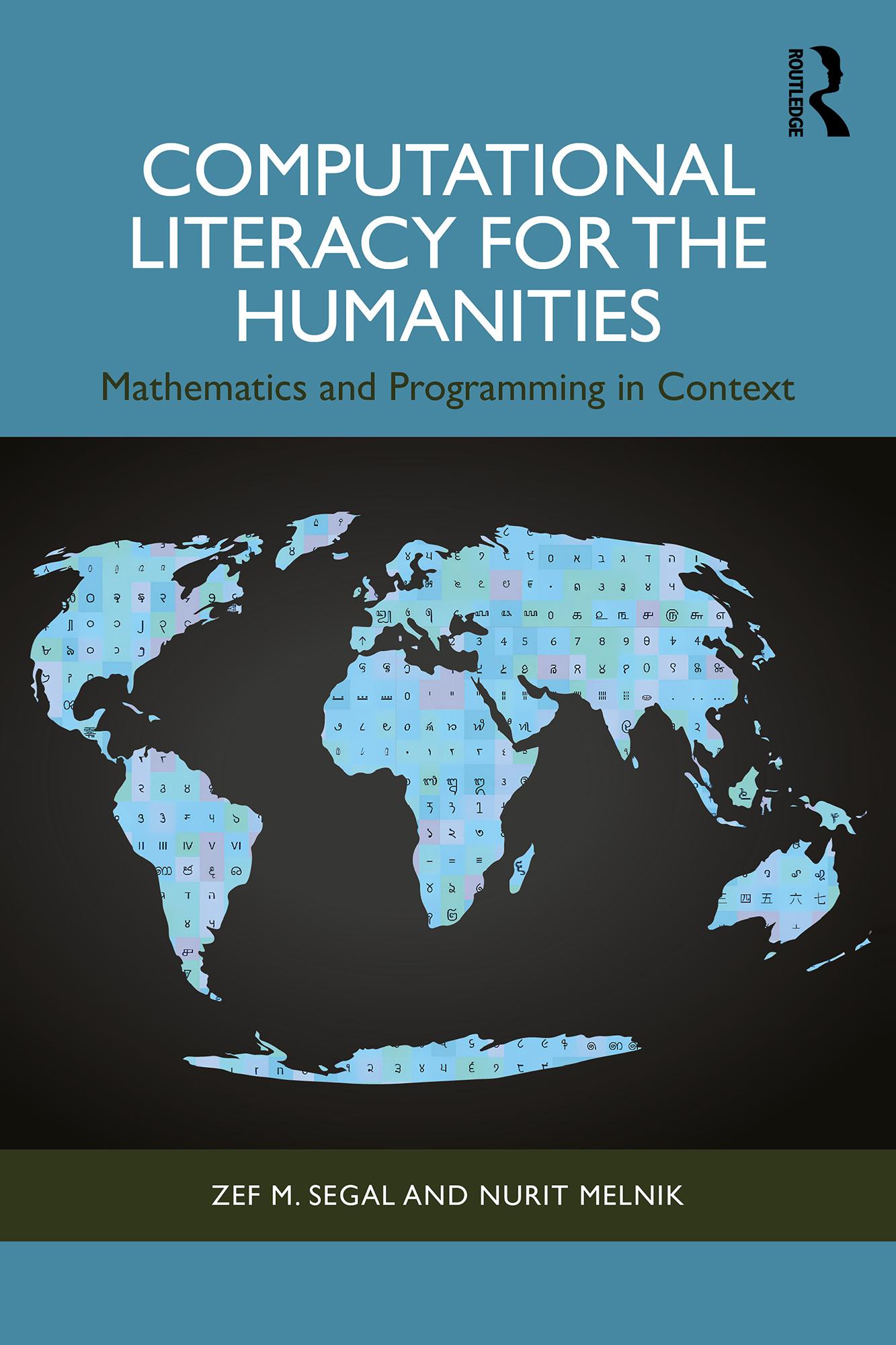
Computational Literacy for the Humanities provides an introduction to mathematics and programming that is specifically designed for use by those engaged in the humanities. Linking mathematical concepts and computational skills, the chapters in this book explore humanistic questions from diverse fields, such as art, history and literature.
The book helps to advance computational and digital literacy by showing that each mathematical concept has a history, and each technique has a meaning. Rather than viewing mathematics and computer programming as purely instrumental, they are integrated into the process of achieving greater understanding of humanistic phenomena. Algorithms, data, statistics and networks are taught critically within the book, whilst the authors also make a concerted effort to expose the internal biases of these tools. They also demonstrate the applicability of quantification and computation for the promotion of diversification and inclusivity within the humanities. All exercises are designed as an opportunity to gain hands-on mathematical and computational experience, whilst critically exploring and interpreting humanistic phenomena.
Computational Literacy for the Humanities shows readers how to engage with data in a way that is challenging, yet meaningful and empowering. It will be of interest to scholars and students working across the humanities and should be of particular interest to those working in digital humanities.
Zahle einfach mit Karte, Klarna, Apple Pay oder Google Pay. Nicht zufrieden? Du hast immer ein 14-tägiges Widerrufsrecht. Lies mehr in unseren AGB. Hast du Fragen, schreib uns eine E-Mail an hello@memmo.org.
Memmo macht das Lernen einfacher – wo auch immer du bist. Bei uns findest du deine Kursbücher und smarte Lerntools an einem Ort: Zusammenfassungen, Quizzes, Podcasts und Lernkarten. Und Ted, dein Lernbuddy, beantwortet alles, was du wissen möchtest. Über 50.000 Studierende lernen bereits hier – gemacht, damit du schneller lernst und weniger Stress hast.