
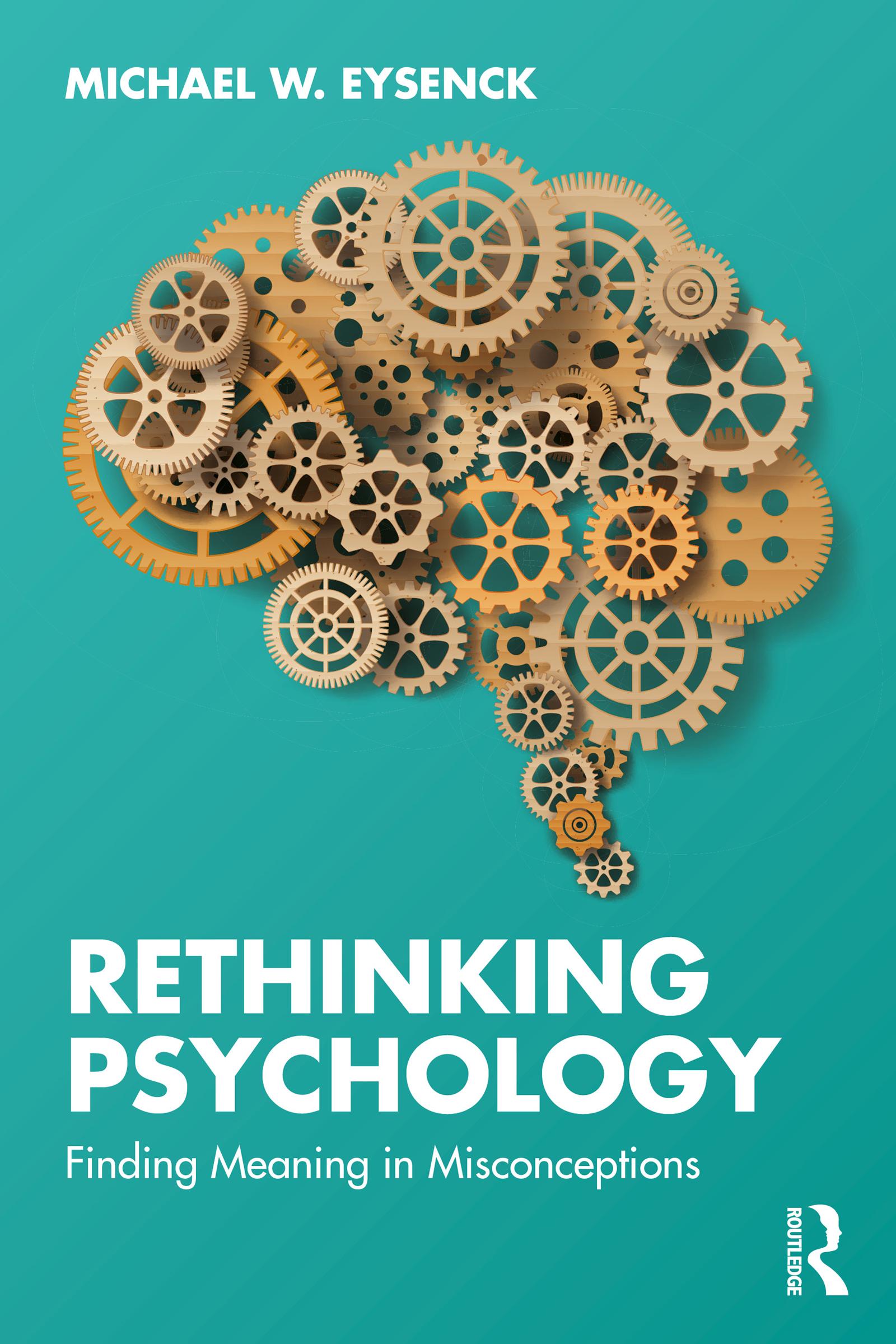
Can subliminal messages motivate behaviour? Can you train your brain to increase your intelligence? Does parenting style affect personality?
Psychologists and non-psychologists looking to understand human behaviour and cognition are forced to contend with a number of complexities unique to the field. Not least amongst these is the fact that psychology lacks the superficially attractive precision of theories in the hard sciences. It is inevitable, then, that non-psychologists are susceptible to numerous psychological myths.
In this thought-provoking exploration of 43 of the most common psychological myths, Michael W. Eysenck examines the complexity of psychological science as well as the distortion of data, not only through the media, but also by researchers, textbook writers, and individuals themselves. He challenges the notion that the substantial progress made by psychology has provided enough convincing experimental evidence to successfully demolish these inaccuracies and explores the ways in which psychological research should be systematically improved so that psychology can take its place as a robust scientific discipline. Highly engaging, this is an informative read for psychologists at all levels, as well as members of the general public interested in challenging their own psychological understanding.
Zahle einfach mit Karte, Klarna, Apple Pay oder Google Pay. Nicht zufrieden? Du hast immer ein 14-tägiges Widerrufsrecht. Lies mehr in unseren AGB. Hast du Fragen, schreib uns eine E-Mail an hello@memmo.org.
Memmo macht das Lernen einfacher – wo auch immer du bist. Bei uns findest du deine Kursbücher und smarte Lerntools an einem Ort: Zusammenfassungen, Quizzes, Podcasts und Lernkarten. Und Ted, dein Lernbuddy, beantwortet alles, was du wissen möchtest. Über 50.000 Studierende lernen bereits hier – gemacht, damit du schneller lernst und weniger Stress hast.