
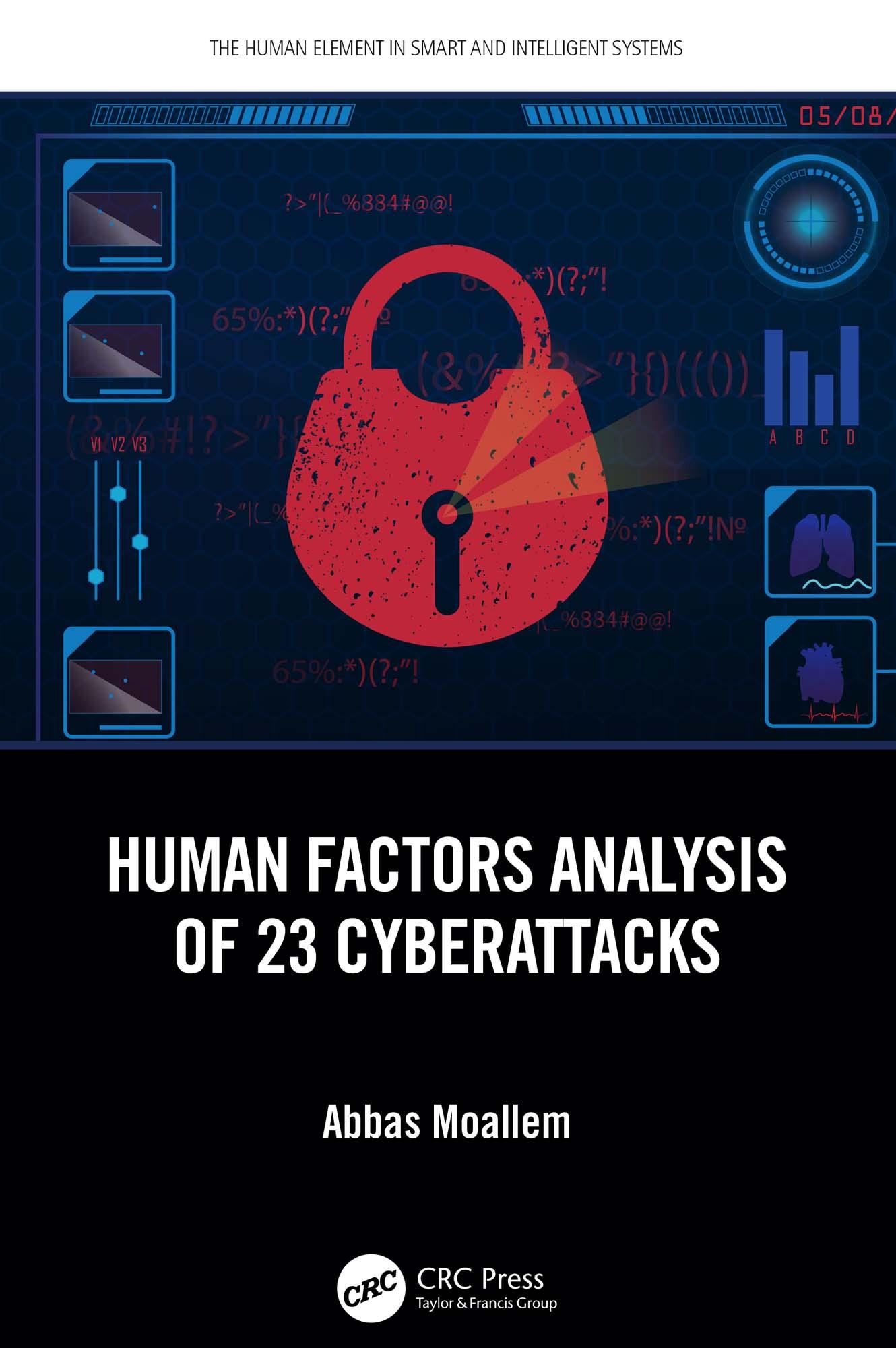
As cyber threat actors have become more sophisticated, data breaches, phishing attacks, and ransomware are increasing, and the global cybercrime damage in 2021 was $16.4 billion a day. While technical issue analyses are fundamental in understanding how to improve system security, analyzing the roles of human agents is crucial. Human Factors Analysis of 23 Cyberattacks addresses, through examples, the human factors behind cybersecurity attacks.
Focusing on human factors in individual attack cases, this book aims to understand the primary behaviors that might result in the success of attacks. Each chapter looks at a series of cases describing the nature of the attack through the reports and reviews of the experts, followed by the role and human factors analysis. It investigates where a human agent's intervention was a factor in starting, discovering, monitoring, or suffering from the attacks. Written in an easy-to-understand way and free from technical jargon, the reader will develop a thorough understanding of why cyberattacks occur and how they can be mitigated by comparison to the practical examples provided.
This title will appeal to students and practitioners in the fields of ergonomics, human factors, cybersecurity, computer engineering, industrial engineering, and computer science.
Zahle einfach mit Karte, Klarna, Apple Pay oder Google Pay. Nicht zufrieden? Du hast immer ein 14-tägiges Widerrufsrecht. Lies mehr in unseren AGB. Hast du Fragen, schreib uns eine E-Mail an hello@memmo.org.
Memmo macht das Lernen einfacher – wo auch immer du bist. Bei uns findest du deine Kursbücher und smarte Lerntools an einem Ort: Zusammenfassungen, Quizzes, Podcasts und Lernkarten. Und Ted, dein Lernbuddy, beantwortet alles, was du wissen möchtest. Über 50.000 Studierende lernen bereits hier – gemacht, damit du schneller lernst und weniger Stress hast.