
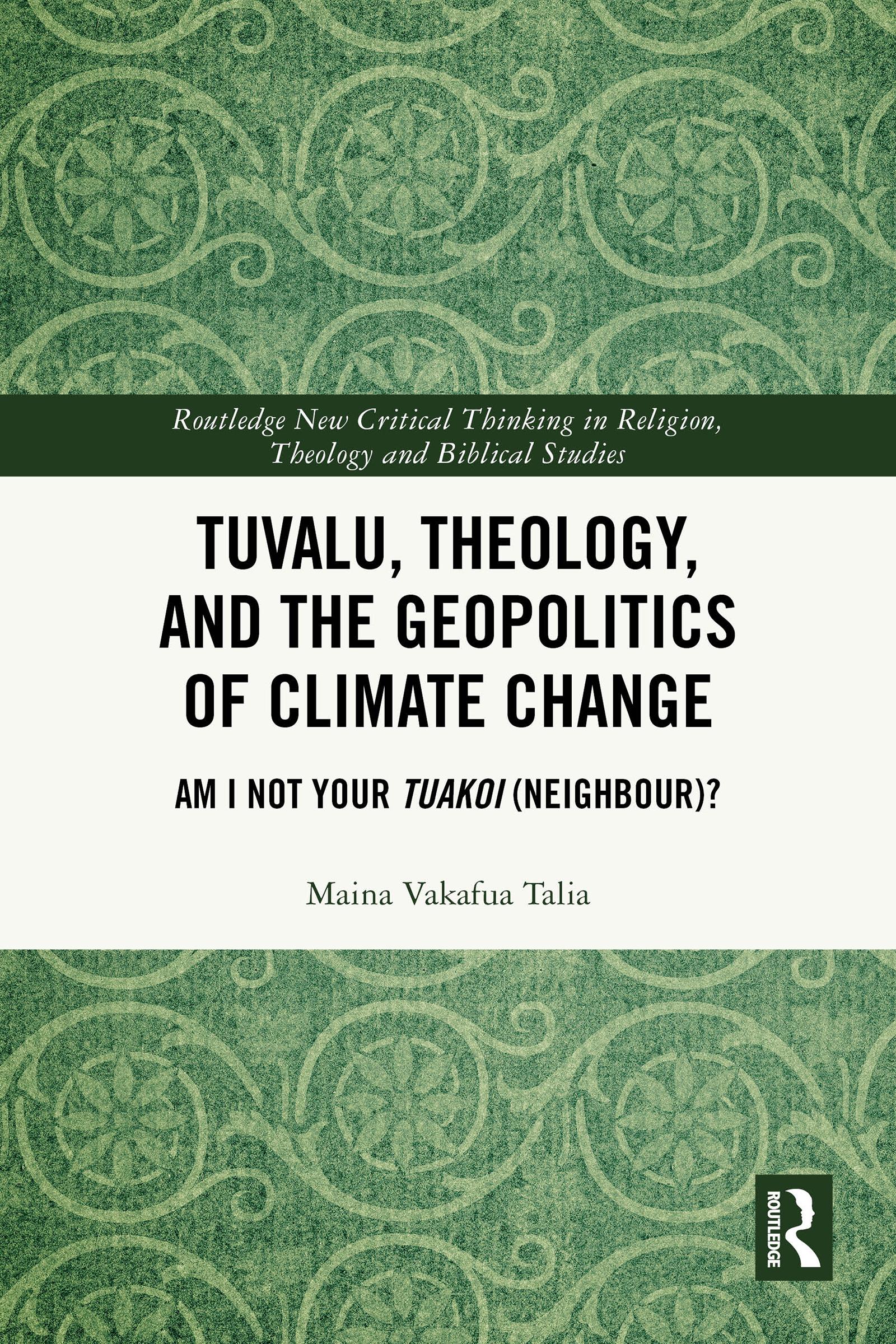
This book examines the threat posed by climate change to the low-lying islands of Tuvalu through a lens of what it means to be a neighbour. Those who live on Tuvalu are among the most vulnerable in the world to threats of rising sea levels and global climate change. Their carbon emissions are miniscule and they are ‘weak actors’ in terms of the geopolitics of climate change. The task in Tuvalu is to take seriously the prospect of the submergence of islands and the potential for cultural extinction. This prospect raises a network of interconnected questions to do with the rights of climate displaced persons and sovereignty over lands lost to climate change. In this volume, the author draws upon Indigenous knowledge, the ethics of climate justice, insights from climate science and familiarity with discourses surrounding the Anthropocene to explore the implications of the parable of the Good Samaritan. The rhetoric of the question ‘am I not your tuakoi (neighbour)?’ inserts a theological and moral dimension into the complex politics of climate change. The book will be of particular interest to scholars of theology, ethics, ecology and environment, as well as those working in Pacific studies, development studies, and politics.
Zahle einfach mit Karte, Klarna, Apple Pay oder Google Pay. Nicht zufrieden? Du hast immer ein 14-tägiges Widerrufsrecht. Lies mehr in unseren AGB. Hast du Fragen, schreib uns eine E-Mail an hello@memmo.org.
Memmo macht das Lernen einfacher – wo auch immer du bist. Bei uns findest du deine Kursbücher und smarte Lerntools an einem Ort: Zusammenfassungen, Quizzes, Podcasts und Lernkarten. Und Ted, dein Lernbuddy, beantwortet alles, was du wissen möchtest. Über 50.000 Studierende lernen bereits hier – gemacht, damit du schneller lernst und weniger Stress hast.