
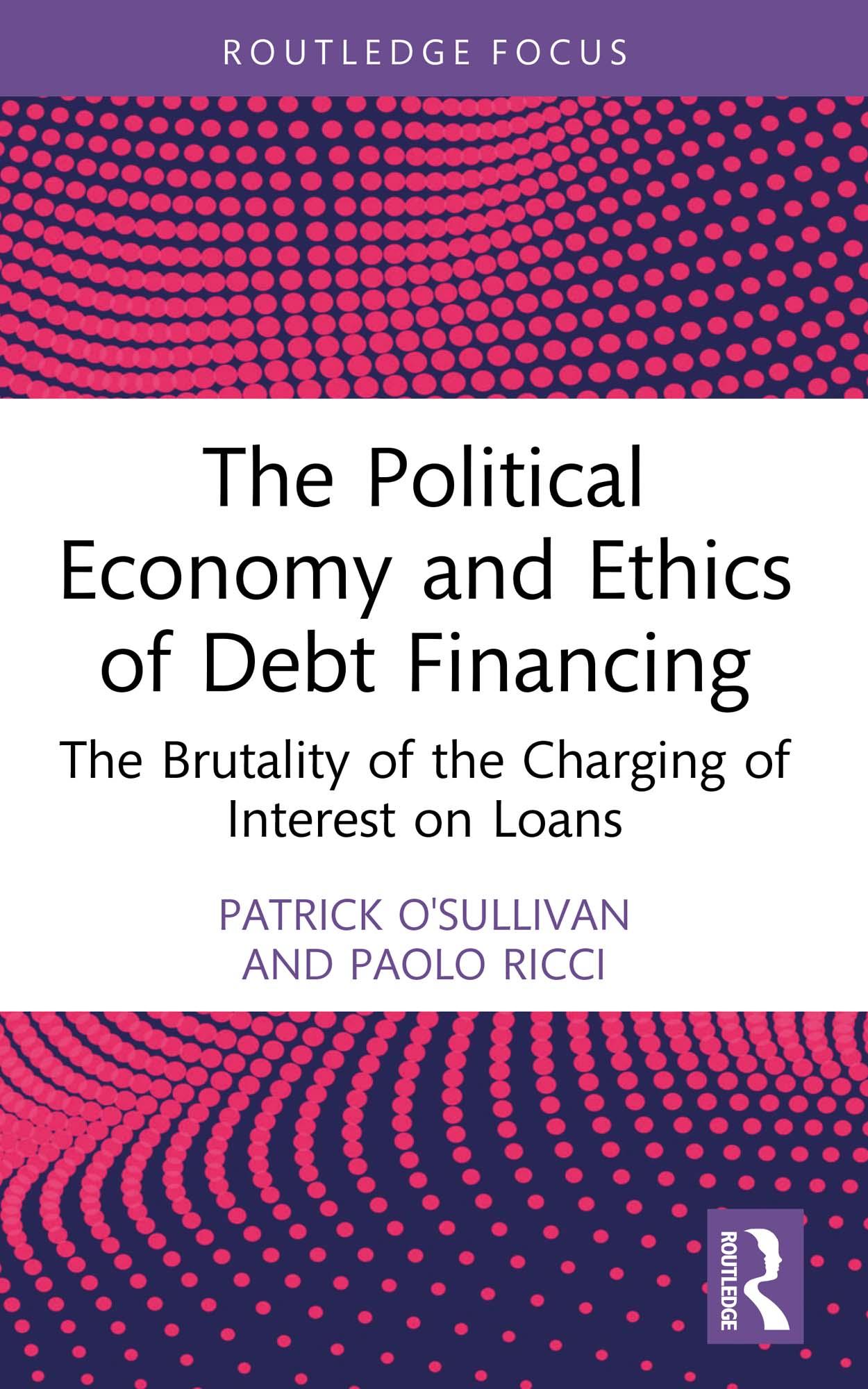
This book takes a fresh look at an age-old controversy in ethics and political economy that stretches right back to Aristotle: the morality and the economics of debt financing, or the charging of interest on loans. It endeavours to show the immense relevance of those ancient debates in the contemporary economy.
Outside of countries which practise Islam and Islamic finance, the charging of interest is taken completely for granted today and little or no thought is devoted to its morality or economic and social impacts. This book argues that in fact the question of the morality of charging interest is still debatable and deserves to be considered anew in the 21st century for the light it can shine on certain salient contemporary sources of economic malaise. This book will first of all review the ancient debates on these questions stretching back to Aristotle seeking to restate the concerns in terms of contemporary economic theories and realities. It will also then delve into the current practices in respect of lending of all kinds that can be found in those Islamic countries and financial institutions which endeavour to follow the prohibition of riba (charging of any kind of interest). This will be contrasted with the impact of interest and debt financing in the contemporary non-Islamic economies arguing that debt financing of businesses promotes greater rates of bankruptcy over the business cycle and that the charging of interest on loans for current consumption purposes will over time increase inequality and inequitable concentration of wealth in societies where it is practised. It will also be shown how in a system without predetermined interest charges problems of exponentially exploding government debt could largely and neatly be avoided by linking bondholder rewards to levels of fiscal proceeds of states.
This book will be of significant interest to readers in ethics, moral philosophy and political economy as well as to policymakers and thinkers grappling with issues around debt burdens (public and private), inequality and fairness.
Zahle einfach mit Karte, Klarna, Apple Pay oder Google Pay. Nicht zufrieden? Du hast immer ein 14-tägiges Widerrufsrecht. Lies mehr in unseren AGB. Hast du Fragen, schreib uns eine E-Mail an hello@memmo.org.
Memmo macht das Lernen einfacher – wo auch immer du bist. Bei uns findest du deine Kursbücher und smarte Lerntools an einem Ort: Zusammenfassungen, Quizzes, Podcasts und Lernkarten. Und Ted, dein Lernbuddy, beantwortet alles, was du wissen möchtest. Über 50.000 Studierende lernen bereits hier – gemacht, damit du schneller lernst und weniger Stress hast.