
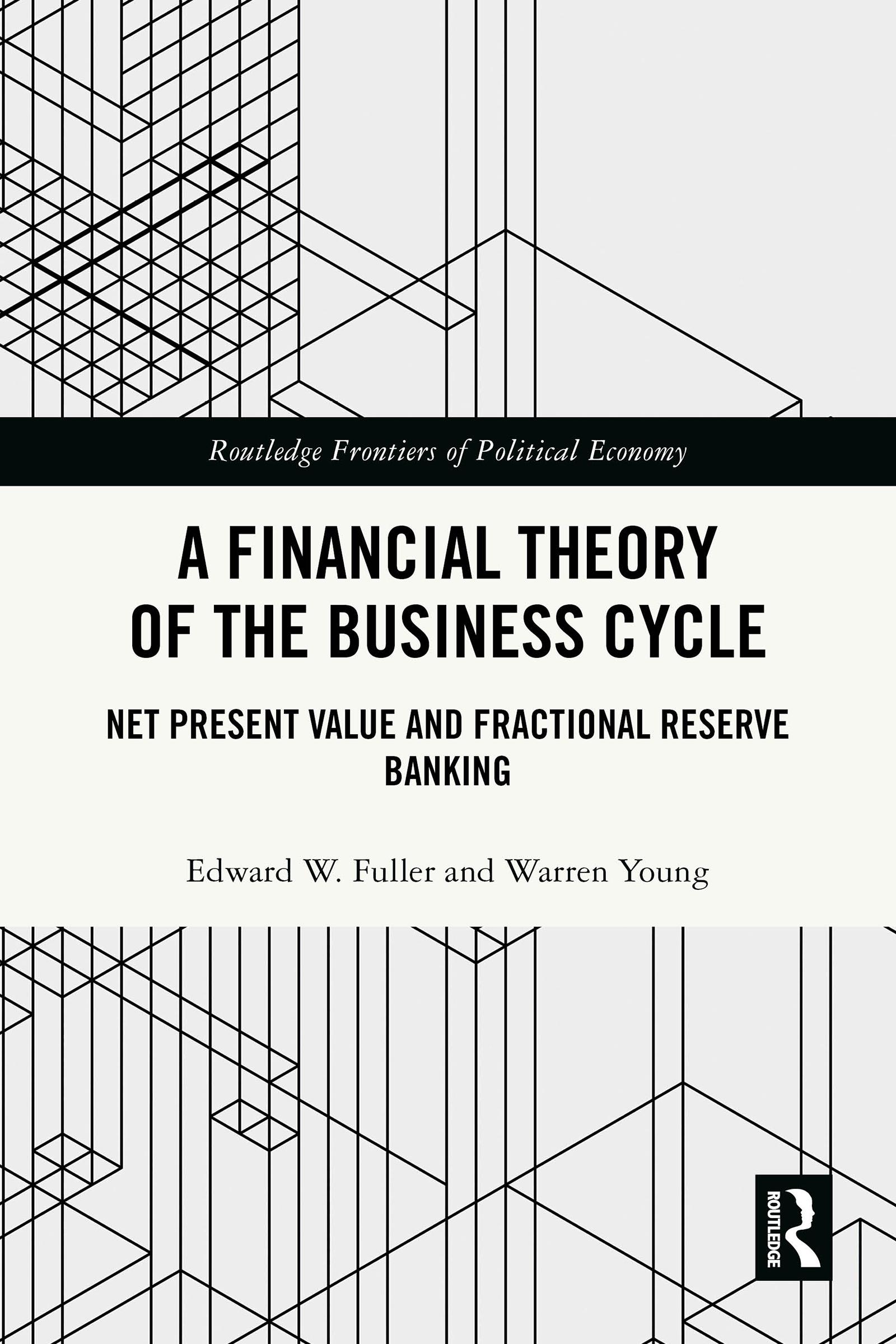
A Financial Theory of the Business Cycle presents a new approach to business cycle theory based on the net present value. The book develops a novel diagrammatic approach to illustrate how fractional reserve banking systematically distorts net-present-value calculations. In addition to providing fresh insights, the new diagrammatic approach provides a comparative framework that can be used to compare pre-existing theories, including those of John Maynard Keynes, Friedrich Hayek, Milton Friedman, and Robert E. Lucas, Jr.
The net present value is the most important concept in the theory and practice of modern finance. As such, it is the proper framework for explaining the systematic financial losses that occur during the business cycle. Eugen von Böhm-Bawerk and Irving Fisher developed the modern theory of the net present value, and the financial theory of the business cycle developed in this book is rooted in their tradition. Although financial elements played a central role in their respective theories, Keynes and Hayek did not use the net present value. This failure created problems that still haunt business cycle theory today. This book addresses these problems and attempts to steer financial theories of the business cycle back to the course set by Böhm-Bawerk and Fisher.
In addition to macroeconomists, this book will appeal to financial economists, money and banking experts, accountants, financial analysts, and businesspeople generally.
Zahle einfach mit Karte, Klarna, Apple Pay oder Google Pay. Nicht zufrieden? Du hast immer ein 14-tägiges Widerrufsrecht. Lies mehr in unseren AGB. Hast du Fragen, schreib uns eine E-Mail an hello@memmo.org.
Memmo macht das Lernen einfacher – wo auch immer du bist. Bei uns findest du deine Kursbücher und smarte Lerntools an einem Ort: Zusammenfassungen, Quizzes, Podcasts und Lernkarten. Und Ted, dein Lernbuddy, beantwortet alles, was du wissen möchtest. Über 50.000 Studierende lernen bereits hier – gemacht, damit du schneller lernst und weniger Stress hast.