
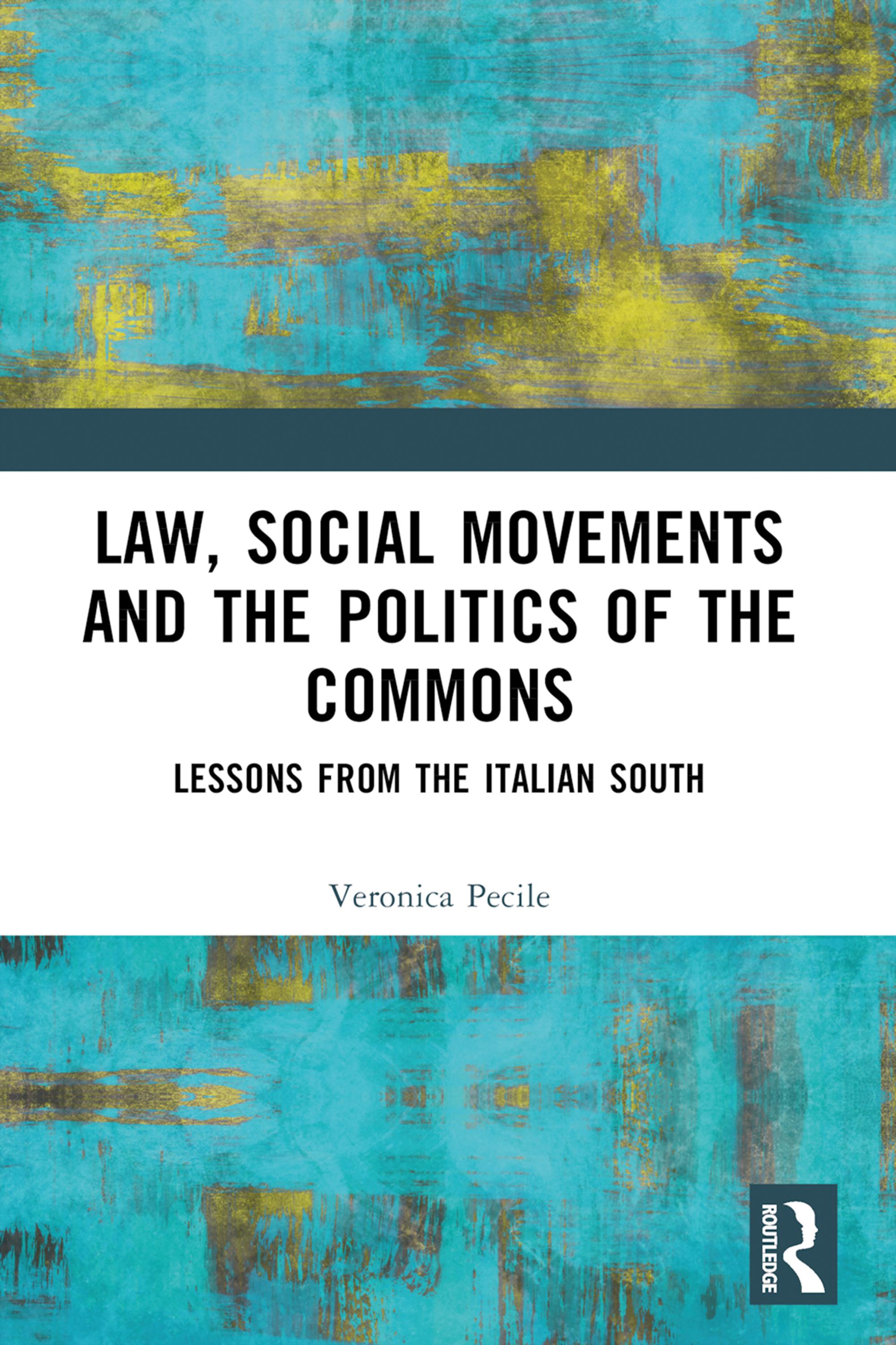
This book reinterprets the notion of the commons by tracing how it has been mobilised in the aftermath of economic crisis.
In a period of widespread activism against the privatisation of resources and services implemented through austerity policies, the reconceptualisation of property as a non-absolute and non-individualistic institution has attracted a great deal of attention. Drawing on the case of the Italian South, and in the wake of economic crisis, this book offers a critical analysis of the struggle for the commons. More specifically, as it details how discourses, legal tools and policies based on disciplinary ideas of the commons are deployed in the neoliberal restructuring of societies, the book considers how conflicting ideas of the commons express different, and often clashing visions, of urban space. In this regard, moreover, it shows how law plays a central, albeit ambivalent, role in the struggle for the commons: as both a governmental technique to regulate urban space and its residents and as an emancipatory tactic to advance non-proprietary visions of ownership.
This book will be of interest to scholars in socio-legal studies, property law, legal sociology and politics, as well as others with more general interests in the critical potential of contemporary social movements.
Zahle einfach mit Karte, Klarna, Apple Pay oder Google Pay. Nicht zufrieden? Du hast immer ein 14-tägiges Widerrufsrecht. Lies mehr in unseren AGB. Hast du Fragen, schreib uns eine E-Mail an hello@memmo.org.
Memmo macht das Lernen einfacher – wo auch immer du bist. Bei uns findest du deine Kursbücher und smarte Lerntools an einem Ort: Zusammenfassungen, Quizzes, Podcasts und Lernkarten. Und Ted, dein Lernbuddy, beantwortet alles, was du wissen möchtest. Über 50.000 Studierende lernen bereits hier – gemacht, damit du schneller lernst und weniger Stress hast.