
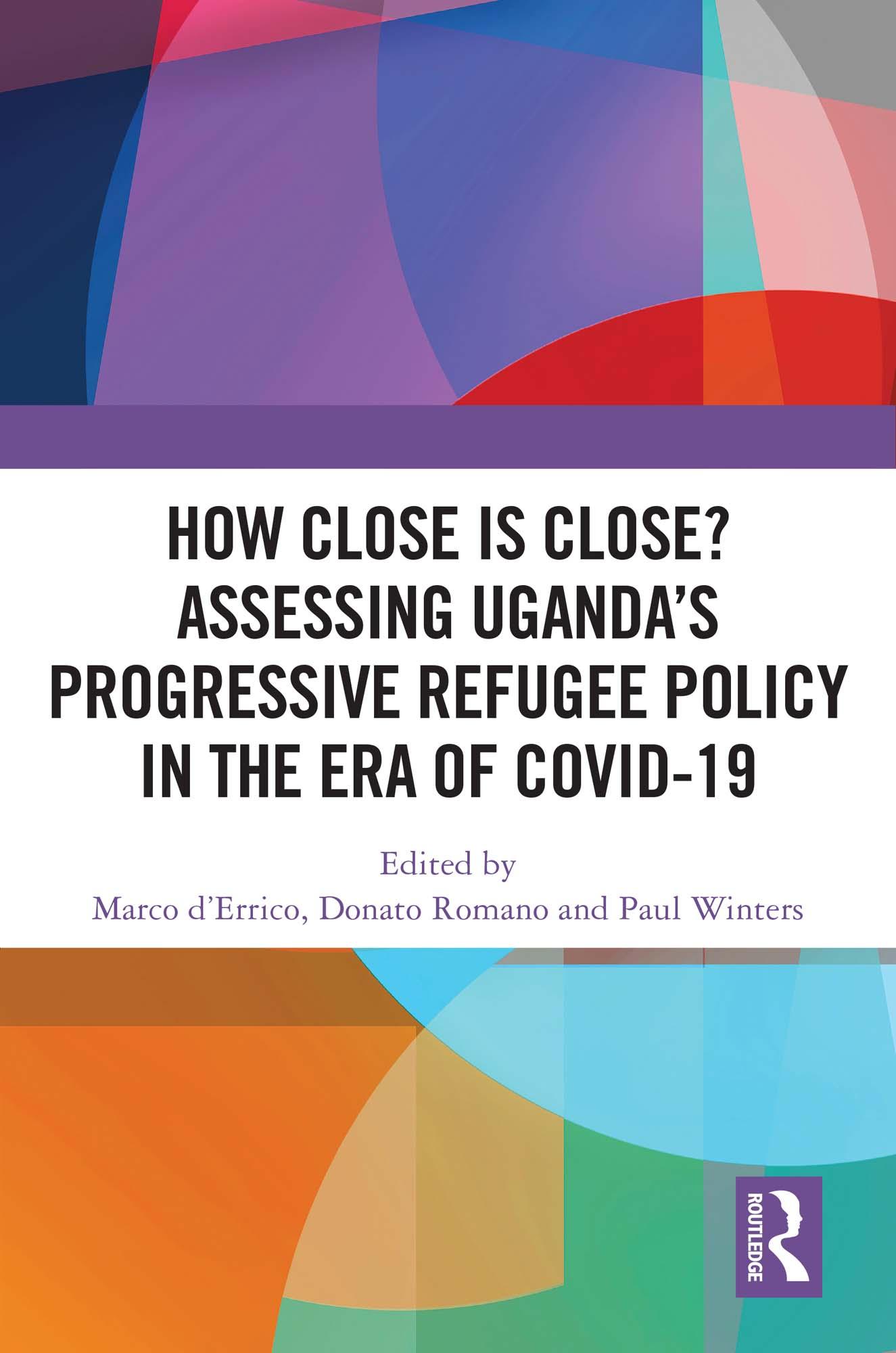
Uganda is home to 1.5 million refugees from DRC, Burundi, South Sudan and other countries. The Uganda political framework is one of the most progressive and inclusive toward refugees. Only a fraction of the refugees is likely to go back to their home countries. This book assesses Uganda’s progressive refugee policy with reference to how it functioned in the era of COVID-19 using a unique panel data collected between 2017 and 2021.
The Uganda Refugee Policy (2006) and the Refugee Regulations (2010) grant refugees wide-ranging rights that include allocating land for agriculture purposes, freedom of movement, and the right to seek employment. However, the magnitude and the speed of influx of refugees in recent years have posed critical challenges to the sustainability of these progressive policies. On top of this, unpredictable and unprecedented crises have emerged, such as COVID-19 and the Ukraine war, that have threatened food security and the resilience of livelihoods, value chains and food systems. The chapters in this book assess Uganda’s progressive refugee policy with reference to how it functioned in the era of COVID-19. They focus on the following three main areas: (i) the economic relationship and coexistence between host and refugees’ communities; (ii) the success and sustainability of the current model of assistance; and (iii) the response to COVID-19 on communities’ welfare and long-term prospects. Addressing these issues is possible due to a unique panel dataset of thirteen refugee settlements and neighbouring host communities specifically collected for these purposes.
Investigating the economic consequences of the integration between host and refugees’ communities and offering new evidence with specific reference to Uganda, this book will be a key resource for scholars, researchers and practitioners of development studies, African studies, economics, and sociology. It was originally published as a special issue of The Journal of Development Studies.
Zahle einfach mit Karte, Klarna, Apple Pay oder Google Pay. Nicht zufrieden? Du hast immer ein 14-tägiges Widerrufsrecht. Lies mehr in unseren AGB. Hast du Fragen, schreib uns eine E-Mail an hello@memmo.org.
Memmo macht das Lernen einfacher – wo auch immer du bist. Bei uns findest du deine Kursbücher und smarte Lerntools an einem Ort: Zusammenfassungen, Quizzes, Podcasts und Lernkarten. Und Ted, dein Lernbuddy, beantwortet alles, was du wissen möchtest. Über 50.000 Studierende lernen bereits hier – gemacht, damit du schneller lernst und weniger Stress hast.