
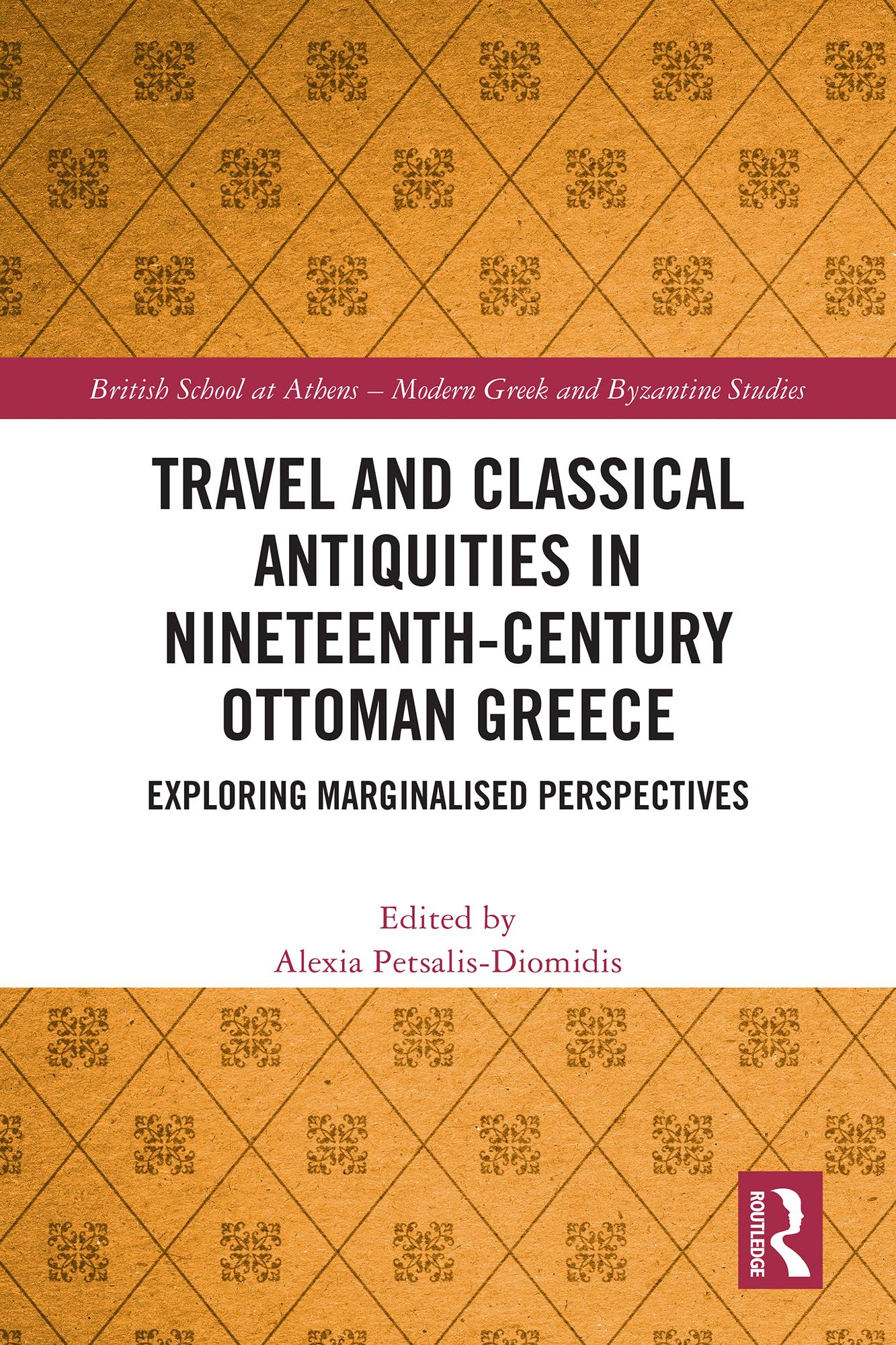
Western travel and collecting classical antiquities in the nineteenth century informed European understandings of Greece's past and present, and enriched private collections and museums. Travel and collecting have typically been studied separately by literary scholars, historians of archaeology, and historians of the Ottoman Empire and modern Greece. Similarly, publications have largely prioritised evidence from and about elite social groups.
This book breaks new ground through its interdisciplinary approach, its insistence on the interweaving of the phenomena of travel and collecting, and its emphasis on marginalised perspectives. Contributors drawn from art history, classics, history of architecture, Ottoman history and modern Greek history foreground diversity and small-scale engagements with the landscape and material past of Ottoman Greece. The book explores the perspectives of both foreign travellers and local inhabitants through case studies, keeping a sharp focus on ethnicity and social status. Diaries, visual art, and rich archival material are analysed, often from a novel perspective, to give voice to a range of people including English servants, Albanian peasants, an illiterate Greek fighter, and the Ottoman Sultan. The result is a micro-cultural history of travel and classical collecting which expands existing narratives. As such, it changes the simplistic dichotomy between collecting as ‘pillaging’ or ‘saving’, and nuances the important current debate surrounding repatriation.
Travel and Classical Antiquities in Nineteenth-Century Ottoman Greece addresses scholars in the areas of classical reception studies, classical archaeology, material culture studies, nineteenth-century studies, Ottoman studies and modern Greek studies. It will also appeal to a broader audience of people interested in travel writing, the history of archaeology and the history of Greece.
Zahle einfach mit Karte, Klarna, Apple Pay oder Google Pay. Nicht zufrieden? Du hast immer ein 14-tägiges Widerrufsrecht. Lies mehr in unseren AGB. Hast du Fragen, schreib uns eine E-Mail an hello@memmo.org.
Memmo macht das Lernen einfacher – wo auch immer du bist. Bei uns findest du deine Kursbücher und smarte Lerntools an einem Ort: Zusammenfassungen, Quizzes, Podcasts und Lernkarten. Und Ted, dein Lernbuddy, beantwortet alles, was du wissen möchtest. Über 50.000 Studierende lernen bereits hier – gemacht, damit du schneller lernst und weniger Stress hast.