
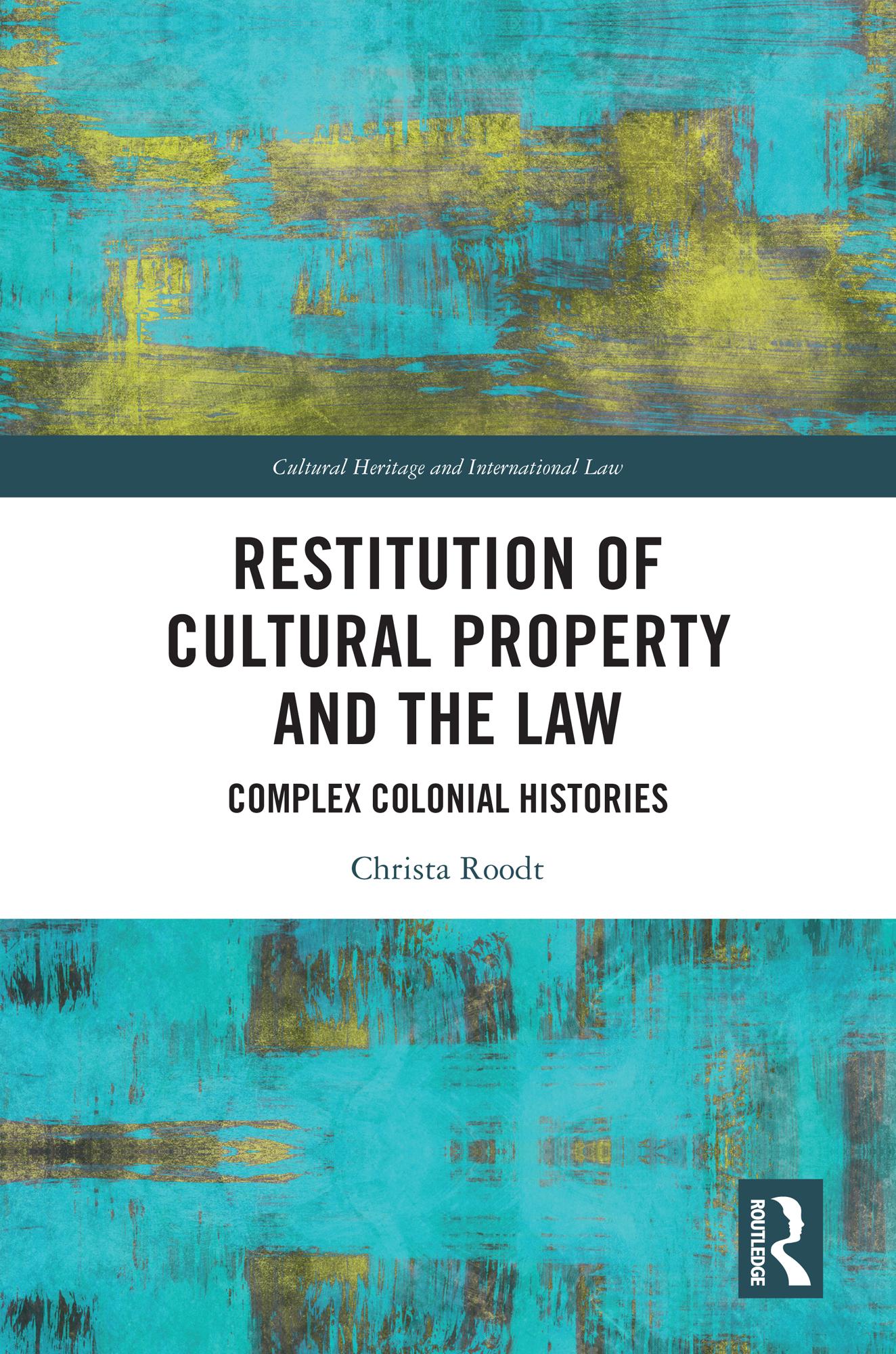
This book adopts a novel approach to the social question of restitution and repatriation of sacred cultural property and heritage acquired unethically during the colonial era. It uses an approach premised on better integration of law, ethics, history, anthropology, and provenance research.
To bridge the material and the sacred world in adjudication and policy formulation, a common definition of what the ‘sacred’ denotes in the context of colonial legacies is adopted as a viable methodology. ‘Sacred’ loot in private and public collections is defined based on clues imparted by disputes which are paradigmatic of the fragmentation that envelops the material, the systems of knowledge associated with that material, the structure and method of international law, subject specialisations, and the legal frameworks in play. The book suggests that the Parthenon Sculptures dispute and the parallel transnational litigation in the Zhanggong Zushi Statue cases offer practical approaches for deconstructing hurdles and assumptions concerning historical claims in the secondary legal norms and tenets of PrIL.
It will be of interest to researchers interested in interdisciplinary work across the humanities and social sciences, including public and private international law, cultural property law, heritage law, and provenance research and practice.
Zahle einfach mit Karte, Klarna, Apple Pay oder Google Pay. Nicht zufrieden? Du hast immer ein 14-tägiges Widerrufsrecht. Lies mehr in unseren AGB. Hast du Fragen, schreib uns eine E-Mail an hello@memmo.org.
Memmo macht das Lernen einfacher – wo auch immer du bist. Bei uns findest du deine Kursbücher und smarte Lerntools an einem Ort: Zusammenfassungen, Quizzes, Podcasts und Lernkarten. Und Ted, dein Lernbuddy, beantwortet alles, was du wissen möchtest. Über 50.000 Studierende lernen bereits hier – gemacht, damit du schneller lernst und weniger Stress hast.