
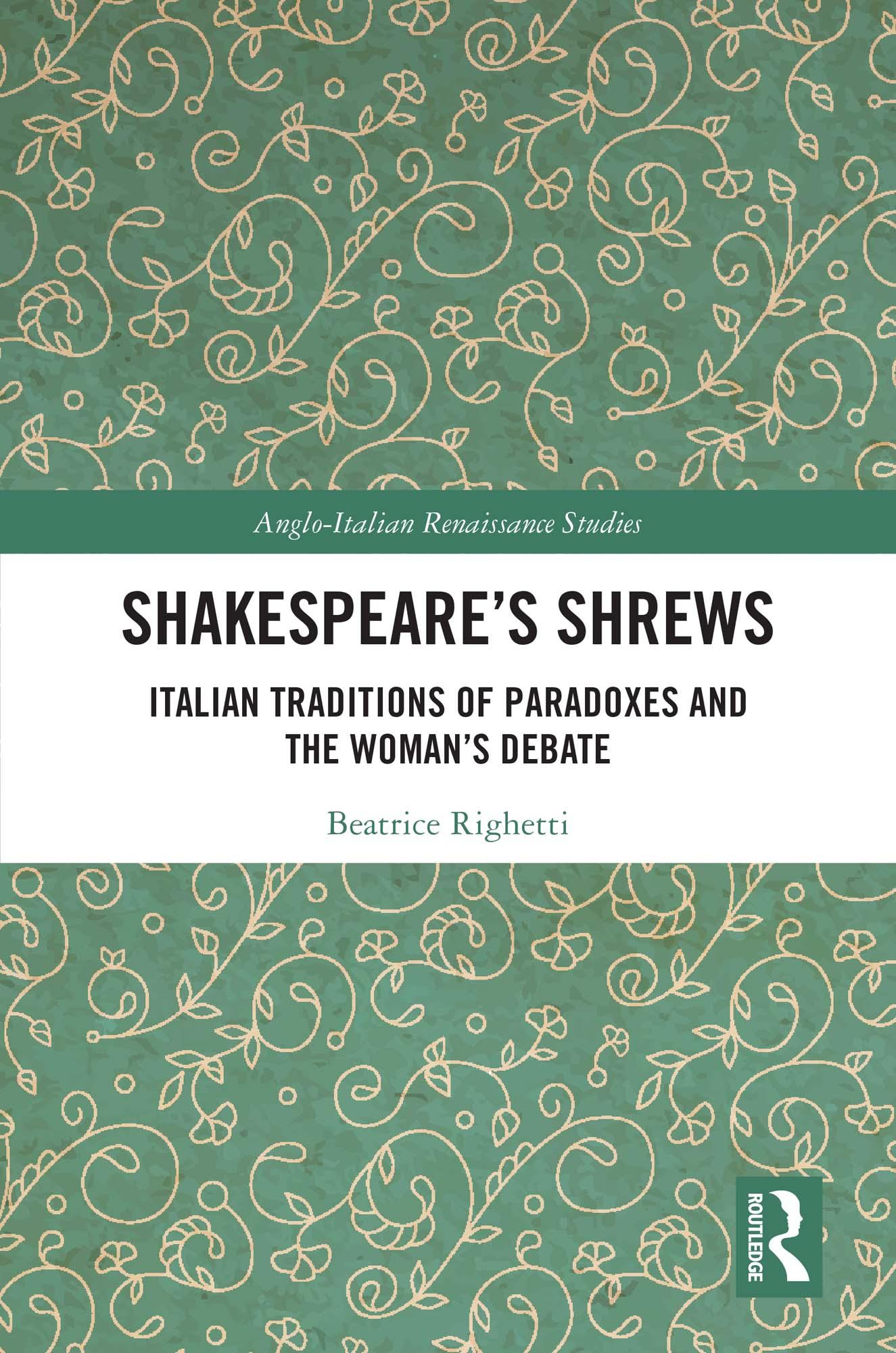
Shakespeare’s Shrews: Italian Traditions of Paradoxes and the Woman’s Debate investigates the echoes of two early modern discourses—paradoxical writing and the woman’s question or querelle des femmes—in the representation of the “Shakespearean shrew” in The Taming of the Shrew, Much Ado About Nothing, and Othello.
This comparative cross‑cultural study explores the English reception of these traditions through the circulation, translation, and adaptation of Italian works such as Ludovico Ariosto’s Orlando Furioso, Baldassare Castiglione’s Il libro del cortegiano, and Ercole and Torquato Tasso’s Dell’ammogliarsi. The enticing interplay of these two discourses is further complicated by their presence in the writing of early modern male and female authors. The examination of Shakespeare’s adaptation of these traditions in his “shrew” character highlights two key findings: the thematic fragmentation of the woman’s question and the evolving role of paradoxes, from figures of speech to “figures of thought”, both influenced by the gender of the speaker.
Zahle einfach mit Karte, Klarna, Apple Pay oder Google Pay. Nicht zufrieden? Du hast immer ein 14-tägiges Widerrufsrecht. Lies mehr in unseren AGB. Hast du Fragen, schreib uns eine E-Mail an hello@memmo.org.
Memmo macht das Lernen einfacher – wo auch immer du bist. Bei uns findest du deine Kursbücher und smarte Lerntools an einem Ort: Zusammenfassungen, Quizzes, Podcasts und Lernkarten. Und Ted, dein Lernbuddy, beantwortet alles, was du wissen möchtest. Über 50.000 Studierende lernen bereits hier – gemacht, damit du schneller lernst und weniger Stress hast.