
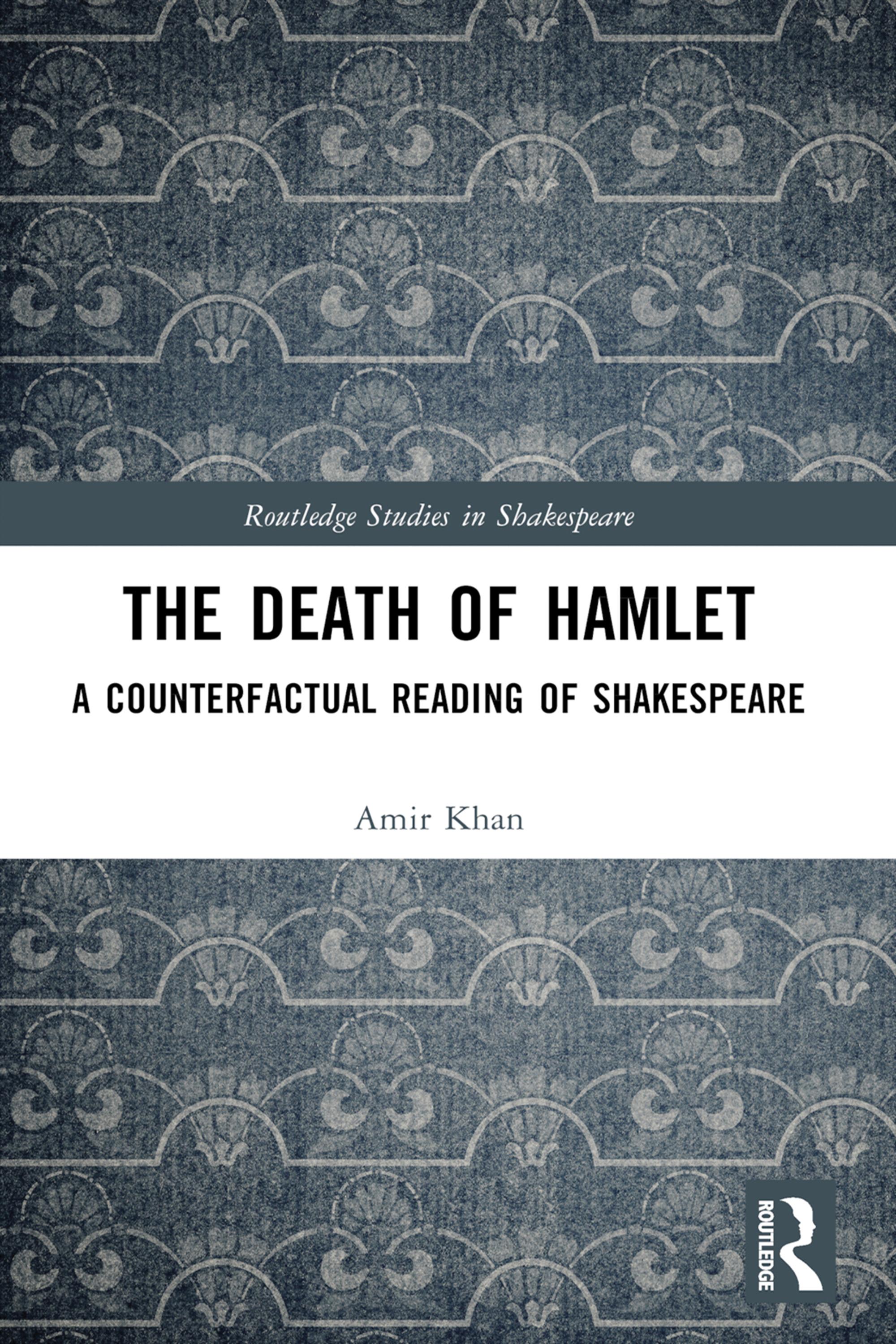
This book is an intervention in Hamlet scholarship. In Thus Spake Zarathustra (1885), Nietzsche famously posited the death of God, taken to mean the dissolution of all horizons within which human beings construct a plausible ontology that gives words significance. The idea of God, as a transcendental signified (to borrow from Derrida), underwrites meaning and values. Socrates placed knowing as the highest philosophical good over two millennia ago; however, once we find that God (i.e. any transcendental signified) is unknowable, the world vanishes. In a world bereft of concepts and meaning, Nietzsche’s philosophical project becomes one of “redeeming” pure willing as itself constitutive of world.
Hamlet and the criticism surrounding it is caught within competing horizons we know are circuitous and unending. We tiresomely make theoretical rounds between competing sets of interpretations that boil down to either establishing meaning within the play (the text transcending its history and revealing universal truths) or situating the text within its proper historical timeframe in order to get it to speak. In short, we are trapped between contextualizing and decontextualizing approaches. Yet we know both approaches, as competing horizons we commit to at the outset, are dead. But to abandon both at the outset means that the text, Hamlet, is itself dead. So how to get it to speak?
Zahle einfach mit Karte, Klarna, Apple Pay oder Google Pay. Nicht zufrieden? Du hast immer ein 14-tägiges Widerrufsrecht. Lies mehr in unseren AGB. Hast du Fragen, schreib uns eine E-Mail an hello@memmo.org.
Memmo macht das Lernen einfacher – wo auch immer du bist. Bei uns findest du deine Kursbücher und smarte Lerntools an einem Ort: Zusammenfassungen, Quizzes, Podcasts und Lernkarten. Und Ted, dein Lernbuddy, beantwortet alles, was du wissen möchtest. Über 50.000 Studierende lernen bereits hier – gemacht, damit du schneller lernst und weniger Stress hast.