
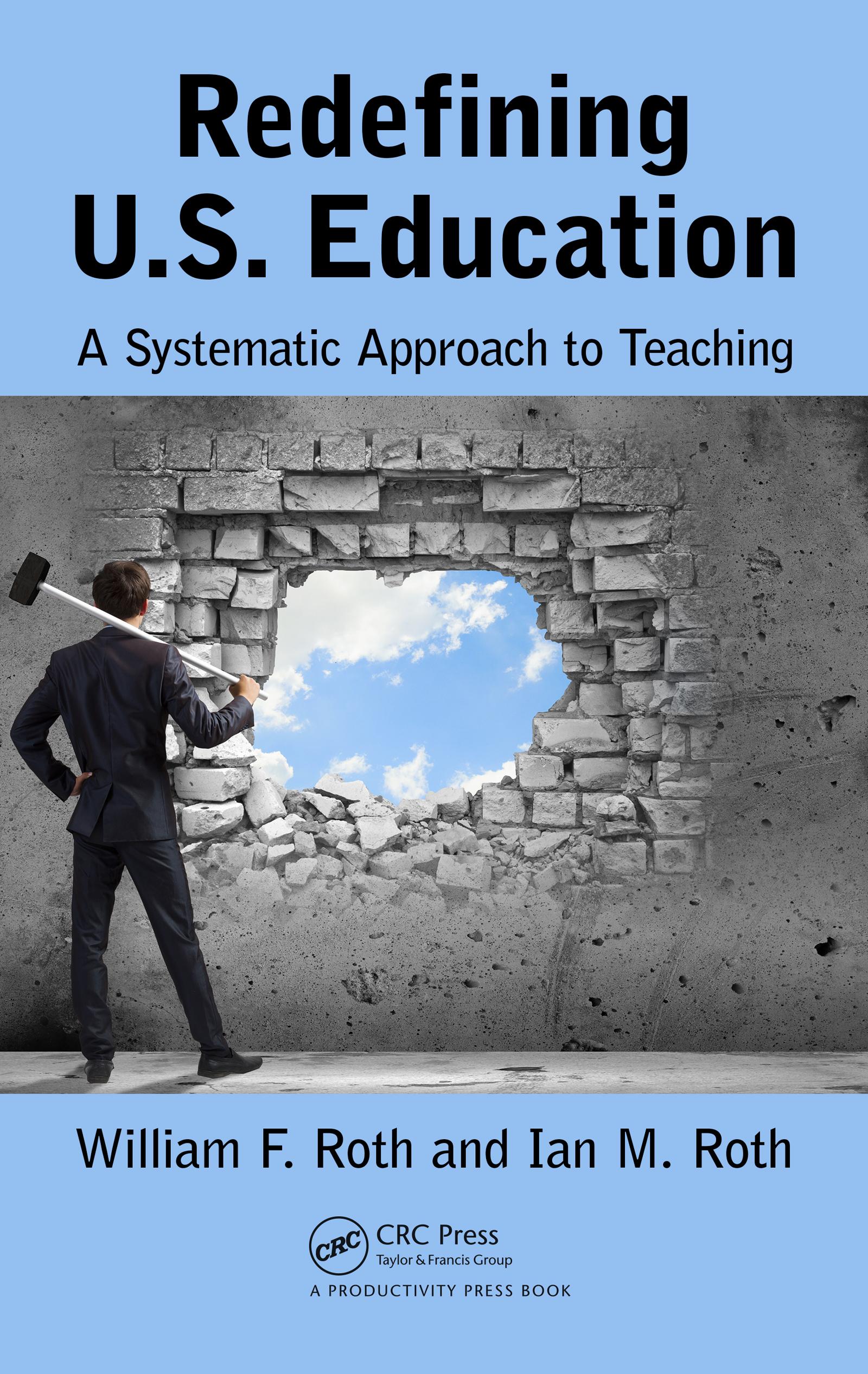
A growing number of educators are beginning to believe that as we move into a different kind of world with different possibilities, the traditional approach to teaching is no longer the most productive. They are beginning to understand that if we are to continue progressing as a nation, we need to place more emphasis on the development of each student’s unique potential. This book presents a new model for education that achieves this goal through the effective use of technology.
Redefining U.S. Education: A Systematic Approach to Teaching first looks at the evolution of the U.S. public education system, explaining how we got here and where we are in terms of our system’s strengths and weaknesses. The book explores the philosophical and theoretical roots of the U.S. system developed in Europe centuries ago. It introduces the major dilemma of whether emphasis should be on ensuring that all students reach a defined level of expertise or on encouraging individual students to develop their full potential.
In an effort to draw from the experiences of two other major societies, the book also looks at the education systems in Europe and Japan. It examines Europe’s Bologna Process, identifying its advantages and shortcomings as an attempt at standardization. It then travels to Japan, a country that represents the epitome in terms of standardization. It discusses the damage that this over-emphasis on standardization has done to Japanese society, and especially to the Japanese education system.
The authors then present an exciting new paradigm of teaching that incorporates computer technology into education. This new paradigm allows students to use computer programs to progress at their own rate in subjects they enjoy and excel at while, concurrently, ensuring that they still get the basics they need to function successfully in society. The book details the key logistics of the new paradigm, including the way classes are run, the way subjects are taught, and the way students are graded.
Zahle einfach mit Karte, Klarna, Apple Pay oder Google Pay. Nicht zufrieden? Du hast immer ein 14-tägiges Widerrufsrecht. Lies mehr in unseren AGB. Hast du Fragen, schreib uns eine E-Mail an hello@memmo.org.
Memmo macht das Lernen einfacher – wo auch immer du bist. Bei uns findest du deine Kursbücher und smarte Lerntools an einem Ort: Zusammenfassungen, Quizzes, Podcasts und Lernkarten. Und Ted, dein Lernbuddy, beantwortet alles, was du wissen möchtest. Über 50.000 Studierende lernen bereits hier – gemacht, damit du schneller lernst und weniger Stress hast.