
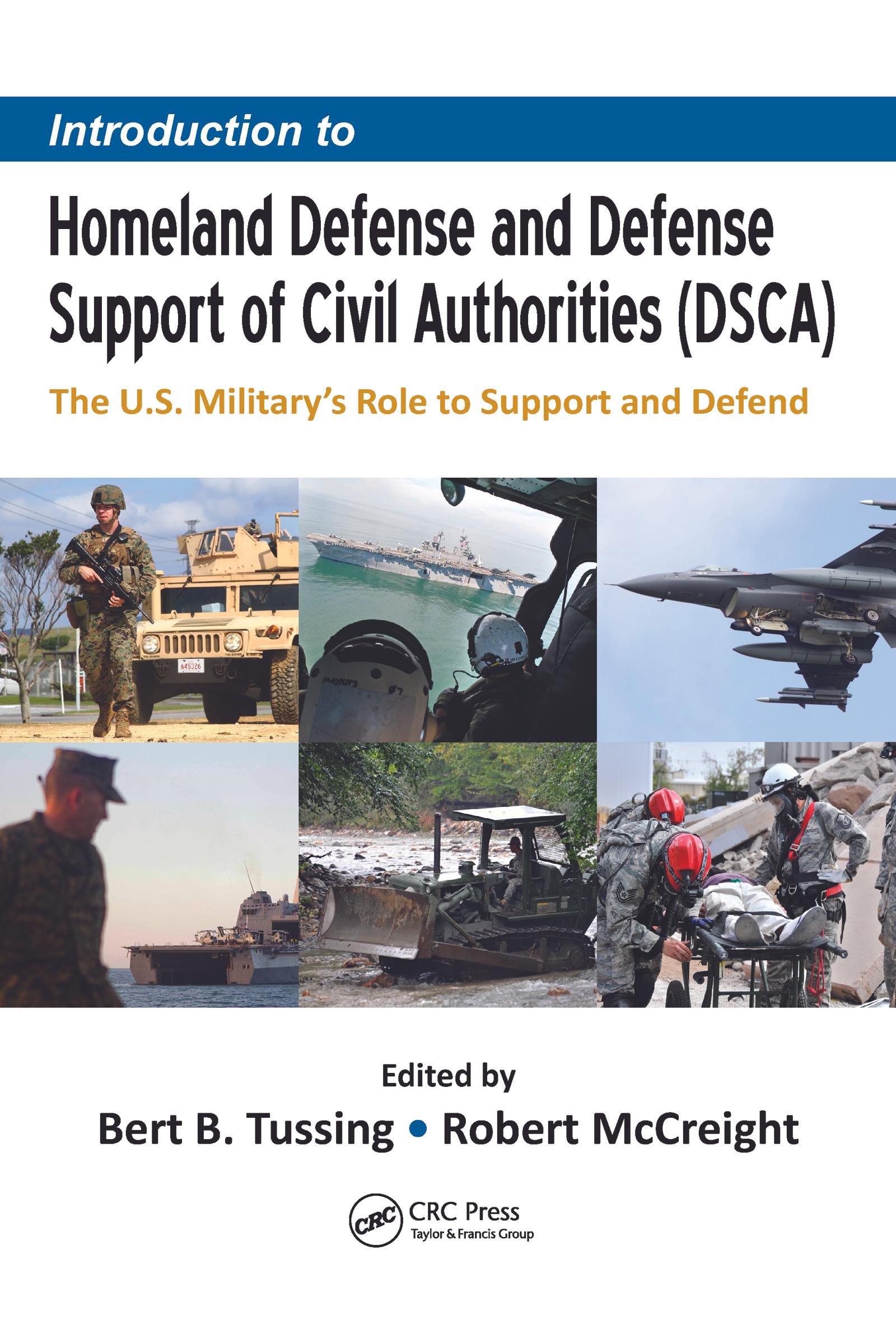
The application of our Armed Forces within the states and territories of the United States is far from intuitive. The challenges of defending the country against assaults within the homeland are much more complex than engaging our enemies on foreign soil. Likewise, the introduction of the military’s appreciable capabilities in response to disasters, be they natural or manmade, comes with authorities and restrictions reflective of an American ethos that will always hold those forces as the servants of the people, never their overseers. Introduction to Homeland Defense and Defense Support of Civil Authorities (DSCA): The U.S. Military’s Role to Support and Defend examines the requirements and regulations that guide the utilization of our forces in the domestic environment.
Topics include:
- The importance of the distinctions between homeland security, homeland defense, and Defense Support of Civil Authorities as they pertain to both authorities and responsibilities
- The deliberately subservient position of the military to civil authorities when engaged in response and recovery operations following a disaster
- The unique relationship between the United States Navy and the United States Coast Guard in a mutually supportive effort that bridges requirements between defense on the high seas and law enforcement in territorial waters
- The air defense mission over the United States, orchestrating manned aircraft, unmanned aircraft, and cruise missiles against threats of the same nature
- The exceptional challenges that would be associated with the application of land forces in a defense mission on American soil
- The development of the CBRN (Chemical, Biological, Radiological, Nuclear) Enterprise as a function of the nation’s focus on preventing, responding to and recovering from a Weapons of Mass Destruction attack
- New challenges emerging in the domestic environment that will call for the application of military resources, to include the Arctic, complex catastrophes, and cybersecurity issues.
Zahle einfach mit Karte, Klarna, Apple Pay oder Google Pay. Nicht zufrieden? Du hast immer ein 14-tägiges Widerrufsrecht. Lies mehr in unseren AGB. Hast du Fragen, schreib uns eine E-Mail an hello@memmo.org.
Memmo macht das Lernen einfacher – wo auch immer du bist. Bei uns findest du deine Kursbücher und smarte Lerntools an einem Ort: Zusammenfassungen, Quizzes, Podcasts und Lernkarten. Und Ted, dein Lernbuddy, beantwortet alles, was du wissen möchtest. Über 50.000 Studierende lernen bereits hier – gemacht, damit du schneller lernst und weniger Stress hast.