
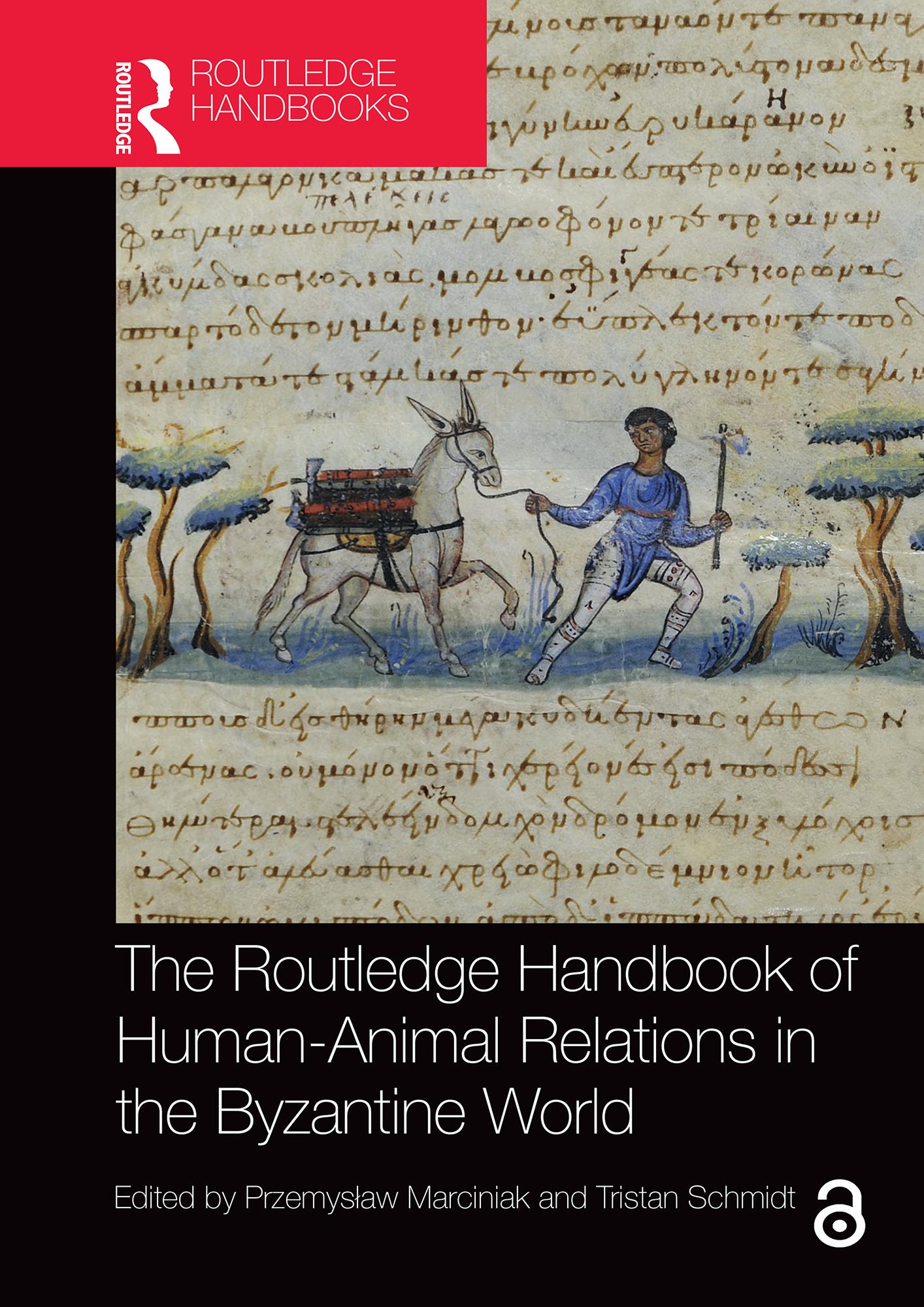
Animals have recently become recognized as significant agents of history as part of the ‘animal turn’ in historical studies. Animals in Byzantium were human companions, a source of entertainment and food – it is small wonder that they made their way into literature and the visual arts. Moreover, humans defined themselves and their activities by referring to non-human animals, either by anthropomorphizing animals (as in the case of the Cat-Mice War) or by animalizing humans and their (un)wanted behaviours.
The Routledge Handbook of Human-Animal Relations in the Byzantine World offers an in-depth survey of the relationships between humans and non-human animals in the Byzantine Empire. The contributions included in the volume address both material (zooarchaeology, animals as food, visual representations of animals) and immaterial (semiotics, philosophy) aspects of human-animal coexistence in chapters written by leading experts in their field.
This book will appeal to students and scholars alike researching Byzantine social and cultural history, as well as those interested in the history of animals. This book marks an important step in the development of animal studies in Byzantium, filling a gap in the wider research on the history of human-animal relations in the Middle Ages.
Zahle einfach mit Karte, Klarna, Apple Pay oder Google Pay. Nicht zufrieden? Du hast immer ein 14-tägiges Widerrufsrecht. Lies mehr in unseren AGB. Hast du Fragen, schreib uns eine E-Mail an hello@memmo.org.
Memmo macht das Lernen einfacher – wo auch immer du bist. Bei uns findest du deine Kursbücher und smarte Lerntools an einem Ort: Zusammenfassungen, Quizzes, Podcasts und Lernkarten. Und Ted, dein Lernbuddy, beantwortet alles, was du wissen möchtest. Über 50.000 Studierende lernen bereits hier – gemacht, damit du schneller lernst und weniger Stress hast.