
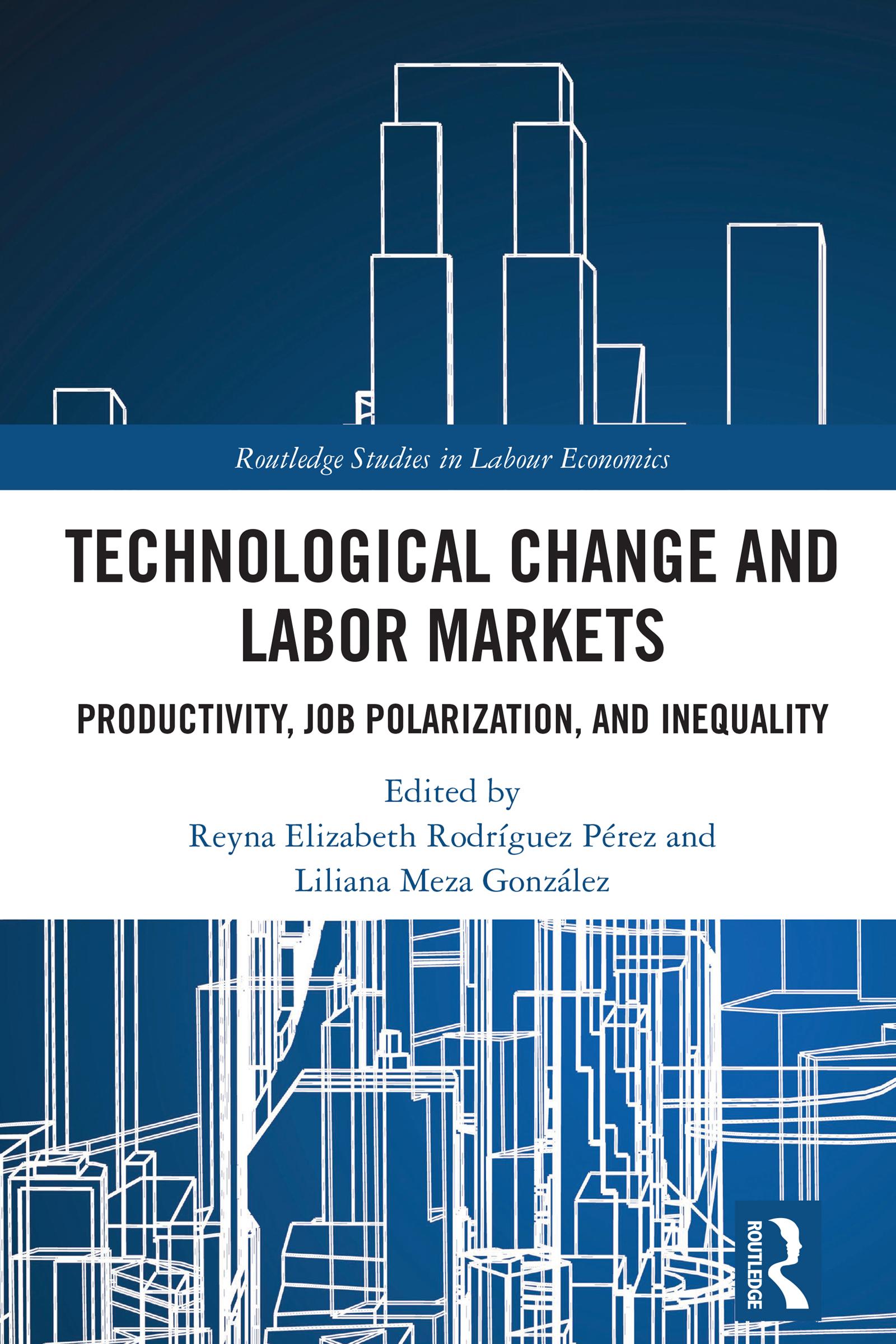
In developed countries like the United States, Germany, and the UK, it has been observed that workers who perform non-routine activities, either cognitive or manual, have benefited in terms of employment and income, while those performing routinary tasks have seen their job prospects and wages decline. This has led to not only a polarization of the labor markets but also a decrease in certain measures of inequality. This phenomenon has been attributed to task-based technological change (TBTC), which differs from the skilled biased technological change in the fact that not only highly skilled workers have benefited from technology advancement. This book presents evidence of how digitalization and TBTC are affecting the labor markets of different regions of the world and examines the factors that cause this inequality among nations.
It examines recent issues around the effect of TBTC on the labor market and the economy in general, with a comparison of different countries in Central and Eastern Europe, North America, and Latin America, as well as in other regions of the world. The incorporation of these regions presents relevant particularities for the subject matter addressed in the book. The book also considers questions such as how labor market effects differ by gender and what the impact of digital skills on employment, inequalities, and public policies might be. In so doing, it identifies the advances, opportunities, and changes that have taken place, while also making public policy proposals.
This book will be a key reading to the global community of graduate students and researchers in the field of economics and, specifically, in the study of labor markets.
Zahle einfach mit Karte, Klarna, Apple Pay oder Google Pay. Nicht zufrieden? Du hast immer ein 14-tägiges Widerrufsrecht. Lies mehr in unseren AGB. Hast du Fragen, schreib uns eine E-Mail an hello@memmo.org.
Memmo macht das Lernen einfacher – wo auch immer du bist. Bei uns findest du deine Kursbücher und smarte Lerntools an einem Ort: Zusammenfassungen, Quizzes, Podcasts und Lernkarten. Und Ted, dein Lernbuddy, beantwortet alles, was du wissen möchtest. Über 50.000 Studierende lernen bereits hier – gemacht, damit du schneller lernst und weniger Stress hast.