
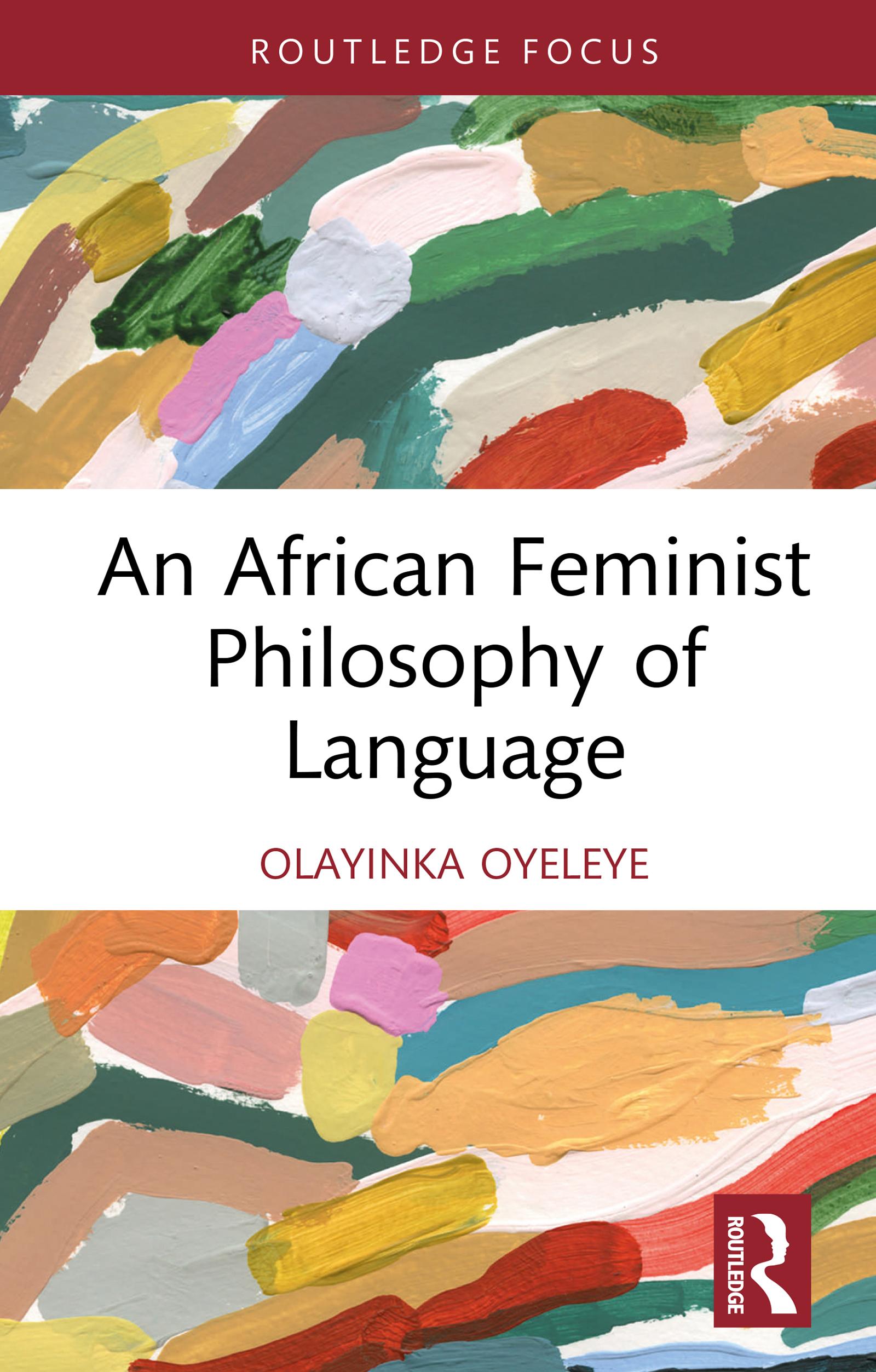
This book calls for the institution of an African feminist philosophy of language, challenging existing debates and encouraging a move away from the Western gaze.
The book begins with an analysis of the philosophical context of African feminism, and a call for the decolonization of epistemological discourse. Oyeleye then goes on to consider how indigenous patriarchies play out in the cultural reality of the Yorùbá in particular, ontologically unpacking the nature of woman as expressed in language, especially in myths and proverbs. Challenging the derogatory language found in proverbs which entrench patriarchal oppression, the author advocates for feminist postproverbials: new proverbs which draw on old traditions but reconstruct the space of woman in a new, egalitarian rhetorical tradition. The author concludes by outlining the conditions necessary for African feminist philosophers to consider language as a decolonizing space which can help to push through the agenda of social change.
This book will be an important resource for researchers from across the fields of gender and women studies, feminist philosophy, philosophy of language, cultural studies, and African studies.
Zahle einfach mit Karte, Klarna, Apple Pay oder Google Pay. Nicht zufrieden? Du hast immer ein 14-tägiges Widerrufsrecht. Lies mehr in unseren AGB. Hast du Fragen, schreib uns eine E-Mail an hello@memmo.org.
Memmo macht das Lernen einfacher – wo auch immer du bist. Bei uns findest du deine Kursbücher und smarte Lerntools an einem Ort: Zusammenfassungen, Quizzes, Podcasts und Lernkarten. Und Ted, dein Lernbuddy, beantwortet alles, was du wissen möchtest. Über 50.000 Studierende lernen bereits hier – gemacht, damit du schneller lernst und weniger Stress hast.