
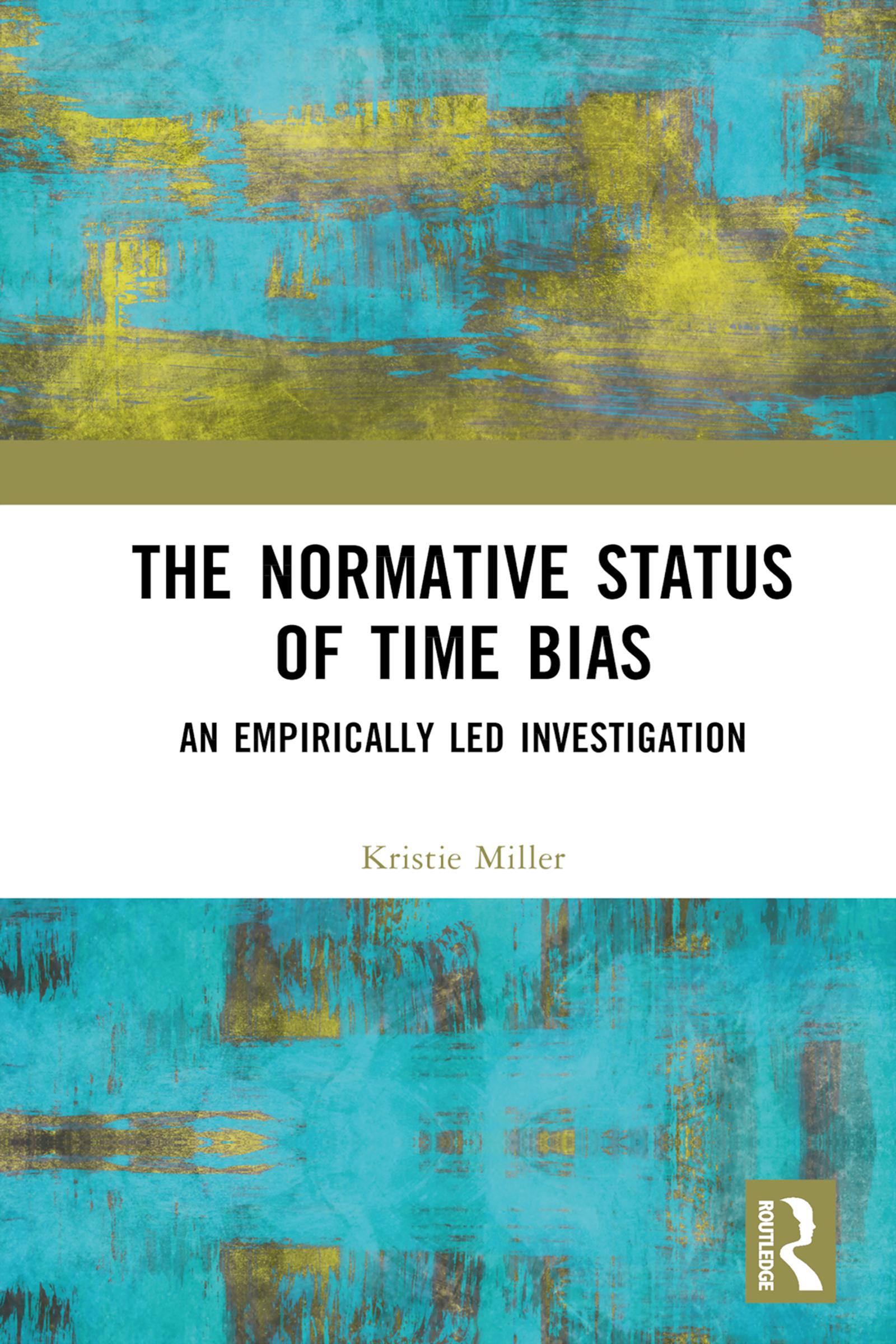
This book empirically investigates the nature of time biases. Many philosophers think that it is rationally permissible to prefer a life that is overall worse to one that is overall better, as long as the badness of that life lies in the past rather than the future. These philosophers think that it is rationally permissible to be time biased. Time biased individuals differently value the wellbeing of their various selves in virtue of where those selves are located in time. This book focuses on three key kinds of time bias: near, present, and future bias. It presents a rich picture of the conditions under which we display these biases, and it outlines several psychological explanations for them. It then uses this new empirical research we conducted to inform arguments regarding the normative status of these biases. At its heart it considers the question: does having time biased preferences of one sort or another make us better off or worse off? And it uses the answers to these questions to inform our theorising about whether we have reason either to have or to avoid having such preferences.
Zahle einfach mit Karte, Klarna, Apple Pay oder Google Pay. Nicht zufrieden? Du hast immer ein 14-tägiges Widerrufsrecht. Lies mehr in unseren AGB. Hast du Fragen, schreib uns eine E-Mail an hello@memmo.org.
Memmo macht das Lernen einfacher – wo auch immer du bist. Bei uns findest du deine Kursbücher und smarte Lerntools an einem Ort: Zusammenfassungen, Quizzes, Podcasts und Lernkarten. Und Ted, dein Lernbuddy, beantwortet alles, was du wissen möchtest. Über 50.000 Studierende lernen bereits hier – gemacht, damit du schneller lernst und weniger Stress hast.