
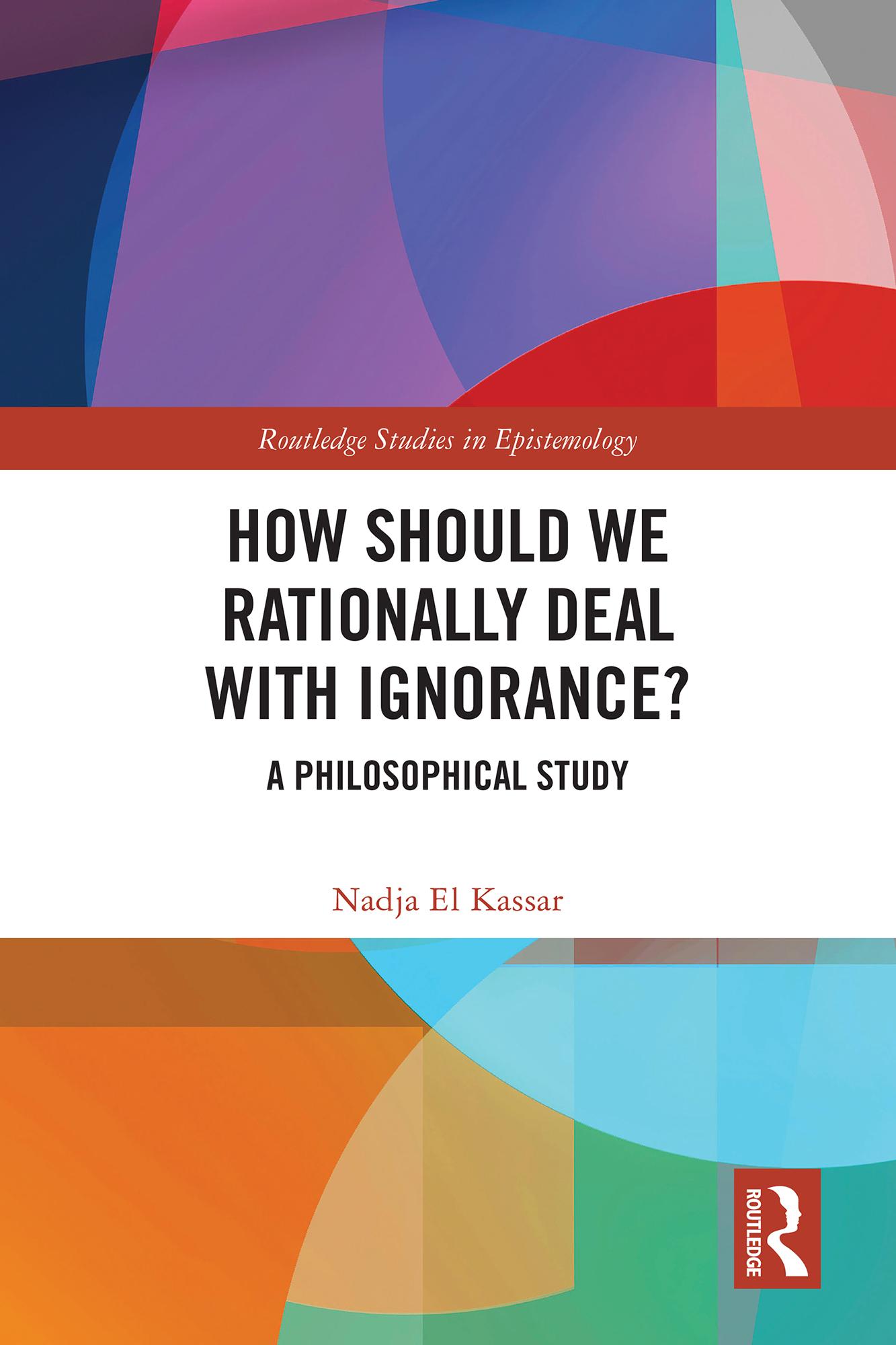
This book addresses two questions that are highly relevant for epistemology and for society: What is ignorance and how should we rationally deal with it? It proposes a new way of thinking about ignorance based on contemporary and historical philosophical theories.
In the first part of the book, the author shows that epistemological definitions of ignorance are quite heterogeneous and often address different phenomena under the label "ignorance." She then develops an integrated conception of ignorance that recognizes doxastic, attitudinal, and structural constituents of ignorance. Based on this new conception, she carves out suggestions for dealing with ignorance from the history of philosophy that have largely been overlooked: virtue-theoretic approaches based on Aristotle and Socrates, consequentialist approaches derived from James, and deontological approaches based on Locke, Clifford, and Kant. None of these approaches individually provide a satisfying approach to the task of rationally dealing with ignorance, and so the author develops an alternative maxim-based answer that extends Kant’s maxims of the sensus communis to the issue of ignorance. The last part of the book applies this maxim-based answer to different contexts in medicine and democracies.
How Should We Rationally Deal with Ignorance? will appeal to scholars and advanced students working in epistemology, political philosophy, feminist philosophy, and the social sciences.
Zahle einfach mit Karte, Klarna, Apple Pay oder Google Pay. Nicht zufrieden? Du hast immer ein 14-tägiges Widerrufsrecht. Lies mehr in unseren AGB. Hast du Fragen, schreib uns eine E-Mail an hello@memmo.org.
Memmo macht das Lernen einfacher – wo auch immer du bist. Bei uns findest du deine Kursbücher und smarte Lerntools an einem Ort: Zusammenfassungen, Quizzes, Podcasts und Lernkarten. Und Ted, dein Lernbuddy, beantwortet alles, was du wissen möchtest. Über 50.000 Studierende lernen bereits hier – gemacht, damit du schneller lernst und weniger Stress hast.