
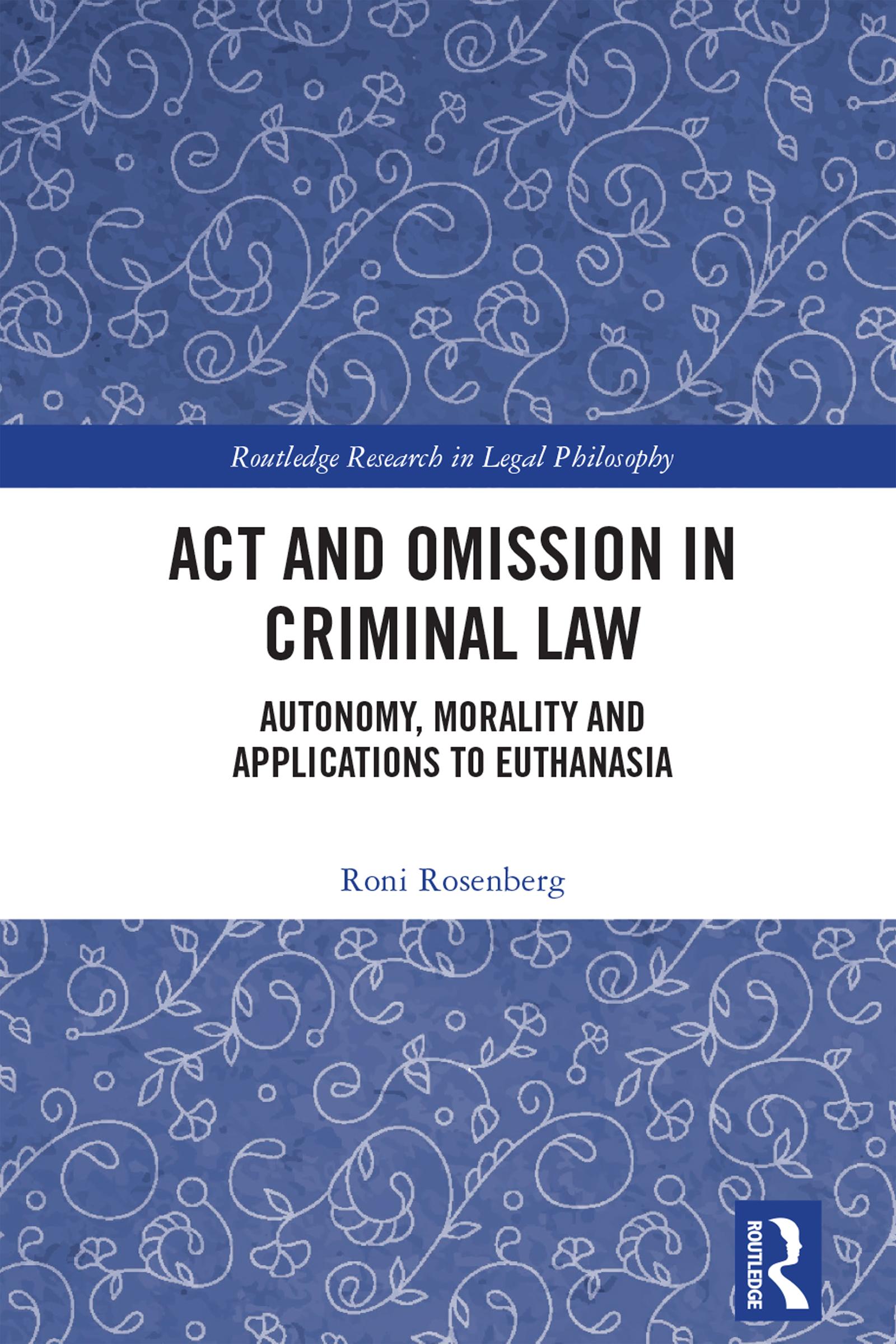
This book offers an innovative perspective on the critical distinction between acts and omissions in criminal law, a distinction that runs like a defining thread through all types of criminal offenses.
While any act that positively causes a prohibited harm is sufficient for a conviction, an omission that causes the very same harm warrants a conviction only when there is a legal duty to act. This fundamental distinction between acts and omissions is not just relevant to criminal law, but it is also deeply rooted in our moral thinking. Thus, it is commonly argued that the difference between acts and omissions is also applicable to the intuitive moral distinction between active euthanasia, forbidden in most countries, and passive euthanasia, permitted in many countries under certain circumstances. Hence, the significance of this book is threefold: First, it offers a comprehensive, coherent, and systematic discussion of the intersections between the philosophical-moral and the legal-criminal aspects of this fundamental topic. Second, it offers a novel rationale for the distinction between acts and omissions, based on the principle of autonomy. Finally, it demonstrates the influences of the theoretical discussion, on the most significant practical questions.
This book will be of interest to researchers, academics and policy-makers working in the areas of criminal law, moral philosophy, and bioethics.
Zahle einfach mit Karte, Klarna, Apple Pay oder Google Pay. Nicht zufrieden? Du hast immer ein 14-tägiges Widerrufsrecht. Lies mehr in unseren AGB. Hast du Fragen, schreib uns eine E-Mail an hello@memmo.org.
Memmo macht das Lernen einfacher – wo auch immer du bist. Bei uns findest du deine Kursbücher und smarte Lerntools an einem Ort: Zusammenfassungen, Quizzes, Podcasts und Lernkarten. Und Ted, dein Lernbuddy, beantwortet alles, was du wissen möchtest. Über 50.000 Studierende lernen bereits hier – gemacht, damit du schneller lernst und weniger Stress hast.