
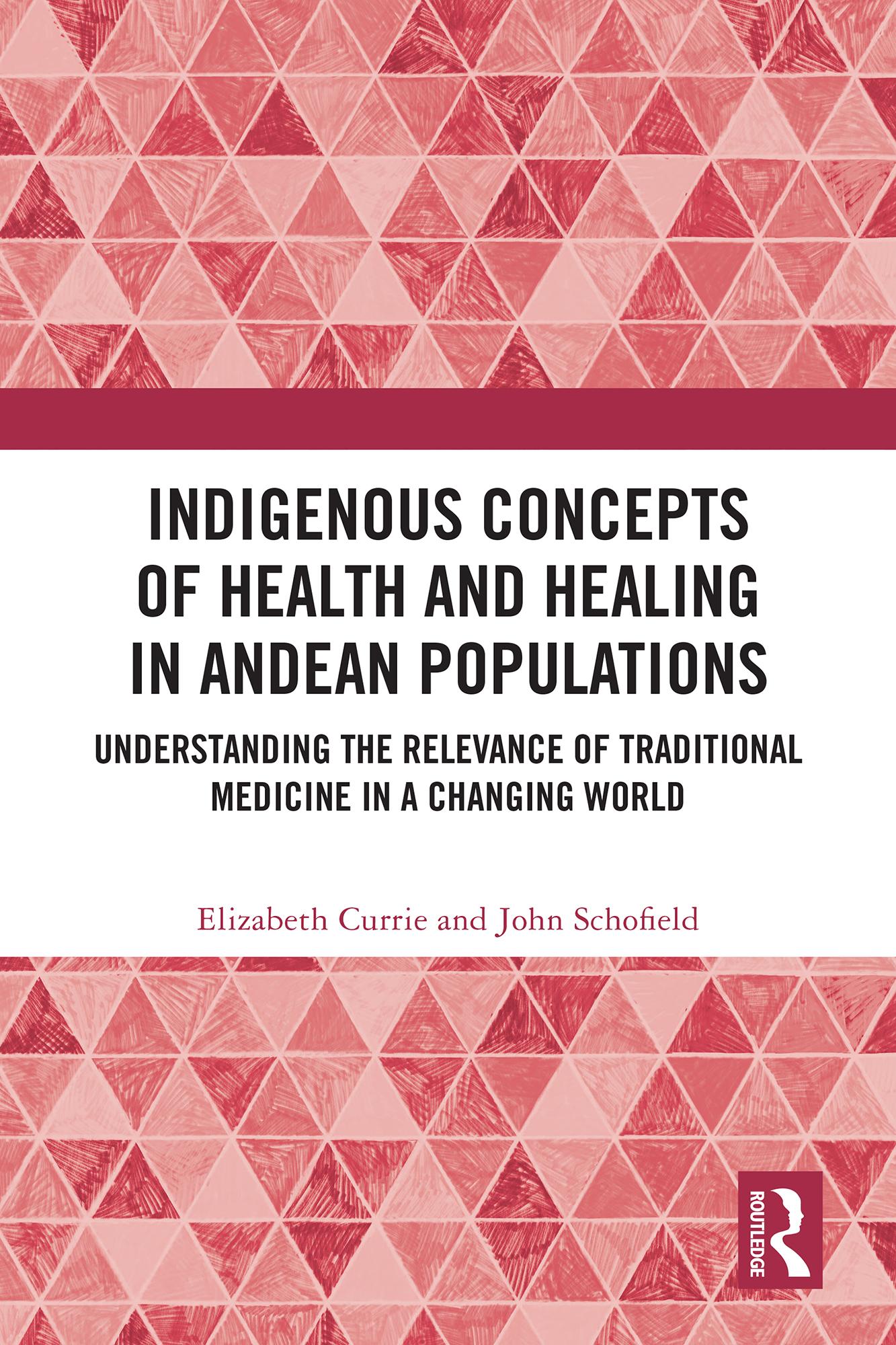
This book uses archaeology and ethnohistory to explore the evidence for the survival of ancestral beliefs and practices related to health and healing in Indigenous Andean communities.
The authors argue that through determining the nature of the survival of beliefs around health and healing, important insights are gained into how people develop adaptive strategies for survival in a way that allows a continuity of identity and integrity. The book works through various stages of research to arrive at its conclusions. Firstly, through archaeology and ethnohistory, it establishes a ‘baseline’ of key ancestral (pre-European) Indigenous Andean beliefs related to health, illness and healing. It then proceeds to review the evidence for the survival of these ancestral beliefs and practices related to Indigenous pre-European Andean epistemologies and ontologies. Analysing the results of the first two sections, the final part reflects on the narratives around ancestral beliefs and practices and how they influence lived experience in the contemporary world. In essence, this book deals with the question 'How do people manage change?', a universal question relevant to humanity at any time, and stresses the need to recognise the significance of cultural diversity, intangible heritage and plurality.
This interdisciplinary study is for researchers in ethnohistory, anthropology, medical anthropology, archaeology, history, heritage and Indigenous studies.
Zahle einfach mit Karte, Klarna, Apple Pay oder Google Pay. Nicht zufrieden? Du hast immer ein 14-tägiges Widerrufsrecht. Lies mehr in unseren AGB. Hast du Fragen, schreib uns eine E-Mail an hello@memmo.org.
Memmo macht das Lernen einfacher – wo auch immer du bist. Bei uns findest du deine Kursbücher und smarte Lerntools an einem Ort: Zusammenfassungen, Quizzes, Podcasts und Lernkarten. Und Ted, dein Lernbuddy, beantwortet alles, was du wissen möchtest. Über 50.000 Studierende lernen bereits hier – gemacht, damit du schneller lernst und weniger Stress hast.