
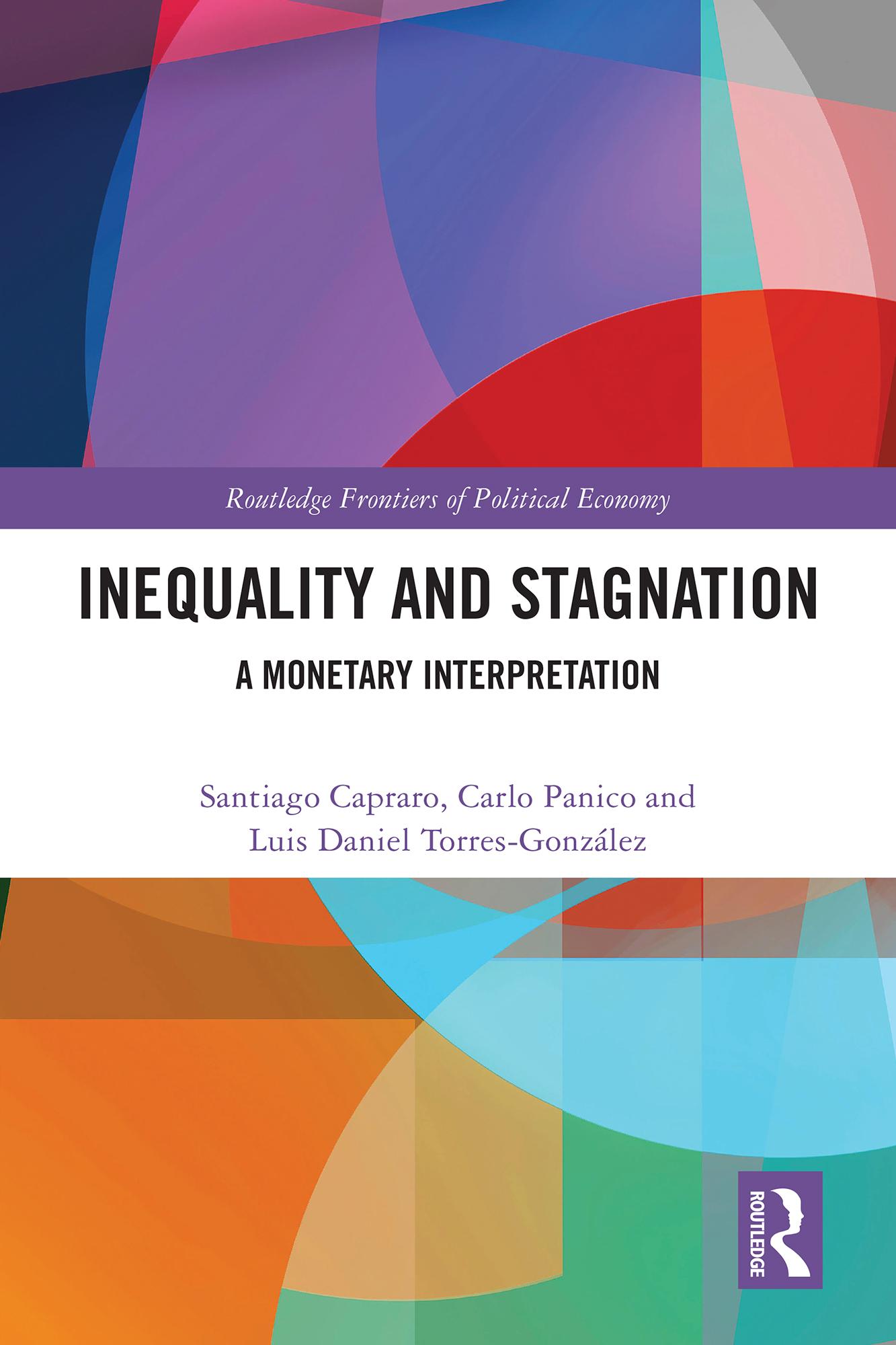
The book examines how the outgrowth of the financial industry has contributed to the recent tendencies towards inequality and stagnation. It proposes a monetary interpretation of these events using a Classical–Keynesian theoretical approach derived from the work of Keynes and Sraffa. The approach moves from the distributive conflicts among economic and social groups, presuming that they influence the legislation shaping the organisation of the markets and the policy of the authorities. It argues that the degrees of liquidity of assets, which reflect the individual perceptions of their future prices, ultimately depend on the organisation of the markets and policy decisions.
The development of his work persuaded Keynes that it was necessary to revolutionise the scientific foundations of economic discipline to effectively interpret events and recommend policies. He consequently introduced in 1932 a monetary theory of production. Following these lines, Sraffa proposed in Production of Commodities to take the rate of interest as an independent variable in the theory of distribution.
Using the Classical–Keynesian approach, the book shows how the changes in legislation and policies since the abandonment of the Bretton Woods agreements have caused the outgrowth of finance and how these alterations have raised financial instability. It identifies various competitive mechanisms through which financial events can affect income distribution and growth, describing how they have triggered the recent tendencies towards inequality and stagnation.
This book is essential reading for researchers studying the interactions among financial markets, distribution, and growth.
Zahle einfach mit Karte, Klarna, Apple Pay oder Google Pay. Nicht zufrieden? Du hast immer ein 14-tägiges Widerrufsrecht. Lies mehr in unseren AGB. Hast du Fragen, schreib uns eine E-Mail an hello@memmo.org.
Memmo macht das Lernen einfacher – wo auch immer du bist. Bei uns findest du deine Kursbücher und smarte Lerntools an einem Ort: Zusammenfassungen, Quizzes, Podcasts und Lernkarten. Und Ted, dein Lernbuddy, beantwortet alles, was du wissen möchtest. Über 50.000 Studierende lernen bereits hier – gemacht, damit du schneller lernst und weniger Stress hast.