
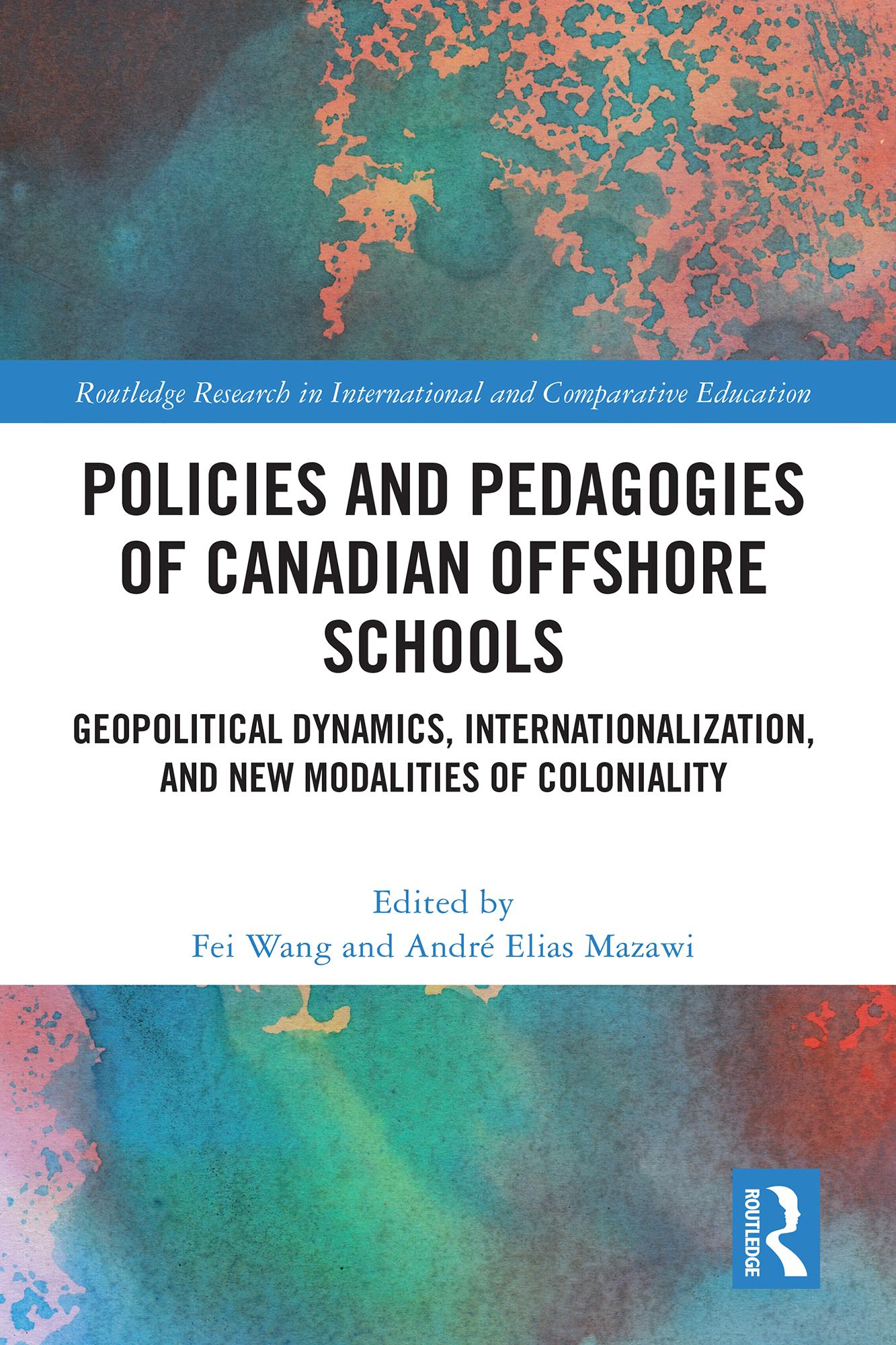
This book critically examines the international, geopolitical, policy, institutional, and curricular challenges facing Canadian offshore school programs. Bringing together scholars and practitioners concerned with addressing the pedagogical, organizational, curriculum, and policy aspects of this transnational mode of schooling, it represents a ground-breaking exploration of K-12 offshore schools within the wider contexts of global geopolitics and forms of soft power.
The book examines the vulnerability that arises from having to manoeuvre political, social, geopolitical, and economic policy simultaneously in both the host and home-licencing countries. It delves into conflicts within the context of neoliberal economic agendas, neocolonial and geopolitical interests, and social class reproduction within host countries. The book is the first scholarly space that questions how international educational initiatives are affected by emerging global threats, such as the recent Covid pandemic. Additionally, it unpacks the question of citizenship and its intersections with social class, immigration, and sociocultural dynamics. It explores how these intersections forge new paths not only to mobility but also to new configurations of power and new spaces of politics and identity. With a range of reflexive, empirical, and theoretical contributions that cover every aspect of offshore schools, the book reassesses the trope of globalization dominated by Eurocentric perspectives. It decompartmentalizes diverse perspectives and insights on the internationalisation of schooling opportunities, and provides an overview of the challenges and possibilities open to offshore schools in different cultural contexts, making it the first comprehensive body of research on this type of schooling.
This book will be of great value to researchers, faculty, scholars, and postgraduate students working across international and comparative education. It will be particularly useful to those interested in the intersections betweeneducation and geopolitically situated forms of soft power.
Zahle einfach mit Karte, Klarna, Apple Pay oder Google Pay. Nicht zufrieden? Du hast immer ein 14-tägiges Widerrufsrecht. Lies mehr in unseren AGB. Hast du Fragen, schreib uns eine E-Mail an hello@memmo.org.
Memmo macht das Lernen einfacher – wo auch immer du bist. Bei uns findest du deine Kursbücher und smarte Lerntools an einem Ort: Zusammenfassungen, Quizzes, Podcasts und Lernkarten. Und Ted, dein Lernbuddy, beantwortet alles, was du wissen möchtest. Über 50.000 Studierende lernen bereits hier – gemacht, damit du schneller lernst und weniger Stress hast.