
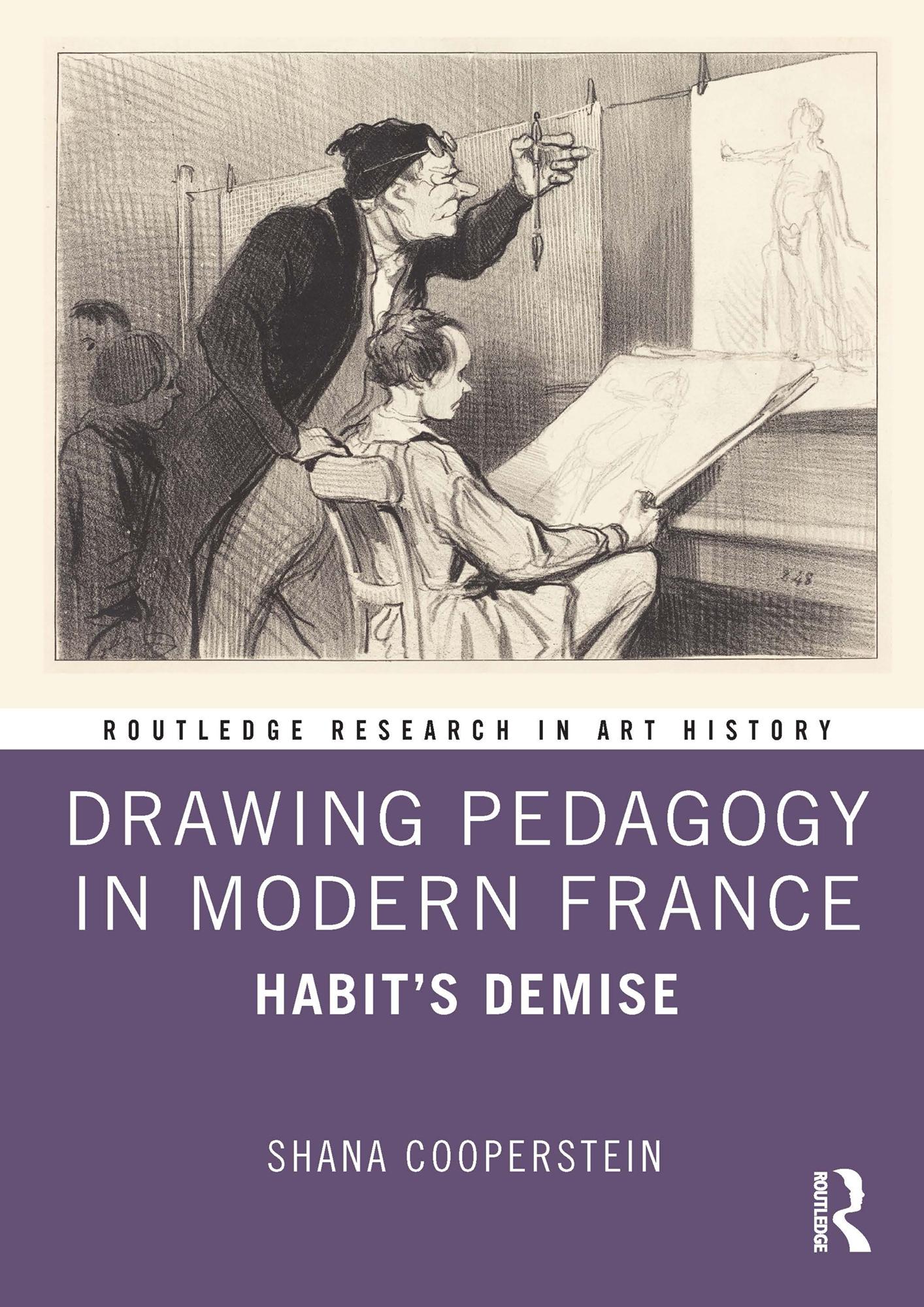
This study uncovers the plethora of new, innovative drawing strategies that shaped French visual arts at the height of France’s imperial power.
Horace Lecoq de Boisbaudran, Eugene Guillaume, and Félix Ravaisson, among others, designed new drawing procedures that responded to leading concerns of modern art and the exigencies of modern life: landscape painting and picturesque tourism, industrial design, and the use of drawing as vehicles of knowledge production and in social control. From graphic regimes that were “purement mathématique” and demanded the practice of orthographic projection, to those that privileged the articulation of proportions and the cultivation of an internal measuring system, fin de siècle educators in the fine and applied arts radically transformed drawing strategies and its history. The shifting parameters of drawing pedagogy and practice unfold onto a wider set of theoretical concerns central to humanistic inquiry and art-making today: the philosophy and cultural history of habit-based learning, the relation between industrialization and drawing, and the relation between art and mathematics.
The book will be of interest to scholars working in art history, French studies, history of art education, history of philosophy, and history of science.
Zahle einfach mit Karte, Klarna, Apple Pay oder Google Pay. Nicht zufrieden? Du hast immer ein 14-tägiges Widerrufsrecht. Lies mehr in unseren AGB. Hast du Fragen, schreib uns eine E-Mail an hello@memmo.org.
Memmo macht das Lernen einfacher – wo auch immer du bist. Bei uns findest du deine Kursbücher und smarte Lerntools an einem Ort: Zusammenfassungen, Quizzes, Podcasts und Lernkarten. Und Ted, dein Lernbuddy, beantwortet alles, was du wissen möchtest. Über 50.000 Studierende lernen bereits hier – gemacht, damit du schneller lernst und weniger Stress hast.