
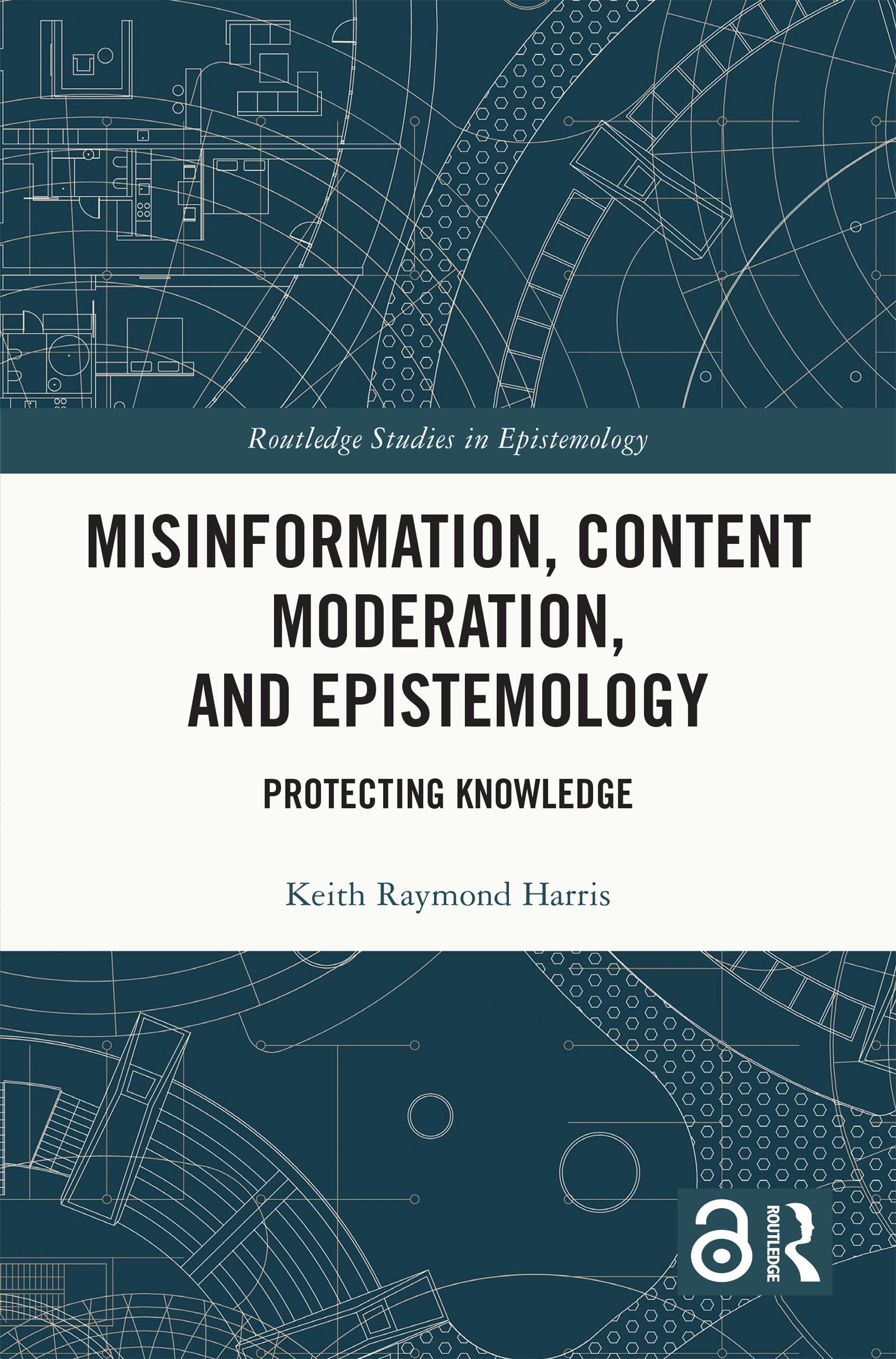
This book argues that misinformation poses a multifaceted threat to knowledge, while arguing that some forms of content moderation risk exacerbating these threats. It proposes alternative forms of content moderation that aim to address this complexity while enhancing human epistemic agency.
The proliferation of fake news, false conspiracy theories, and other forms of misinformation on the internet and especially social media is widely recognized as a threat to individual knowledge and, consequently, to collective deliberation and democracy itself. This book argues that misinformation presents a three-pronged threat to knowledge. While researchers often focus on the role of misinformation in causing false beliefs, this deceptive potential of misinformation exists alongside the potential to suppress trust and to distort the perception of evidence. Recognizing the multifaceted nature of this threat is essential to the development of effective measures to mitigate the harms associated with misinformation. The book weaves together work in analytic epistemology with emerging empirical work in other disciplines to offer novel insights into the threats posed by misinformation. Additionally, it breaks new ground by systematically assessing different forms of content moderation from the perspective of epistemology.
Misinformation, Content Moderation, and Epistemology will appeal to philosophers working in applied and social epistemology, as well as scholars and advanced students in disciplines such as communication studies, political science, and social psychology who are researching misinformation.
The Introduction and Chapter 1 of this book are freely available as downloadable Open Access PDFs at http://www.taylorfrancis.com under a Creative Commons Attribution-Non Commercial-No Derivatives (CC-BY- NC- ND) 4.0 license.
Zahle einfach mit Karte, Klarna, Apple Pay oder Google Pay. Nicht zufrieden? Du hast immer ein 14-tägiges Widerrufsrecht. Lies mehr in unseren AGB. Hast du Fragen, schreib uns eine E-Mail an hello@memmo.org.
Memmo macht das Lernen einfacher – wo auch immer du bist. Bei uns findest du deine Kursbücher und smarte Lerntools an einem Ort: Zusammenfassungen, Quizzes, Podcasts und Lernkarten. Und Ted, dein Lernbuddy, beantwortet alles, was du wissen möchtest. Über 50.000 Studierende lernen bereits hier – gemacht, damit du schneller lernst und weniger Stress hast.