
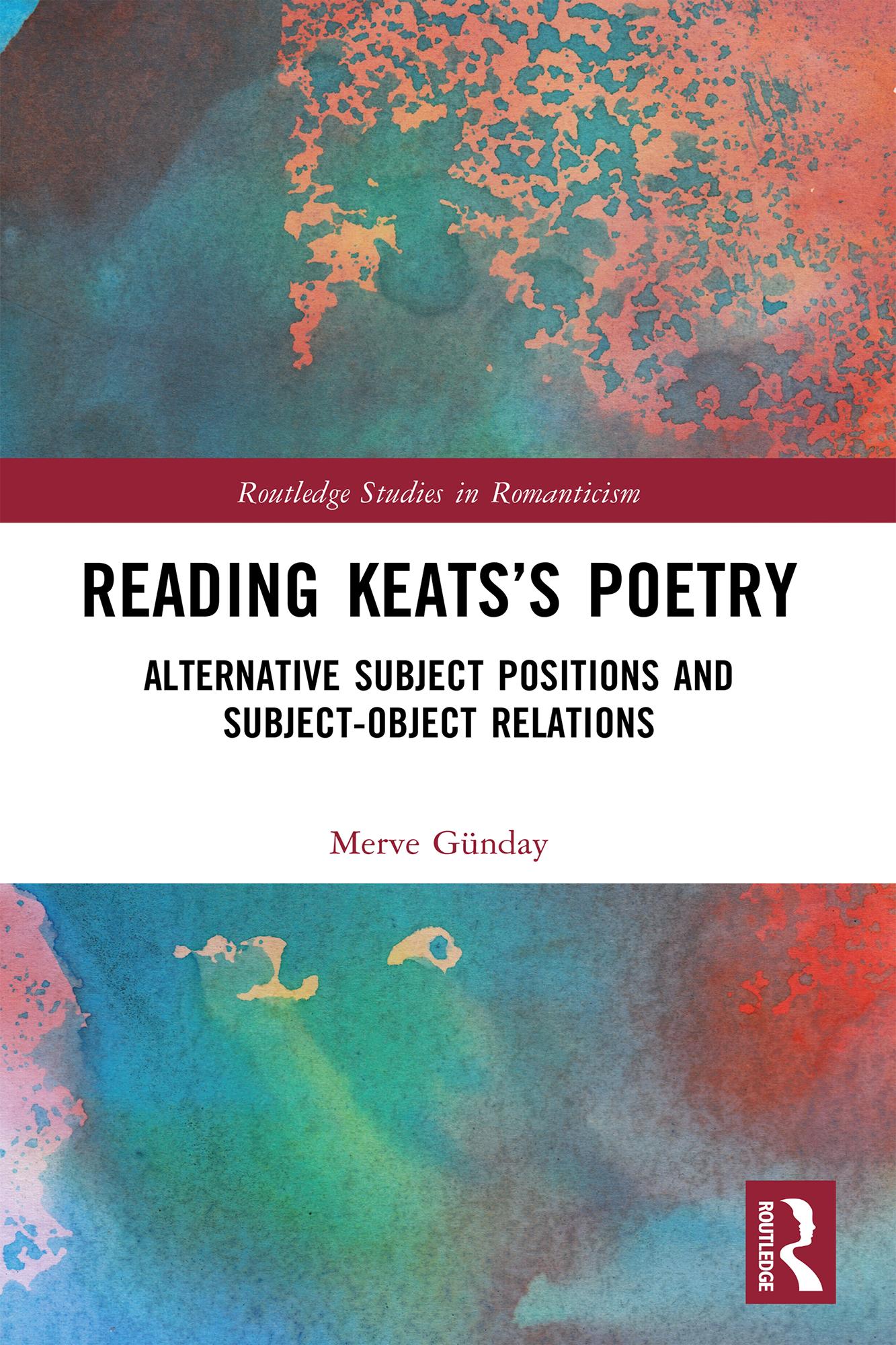
This book claims that Keats’s poetry is a reaction against the discourse of modernity which traumatized the human subject by creating a divide between human and nature, subject and object. It argues that by transcending this divide and acknowledging the agency of both subject and object, Keats makes an ideological statement and offers a new site of existence or relationality to readers. This site also implies a response to the accusations that the Romantics were not interested in the realities of their time. What Keats does is to give an aestheticized response to the hardcore facts of his time. Departing from previous studies due to its emphasis on subjectivity and relationality, the book discusses Keats with regard to post/non-anthropocentric, alternative subject positions and subject-object relations in his “Ode to a Nightingale,” “In drear nighted December,” “Isabella; or, The Pot of Basil,” “Lamia,” “La Belle Dame sans Mercy,” and “Ode on a Grecian Urn.” Drawing on Lacanian and Braidottian epistemologies in its discussion of the intricacy between the imaginary and the symbolic, the irruption of the psychotic into the symbolic, and the agency of the object on the subject in Keats’s poetry, the book suggests that the inner dynamics of both the subject and the object acquire agency, which shatters Oneness and totality assumed in the Cartesian self.
Zahle einfach mit Karte, Klarna, Apple Pay oder Google Pay. Nicht zufrieden? Du hast immer ein 14-tägiges Widerrufsrecht. Lies mehr in unseren AGB. Hast du Fragen, schreib uns eine E-Mail an hello@memmo.org.
Memmo macht das Lernen einfacher – wo auch immer du bist. Bei uns findest du deine Kursbücher und smarte Lerntools an einem Ort: Zusammenfassungen, Quizzes, Podcasts und Lernkarten. Und Ted, dein Lernbuddy, beantwortet alles, was du wissen möchtest. Über 50.000 Studierende lernen bereits hier – gemacht, damit du schneller lernst und weniger Stress hast.