
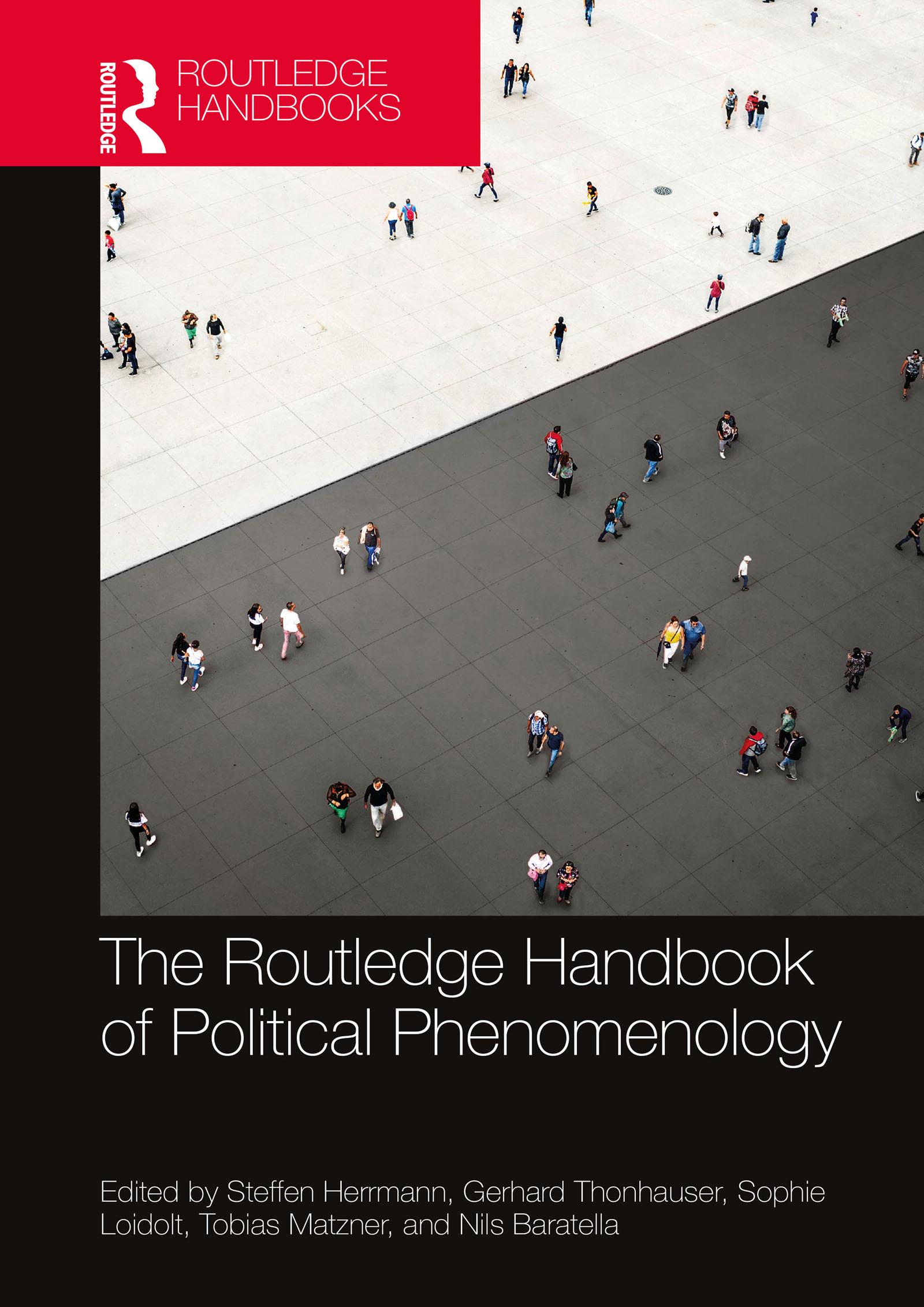
Phenomenology has primarily been concerned with conceptual questions about knowledge and ontology. However, in recent years, the rise of interest and research in applied phenomenology has seen the study of political phenomenology move to a central place in the study of phenomenology generally.
The Routledge Handbook of Political Phenomenology is the first major collection on this important topic. Comprising 35 chapters by an international team of expert contributors, the handbook is organized into six clear parts, each with its own introduction by the editors:
- Founders of Phenomenology
- Existentialist Phenomenology
- Phenomenology of the Social and Political World
- Phenomenology of Alterity
- Phenomenology in Debate
- Contemporary Developments.
Full attention is given to central figures in the phenomenological movement, including Husserl, Heidegger, Sartre, Merleau-Ponty, and Levinas, as well as those whose contribution to political phenomenology is more distinctive, such as Arendt, De Beauvoir, and Fanon. Also included are chapters on gender, race and intersectionality, disability, and technology.
Ideal for those studying phenomenology, continental philosophy, and political theory, The Routledge Handbook of Political Phenomenology bridges an important gap between a major philosophical movement and contemporary political issues and concepts.
Zahle einfach mit Karte, Klarna, Apple Pay oder Google Pay. Nicht zufrieden? Du hast immer ein 14-tägiges Widerrufsrecht. Lies mehr in unseren AGB. Hast du Fragen, schreib uns eine E-Mail an hello@memmo.org.
Memmo macht das Lernen einfacher – wo auch immer du bist. Bei uns findest du deine Kursbücher und smarte Lerntools an einem Ort: Zusammenfassungen, Quizzes, Podcasts und Lernkarten. Und Ted, dein Lernbuddy, beantwortet alles, was du wissen möchtest. Über 50.000 Studierende lernen bereits hier – gemacht, damit du schneller lernst und weniger Stress hast.