
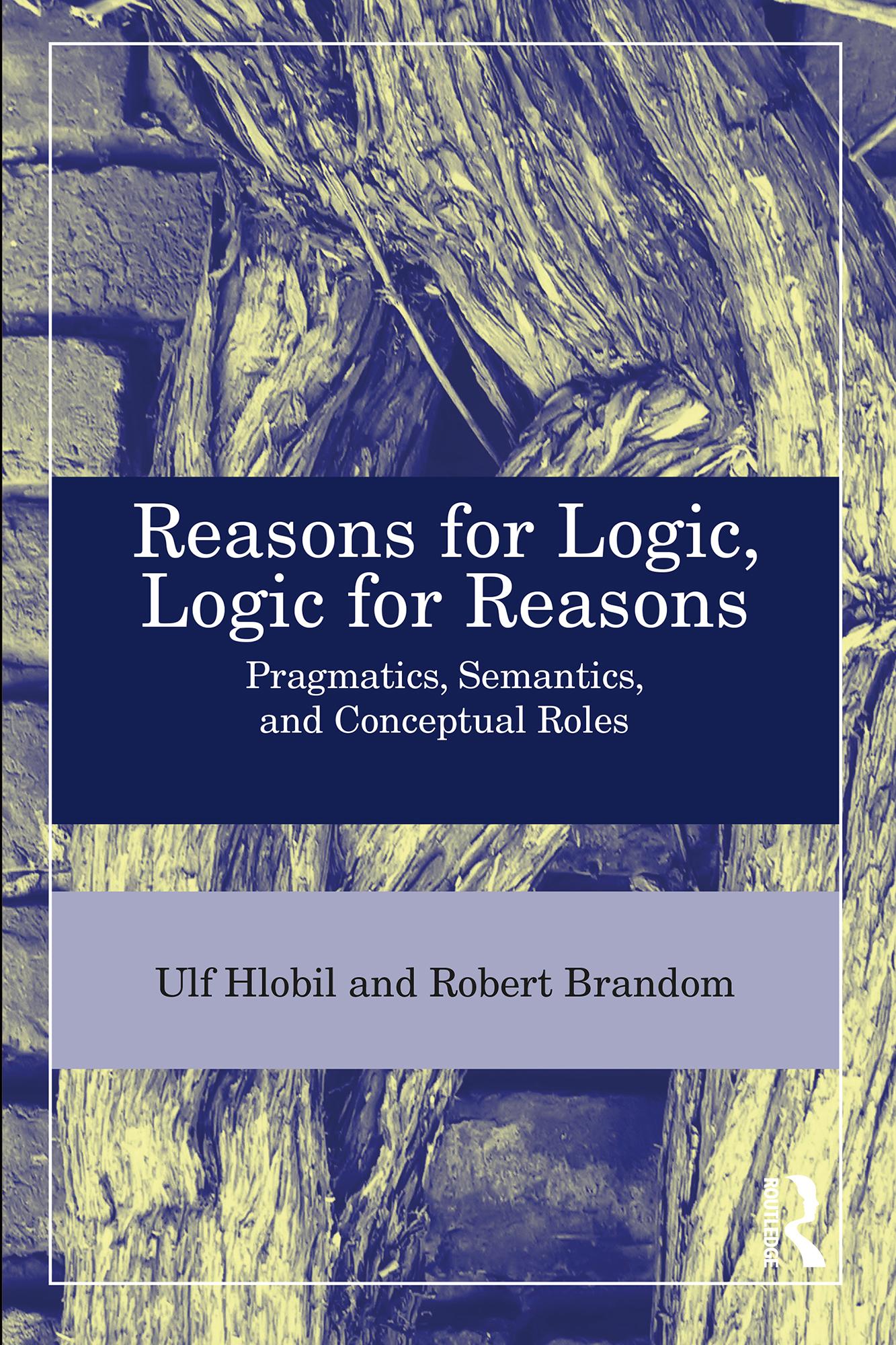
Reasons for Logic, Logic for Reasons presents a philosophical conception of logic—“logical expressivism”—according to which the role of logic is to make explicit reason relations, which are often neither monotonic nor transitive. This conception of logic reveals new and enlightening perspectives on inferential roles, sequent calculi, representation, truthmakers, and many extant logical theories.
The book shows how we can understand different metavocabularies as making explicit the same reason relations, namely normative-pragmatic, alethic-representational, logical, and “implication-space” metavocabularies. This includes a philosophical account of the pragmatic role of reason relations, treatments of nonmonotonic and nontransitive consequence relations in sequent calculi, a correspondence between these sequent calculi and variants of truthmaker theory, and the introduction of a novel kind of formal semantics that interprets sentences by assigning inferential roles to them. The book thus offers logical expressivists and semantic inferentialists new ways to understand logic, content, inferential roles, representation, and reason relations.
This book will appeal to researchers and graduate students who are interested in the philosophy of logic, in reasons and reasoning, in theories of meaning and content, or in nonmonotonic and nontransitive logics.
Zahle einfach mit Karte, Klarna, Apple Pay oder Google Pay. Nicht zufrieden? Du hast immer ein 14-tägiges Widerrufsrecht. Lies mehr in unseren AGB. Hast du Fragen, schreib uns eine E-Mail an hello@memmo.org.
Memmo macht das Lernen einfacher – wo auch immer du bist. Bei uns findest du deine Kursbücher und smarte Lerntools an einem Ort: Zusammenfassungen, Quizzes, Podcasts und Lernkarten. Und Ted, dein Lernbuddy, beantwortet alles, was du wissen möchtest. Über 50.000 Studierende lernen bereits hier – gemacht, damit du schneller lernst und weniger Stress hast.