
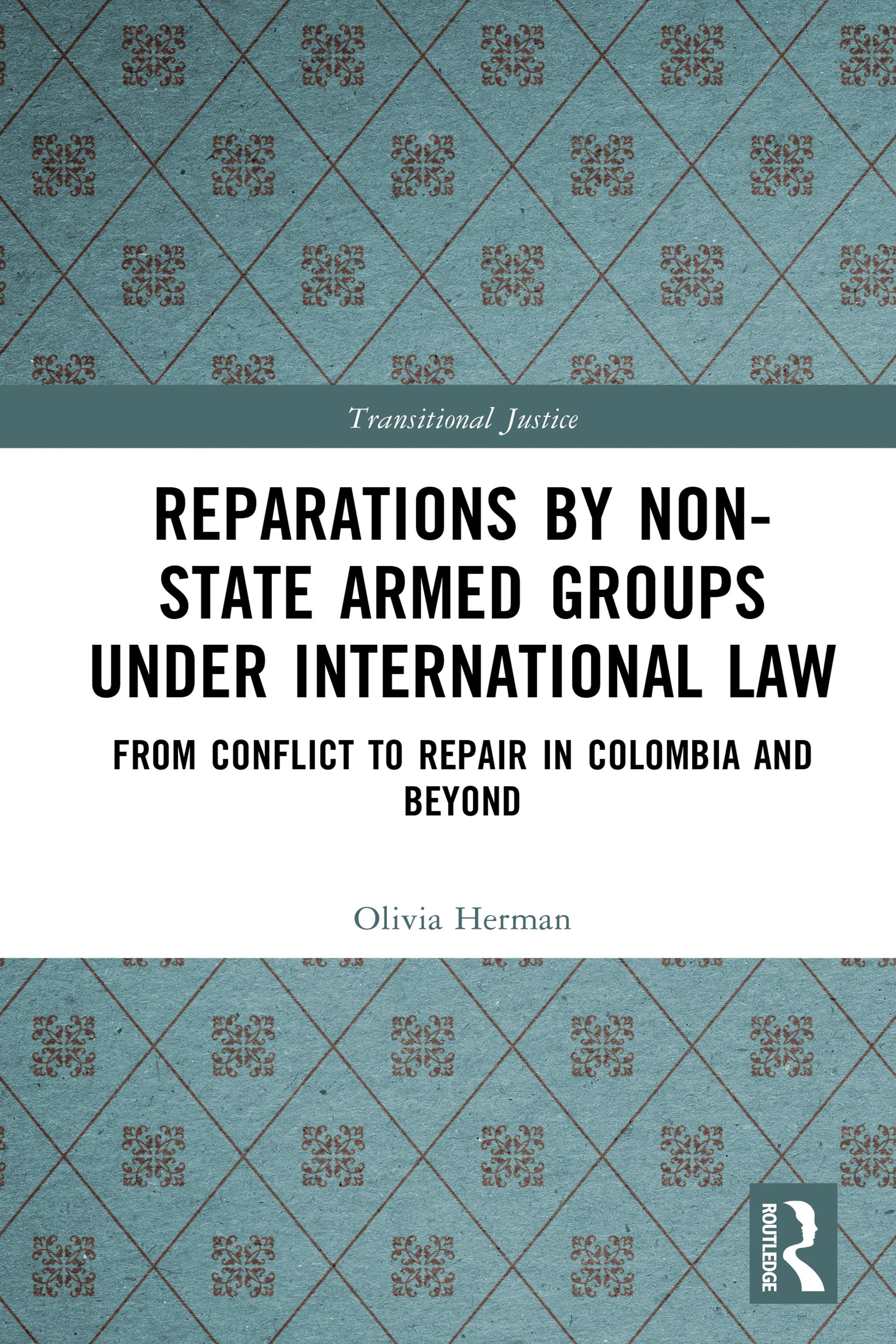
This book examines whether and how non-state armed groups might be required to provide reparations for the harm caused by their violations of international law committed during situations of non-international armed conflict.
Most of today’s armed conflicts are waged between states and non-state armed groups or between such groups. Societies ravaged by these conflicts endure extensive harm resulting from violations of international humanitarian law and international human rights law. This reality prompts a series of pressing questions. Akin to states, should non-state armed groups be held responsible for making reparation when violating international law? And if so, what measures can these groups take to repair the harm they have caused? The book begins by clarifying if there exists, in contemporary international law, a duty for armed groups to provide reparation. It considers whether non-state armed groups have primary international obligations as distinct duty bearers, and whether reparation can be one of the legal consequences when violating these obligations. Subsequently, the book sheds new light on how non-state armed groups’ duty of reparation can be operationalised in international law. This involves elucidating both the conceptualisation and practical application of this duty. Combining this legal analysis with practical perspectives, the book unveils important insights for international law, drawn from an in-depth analysis of Colombia’s experiences with reparations by armed groups in the context of transitional justice.
This book will be of interest to scholars and practitioners working in the fields of international law related to armed conflict, accountability and redress, and transitional justice more broadly.
Zahle einfach mit Karte, Klarna, Apple Pay oder Google Pay. Nicht zufrieden? Du hast immer ein 14-tägiges Widerrufsrecht. Lies mehr in unseren AGB. Hast du Fragen, schreib uns eine E-Mail an hello@memmo.org.
Memmo macht das Lernen einfacher – wo auch immer du bist. Bei uns findest du deine Kursbücher und smarte Lerntools an einem Ort: Zusammenfassungen, Quizzes, Podcasts und Lernkarten. Und Ted, dein Lernbuddy, beantwortet alles, was du wissen möchtest. Über 50.000 Studierende lernen bereits hier – gemacht, damit du schneller lernst und weniger Stress hast.