
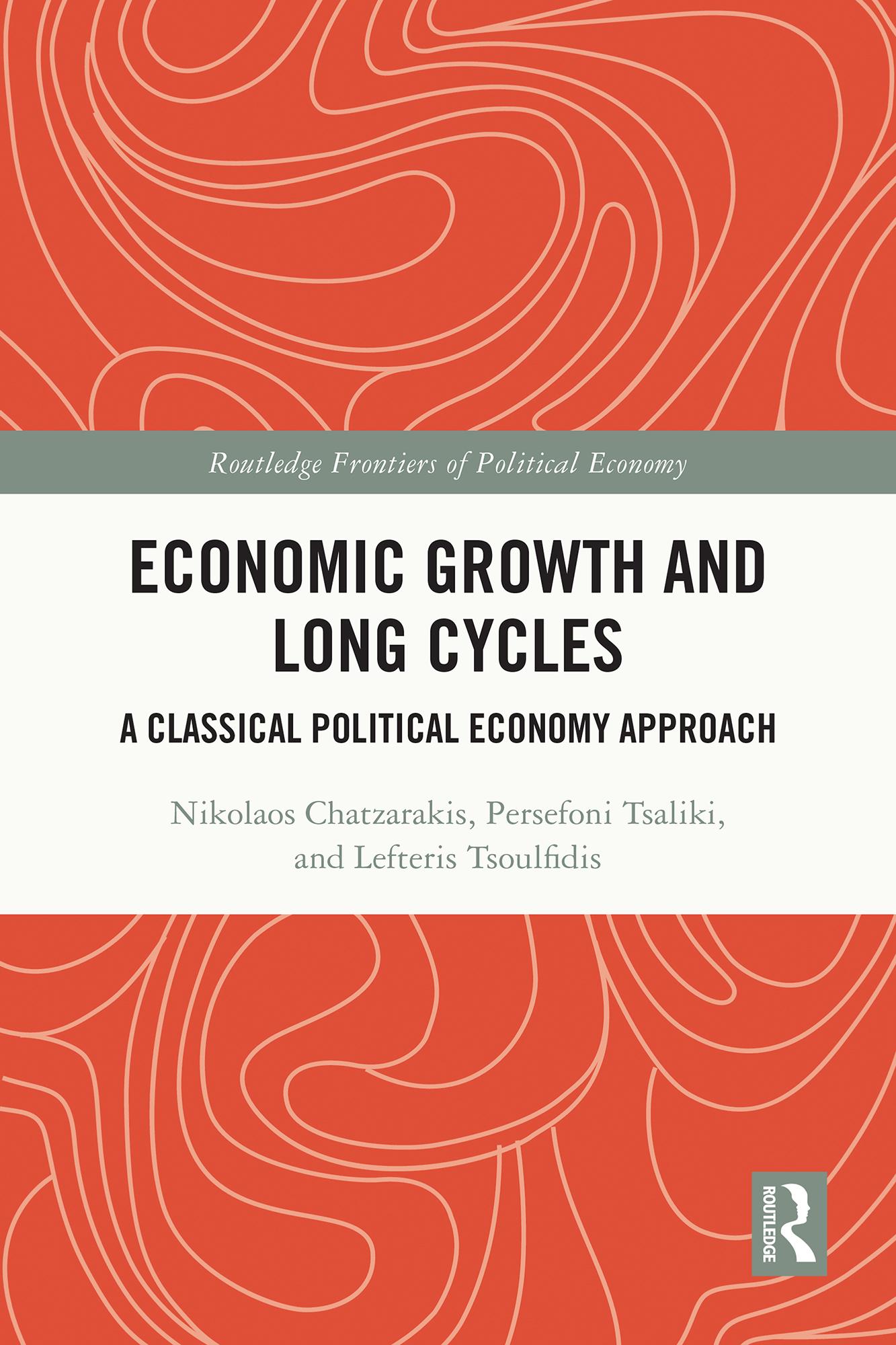
Contemporary capitalism is characterized by periods of vigorous economic growth and periods of slow or even negative growth. This book draws on the classical political economy approach to consider both economic cycles and economic growth and draw conclusions about the inherent instability of the modern economy. The book shows that the work of the old classical economists (Smith and Ricardo) and Marx is theoretically sound and capable of providing answers to both growth and cycles. It also demonstrates the potential and natural integration of growth and cycles in a single model. The microeconomic foundation of this model is the labor theory of value, which continues with the General Law of Capital Accumulation, the Law of the Falling Rate of Profit, and the movement of the Industrial Reserve Army of Labour. Finally, a dynamic model of growth-cum-cycles is constructed consisting of the evolution and interaction of five key variables, namely, the rate of profit, the propensity to invest in fixed capital, technological change, the reserve army of labour, and the rate of capital devaluation. The analysis demonstrates that economic growth and cycles are not disconnected from each other, as they have been treated in the literature, but rather interdependent aspects of the same evolutionary process of a capitalist economy. This book will interest readers in the history of economic thought, economic growth and development, macroeconomics, and political economy.
Zahle einfach mit Karte, Klarna, Apple Pay oder Google Pay. Nicht zufrieden? Du hast immer ein 14-tägiges Widerrufsrecht. Lies mehr in unseren AGB. Hast du Fragen, schreib uns eine E-Mail an hello@memmo.org.
Memmo macht das Lernen einfacher – wo auch immer du bist. Bei uns findest du deine Kursbücher und smarte Lerntools an einem Ort: Zusammenfassungen, Quizzes, Podcasts und Lernkarten. Und Ted, dein Lernbuddy, beantwortet alles, was du wissen möchtest. Über 50.000 Studierende lernen bereits hier – gemacht, damit du schneller lernst und weniger Stress hast.