
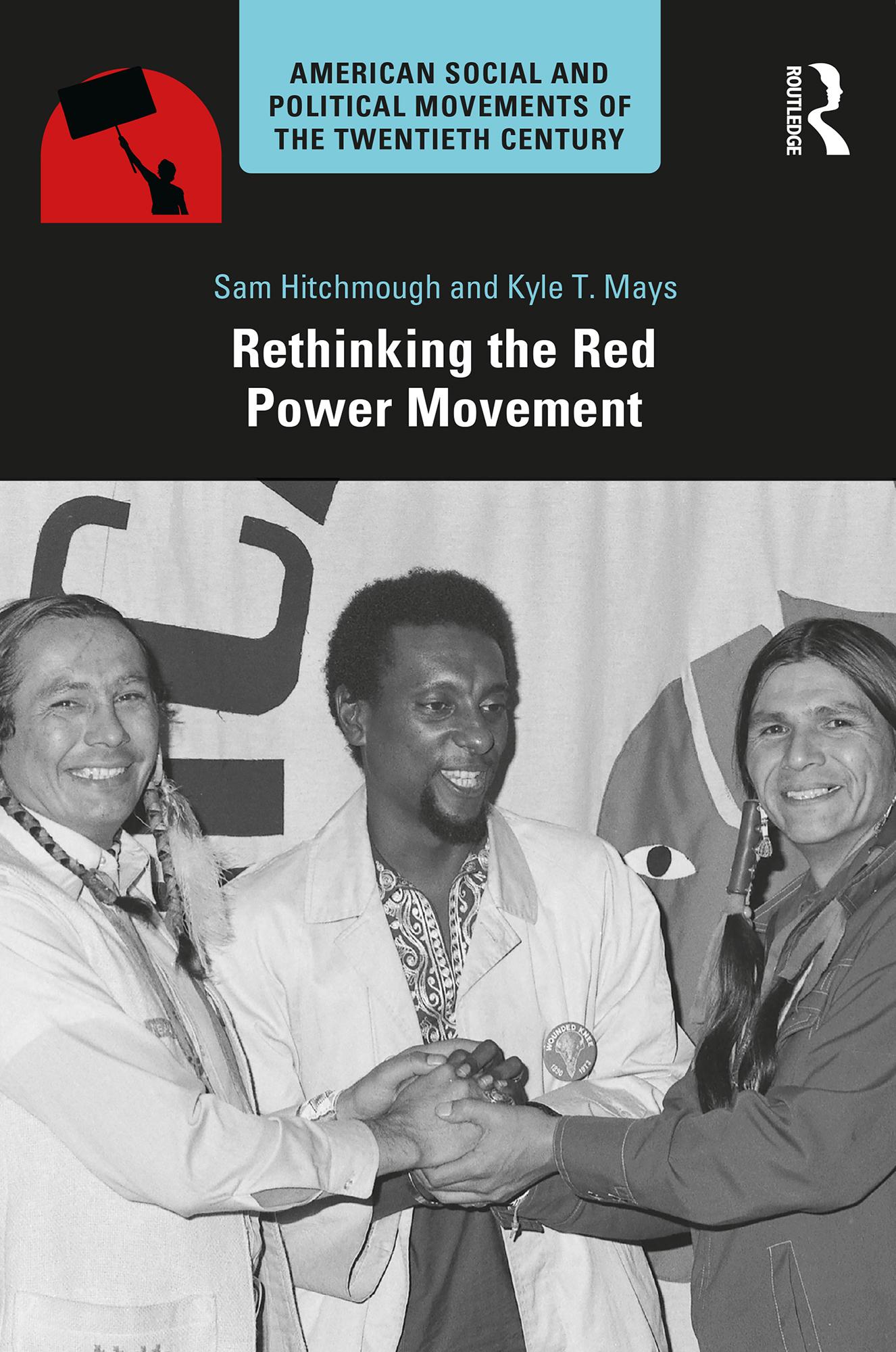
Rethinking the Red Power Movement examines Red Power ideology with a focus on its many forms of solidarity with African Americans, the role of gender in shaping the movement, its international expansion, and its current meaning in contemporary activism.
The Red Power Movement is often considered the apex of Indigenous activism in the twentieth century. While diverse, the movement is typically told through four actions. Beginning with the occupation of Alcatraz in 1969, followed by the Trail of Broken Treaties in 1972, Wounded Knee in 1973, then culminating with the Longest Walk in 1978, there is a clear jumpstart, middle, and end to the Red Power Movement. Through a chronological approach, this study makes the case that Red Power never died—and neither did Indigenous activism. Instead, it shows how Indigenous peoples found many ways to push forward Indigenous sovereignty and continue to call on the United States to value Indigenous possibilities for justice, freedom, and power.
This book is useful for students and scholars interested in twentieth century America, social movements, and the history of Indigenous activism.
Zahle einfach mit Karte, Klarna, Apple Pay oder Google Pay. Nicht zufrieden? Du hast immer ein 14-tägiges Widerrufsrecht. Lies mehr in unseren AGB. Hast du Fragen, schreib uns eine E-Mail an hello@memmo.org.
Memmo macht das Lernen einfacher – wo auch immer du bist. Bei uns findest du deine Kursbücher und smarte Lerntools an einem Ort: Zusammenfassungen, Quizzes, Podcasts und Lernkarten. Und Ted, dein Lernbuddy, beantwortet alles, was du wissen möchtest. Über 50.000 Studierende lernen bereits hier – gemacht, damit du schneller lernst und weniger Stress hast.