
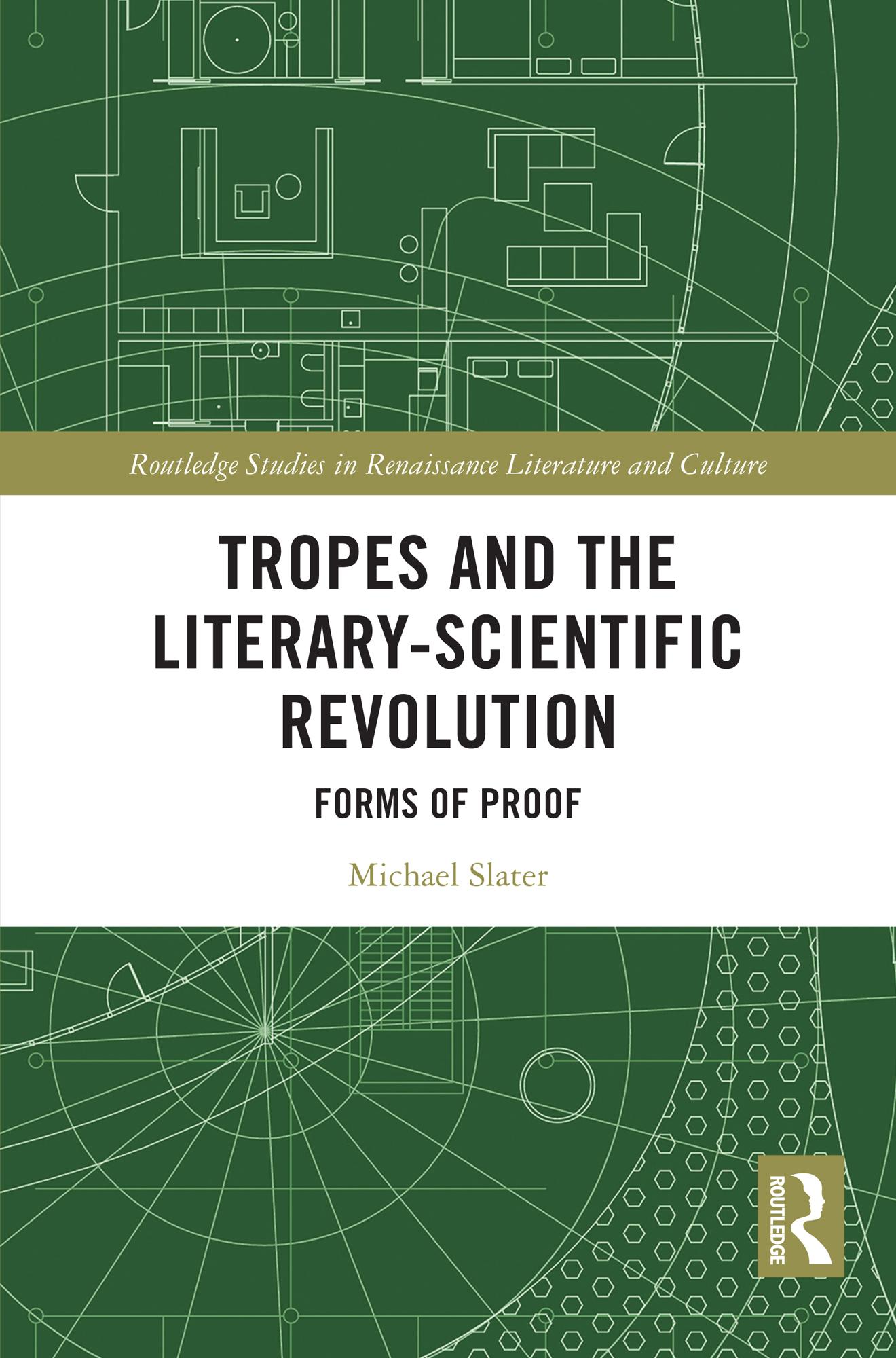
Tropes and the Literary-Scientific Revolution: Forms of Proof argues that the rise of mechanical science in the seventeenth century had a profound impact on both language and literature. To the extent that new ideas about things were accompanied by new attitudes toward words, what we commonly regard as the “scientific revolution” inevitably bore literary dimensions as well. Literary tropes and forms underwent tremendous reassessment in the seventeenth century, and early modern science was shaped just as powerfully by contest over the place of literary figures, from personification and metaphor to anamorphosis and allegory. In their rejection of teleological explanations of natural motion, for instance, early modern philosophers often disputed the value of personification, a figural projection of interiority onto what was becoming increasingly a mechanical world. And allegory—a dominant mode of literature from the late Middle Ages until well into the Renaissance—became “the vice of those times,” as Thomas Rymer described it in 1674. This book shows that its acute devaluation was possible only in conjunction with a distinctively modern physics. Analyzing writings by Sidney, Shakespeare, Bacon, Jonson, Brahe, Kepler, Galileo, Hobbes, Descartes, and more, it asserts that the scientific revolution was a literary phenomenon, just as the literary revolution was also a scientific one.
Zahle einfach mit Karte, Klarna, Apple Pay oder Google Pay. Nicht zufrieden? Du hast immer ein 14-tägiges Widerrufsrecht. Lies mehr in unseren AGB. Hast du Fragen, schreib uns eine E-Mail an hello@memmo.org.
Memmo macht das Lernen einfacher – wo auch immer du bist. Bei uns findest du deine Kursbücher und smarte Lerntools an einem Ort: Zusammenfassungen, Quizzes, Podcasts und Lernkarten. Und Ted, dein Lernbuddy, beantwortet alles, was du wissen möchtest. Über 50.000 Studierende lernen bereits hier – gemacht, damit du schneller lernst und weniger Stress hast.