
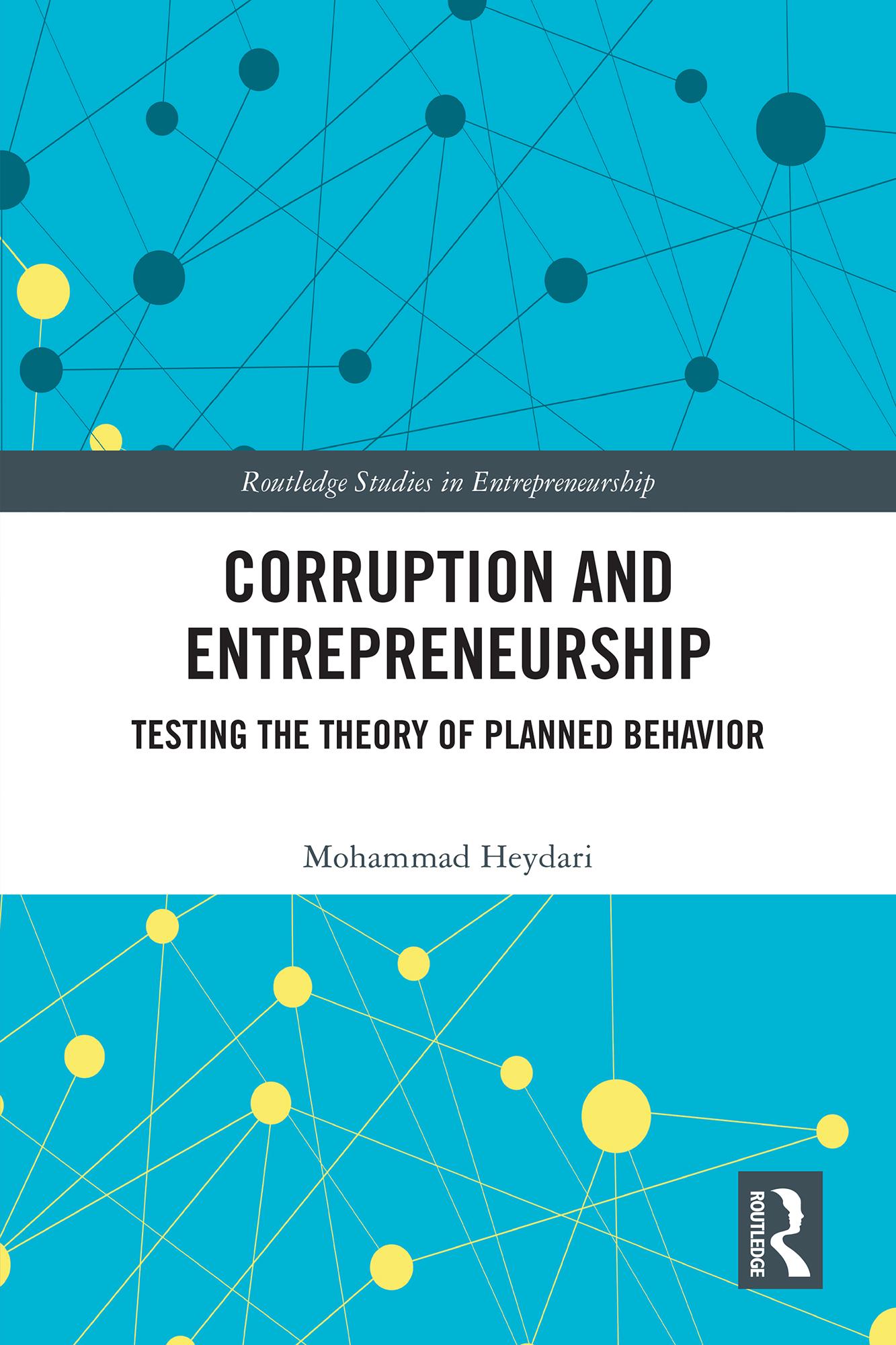
This book examines corruption as a collective behavior problem for entrepreneurs. In particular, it considers Azjen’s theory of planned behavior (TPB) to explain perceived corruption and its effects on entrepreneurship.
Heydari argues that behavioral intentions are shaped by variables such as attitude, subjective norms and perceived behavioral control. He proposes the novel Heydari Behavioral Synthesis Theory (HBST) model and applies it to two case studies to highlight the institutional, individual and societal factors that may inhibit entrepreneurial behavior. He concludes that corruption may persist not just because of difficulties in monitoring and prosecuting, but because it is systemically pervasive and discourages individual countermeasures. He closes by looking at anti-corruption policies and outlining future research directions.
Arguing that widespread corruption may be theoretically mischaracterized in the literature, this book is of interest to policy-makers, researchers and postgraduate students in the fields of management science, industrial and organizational psychology, entrepreneurship and corruption studies.
Zahle einfach mit Karte, Klarna, Apple Pay oder Google Pay. Nicht zufrieden? Du hast immer ein 14-tägiges Widerrufsrecht. Lies mehr in unseren AGB. Hast du Fragen, schreib uns eine E-Mail an hello@memmo.org.
Memmo macht das Lernen einfacher – wo auch immer du bist. Bei uns findest du deine Kursbücher und smarte Lerntools an einem Ort: Zusammenfassungen, Quizzes, Podcasts und Lernkarten. Und Ted, dein Lernbuddy, beantwortet alles, was du wissen möchtest. Über 50.000 Studierende lernen bereits hier – gemacht, damit du schneller lernst und weniger Stress hast.