
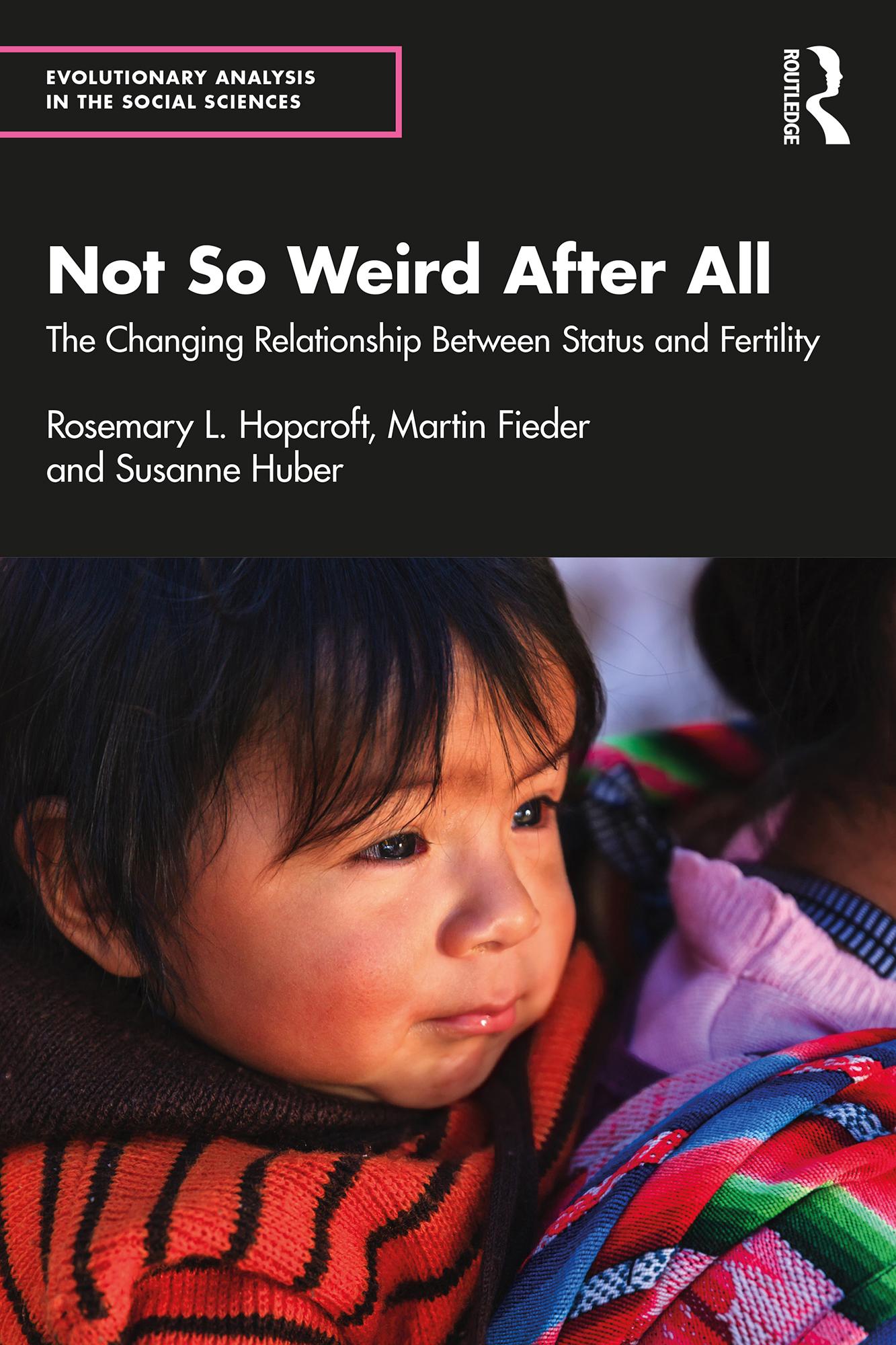
This is the first book to fully examine, from an evolutionary point of view, the association of social status and fertility in human societies before, during, and after the demographic transition. In most nonhuman social species, social status or relative rank in a social group is positively associated with the number of offspring, with high-status individuals typically having more offspring than low-status individuals. However, humans appear to be different. As societies have gotten richer, fertility has dipped to unprecedented lows, with some developed societies now at or below replacement fertility. Within rich societies, women in higher-income families often have fewer children than women in lower-income families. Evolutionary theory suggests that the relationship between social status and fertility is likely to be somewhat different for men and women, so it is important to examine this relationship for men and women separately. When this is done, the positive association between individual social status and fertility is often clear in less-developed, pre-transitional societies, particularly for men. Once the demographic transition begins, it is elite families, particularly the women of elite families, who lead the way in fertility decline. Post-transition, the evidence from a variety of developed societies in Europe, North America and East Asia is that high-status men (particularly men with high personal income) do have more children on average than lower-status men. The reverse is often true of women, although there is evidence that this is changing in Nordic countries. The implications of these observations for evolutionary theory are also discussed. This book will be of interest to students and researchers in the social sciences with an interest in evolutionary sociology, evolutionary anthropology, evolutionary psychology, demography, and fertility.
Zahle einfach mit Karte, Klarna, Apple Pay oder Google Pay. Nicht zufrieden? Du hast immer ein 14-tägiges Widerrufsrecht. Lies mehr in unseren AGB. Hast du Fragen, schreib uns eine E-Mail an hello@memmo.org.
Memmo macht das Lernen einfacher – wo auch immer du bist. Bei uns findest du deine Kursbücher und smarte Lerntools an einem Ort: Zusammenfassungen, Quizzes, Podcasts und Lernkarten. Und Ted, dein Lernbuddy, beantwortet alles, was du wissen möchtest. Über 50.000 Studierende lernen bereits hier – gemacht, damit du schneller lernst und weniger Stress hast.
Das könnte dir auch gefallen
Buch kaufen0