
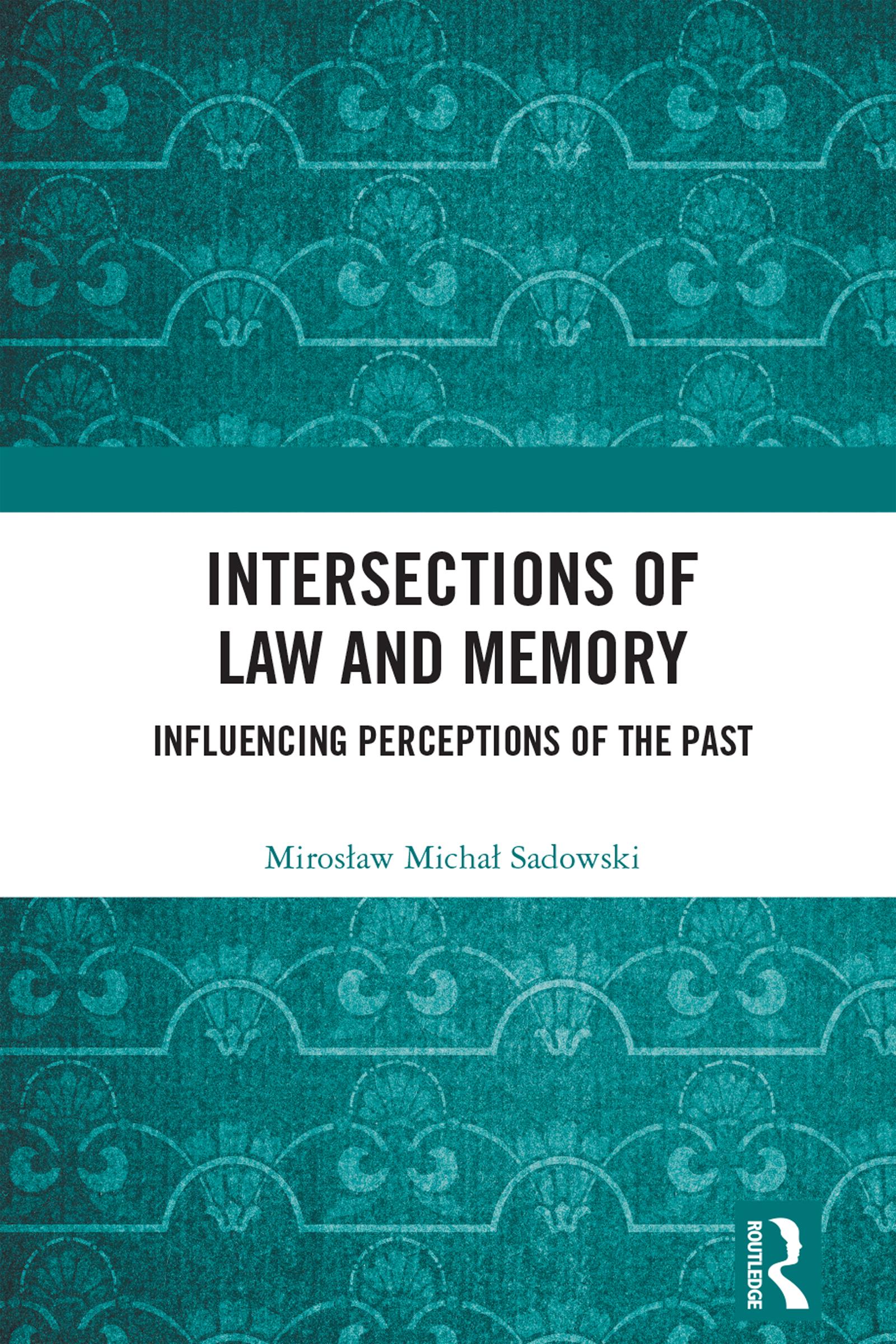
This book elaborates a new framework for considering and understanding the relationship between law and memory.
How can law influence collective memory? What are the mechanisms law employs to influence social perceptions of the past? And how successful is law in its attempts to rewrite narratives about the past? As the field of memory studies has grown, this book takes a step back from established transitional justice narratives, returning to the core sociological, philosophical and legal theoretical issues that underpin this field. The book then goes on to propose a new approach to the relationship between law and collective memory based on a conception of ‘legal institutions of memory’. It then elaborates the functioning of such institutions through a range of examples – taken from Japan, Iraq, Brazil, Portugal, Rwanda and Poland – that move from the work of international tribunals and truth commissions to more explicit memory legislation. The book concludes with a general assessment of the contemporary intersections of law and memory, and their legal institutionalisation.
This book will be of interest to scholars with relevant interests in the sociology of law, legal theory and international law, as well as in sociology and politics.
Zahle einfach mit Karte, Klarna, Apple Pay oder Google Pay. Nicht zufrieden? Du hast immer ein 14-tägiges Widerrufsrecht. Lies mehr in unseren AGB. Hast du Fragen, schreib uns eine E-Mail an hello@memmo.org.
Memmo macht das Lernen einfacher – wo auch immer du bist. Bei uns findest du deine Kursbücher und smarte Lerntools an einem Ort: Zusammenfassungen, Quizzes, Podcasts und Lernkarten. Und Ted, dein Lernbuddy, beantwortet alles, was du wissen möchtest. Über 50.000 Studierende lernen bereits hier – gemacht, damit du schneller lernst und weniger Stress hast.