
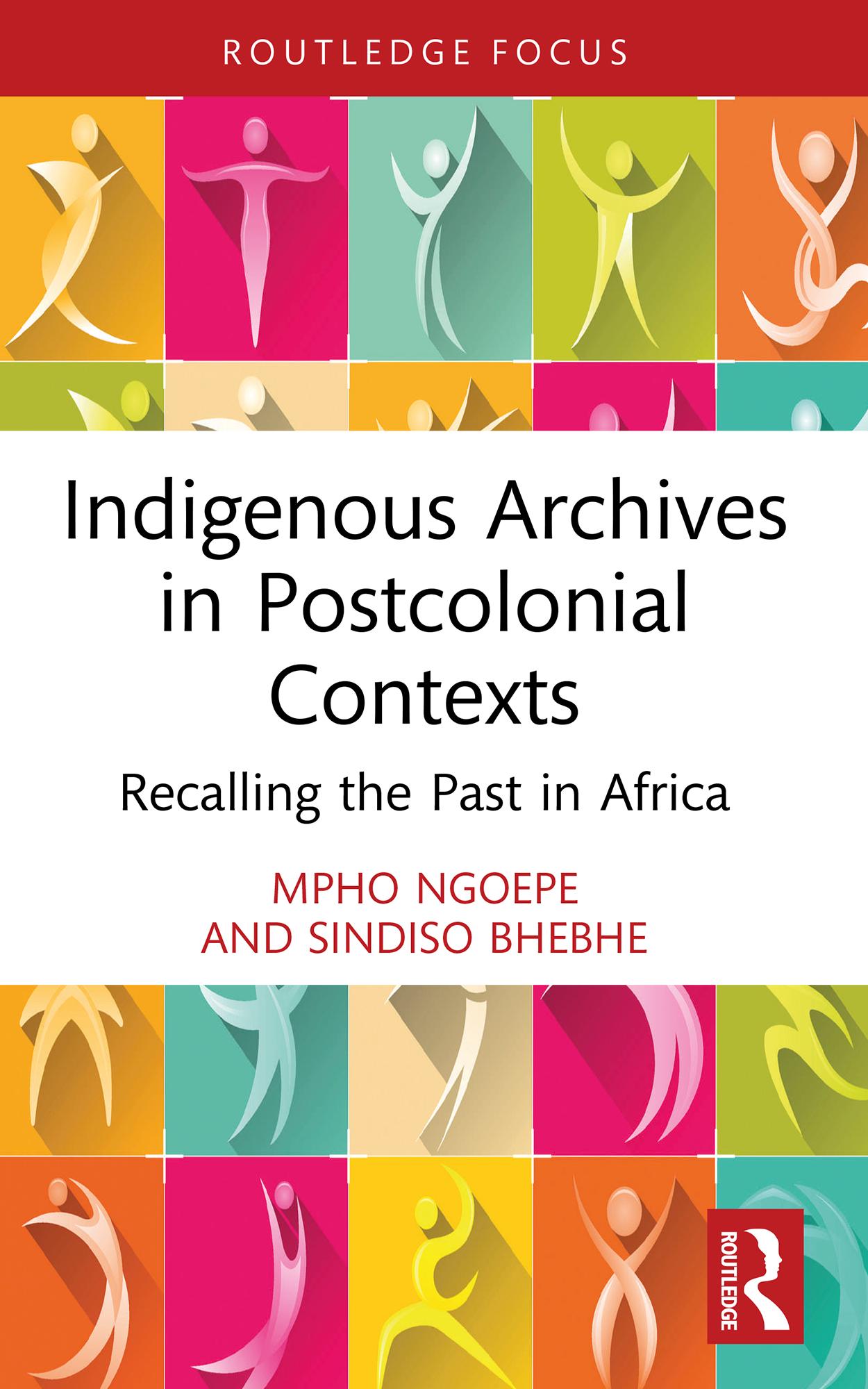
Indigenous Archives in Postcolonial Contexts revisits the definition of a record and extends it to include memory, murals, rock art paintings and other objects.
Drawing on five years of research and examples from Zimbabwe, Botswana and South Africa, the authors analyse archives in the African context. Considering issues such as authentication, ownership and copyright, the book considers how murals and their like can be used as extended or counter archives. Arguing that extended archives can reach people in a way that traditional archives cannot and that such archives can be used to bridge the gaps identified within archival repositories, the authors also examine how such archives are managed and authenticated using traditional archival principles. Presenting case studies from organisations such as Gay and Lesbian Memory in Action Archives (GALA) and heritage projects such as the Makgabeng Open Cultural Museum, the authors also analyse Indigenous family praises and songs and explore how such records are preserved and transmitted to the next generation.
Indigenous Archives in Postcolonial Contexts demonstrates how the voices of the marginalised can be incorporated into archives. Making an important contribution to the effort to decolonise African archives, the book will be essential reading for academics and students working in archival studies, library and information science, Indigenous studies, African studies, cultural heritage, history and anthropology.
Zahle einfach mit Karte, Klarna, Apple Pay oder Google Pay. Nicht zufrieden? Du hast immer ein 14-tägiges Widerrufsrecht. Lies mehr in unseren AGB. Hast du Fragen, schreib uns eine E-Mail an hello@memmo.org.
Memmo macht das Lernen einfacher – wo auch immer du bist. Bei uns findest du deine Kursbücher und smarte Lerntools an einem Ort: Zusammenfassungen, Quizzes, Podcasts und Lernkarten. Und Ted, dein Lernbuddy, beantwortet alles, was du wissen möchtest. Über 50.000 Studierende lernen bereits hier – gemacht, damit du schneller lernst und weniger Stress hast.